John Calvin Quotes
Those who would be thought the rulers of the church arrogate to themselves a license to speak whatsoever they please, and to insist that as soon as they have spoken they shall be implicitly obeyed.
John Calvin, 1509-1564, Lawyer and Protestant Minister, Founder of Calvinism, The Necessity of Reforming the Church, 1543
Sourced by: Eigen's Political and Historical Quotations

This concept is not terribly different from the concept of the theocracy of the Islamic government of Iran in the 21st century. There is a civil government but it serves and is “under the direction of the spiritual power.”


Of all the Western Colonial Powers, Spain was the worst. They took the most from their possessions and contributed the least. Worst, they killed off almost all the indigenous people.


Ingersoll was considered to be the greatest orator and political thinker of his day, but his overt atheistic views curtailed his elected political career.


This notice of Excommunication was promulgated to the Catholic clergy in Ireland in May of 1538. It required all Roman Catholic leaders to size the property of Protestants or Catholics who sympathized with them. Those who did were then regarded as traitors by the Protestant King. The anti-Protestant feeling culminated with the massacre of about 100 Protestants who were drowned in Bann a few years later.

What Alcuin did not say was that Charlemagne had the largest and most powerful army.


This vision, known as "The Third Rome" saw not only Moscow as the seat of Christianity for the world, but saw the Czar as the Head of the Christian unified Church. Constantinople had fallen to the Muslims and Rome to the Barbarians and the Pope had virtually no power at the time. Particularly interesting is his vision of transforming a civil Emperor to the head of the Church—one who was strong and wealthy enough to end the schism of the Eastern and Western Churches and command all. In this sense, he was following the Muslim concept of a single secular and religious, all powerful, leader—like the Caliph.

No other religion has ever preached majority rule so clearly and unambiguously. Because of this strong democratic philosophy, some dictatorial governments see the Bahai as particularly dangerous. Also some religions who see their doctrine and the world of God as being always right and the majority of people should not determine morality are even law. They recognize a higher power. Iran, in particular, has been a terrible persecutor of Bahai, their largest religious minority, which is the antithesis to the concept of a theocracy and at the opposite end of the religious spectrum from Islam. Bahai leaders had been executed. Bahai there are not allowed to attend higher education institutions, build religious facilities, preach openly or serve in many roles. See {614912}.


As enlightened as this statement is, it was not always a part of Mormon doctrine. When Brigham Young was head of the church he also served as Governor of the Utah Territory, and the separation of church and state was not so clear. In modern times however, the Mormon views have been the quintessential views of most Americans—Mormon or otherwise.
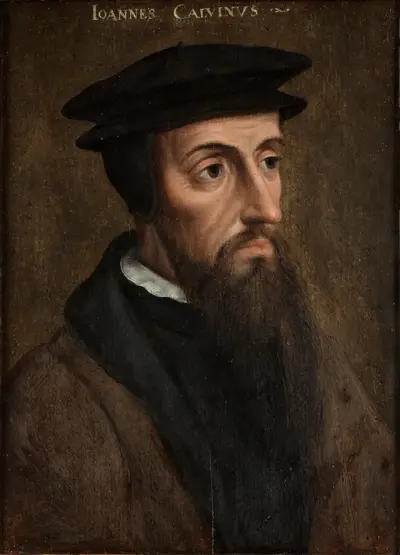
John Calvin was a French theologian, pastor and reformer in Geneva during the Protestant Reformation. He was a principal figure in the development of the system of Christian theology later called Calvinism, aspects of which include the doctrines of predestination and of the absolute sovereignty of God in salvation of the human soul from death and eternal damnation, in which doctrines Calvin was influenced by and elaborated upon the Augustinian and other Christian traditions. Various Congregational, Reformed and Presbyterian churches, which look to Calvin as the chief expositor of their beliefs, have spread throughout the world.
