Shoghi Effendi Quotes
Abide by the voice of the majority, which we are told by our Master to be the voice of truth, never to be challenged, and always to be whole-heartedly enforced.
No other religion has ever preached majority rule so clearly and unambiguously. Because of this strong democratic philosophy, some dictatorial governments see the Bahai as particularly dangerous. Also some religions who see their doctrine and the world of God as being always right and the majority of people should not determine morality are even law. They recognize a higher power. Iran, in particular, has been a terrible persecutor of Bahai, their largest religious minority, which is the antithesis to the concept of a theocracy and at the opposite end of the religious spectrum from Islam. Bahai leaders had been executed. Bahai there are not allowed to attend higher education institutions, build religious facilities, preach openly or serve in many roles. See {614912}.
Shoghi Effendi, 1897-1957, Guardian of the Bahai (Leader of the Religion), Grandson of the Bahai founder Bahaullah, Letter to the Bahai of America, February 23, 1924
Sourced by: Eigen's Political and Historical Quotations

See {624641} for Iranian confirmation of its discriminatory policy. The Iranian "justification for murdering Bahais is this: The Behai were originally Muslims and then they created an heretic form of Islam. Under Islamic Law (Sharia), any Muslim who converts away from Islam to ANY other religioun must be out to death. As barbarous as this sounds, the irrational thinking is the same as that of the Catholic Church when Protestant chiurches emerged. All of them were to be put to death. However that was over 600 years ago, and humanity has much imporoved standards today. But the Muslims are 700 years younnger than the Catholic Church and some point out that they are behaving the same way as the Catholics, brutal as it is, when the Church was at the same level of maturity as Islam is today.


Sometimes referred to as Gaspar de Toledo. This quotation Illustrates one of the ways that Churches maintained power over the secular government even though they were supposedly separate. By maintaining control over the secular leaders consciences and sense of morality, the Church could control the secular government. In this particular historical case, there was not even a supposed separation. The Confessor had an ex officio role in the high council. See {629457}.


government appointed officials and bureaucrats Savonarola was a very hated ruler, opposed to any kind of a Parliament or assembly. And the penalty for advocating for a Parliament was severe. The Signoria were the various government appointees and clerks. They were influential in Florence and hence they were silenced by the mot draconian methods. There was a movement throughout Italy for parliaments and less arbitrary government. Savonarola was particularly strict in his rooting out sin and cruel in his punishments and hence very unpopular. He was also under the delusion that God himself had called on him to preach his strict version of morality. Some of the Nobles reached the Pope with many of Savonarola’s extreme statements and Savonarola was excommunicated and burned as a heretic. His executioner gloated that he was burning Savonarola before the powerful priest could burn him as he had done so many others.


Samuel Langhorne Clemens, 1835-1910


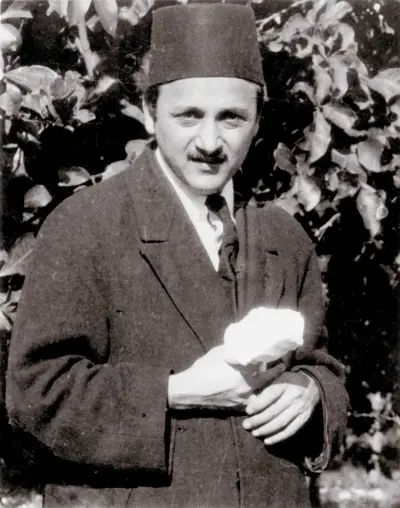
- Born: March 1, 1897
- Died: November 4, 1957
- Nationality: Persian
- Profession:
Shoghí Effendí was the grandson and successor of ʻAbdu'l-Bahá, appointed to the role of Guardian of the Baháʼí Faith from 1921 until his death in 1957. Shoghi Effendi created a series of teaching plans that oversaw the expansion of the faith to many new countries. He also translated and provided authoritative interpretation of many of the writings of the Baháʼí central figures. He was succeeded by an interim arrangement of the Hands of the Cause until the election of the Universal House of Justice in 1963.
