Mark Twain Quotes
During many ages there were witches. The Bible said so. The Bible commanded that they should not be allowed to live. Therefore the Church, after eight hundred years, gathered up its halters, thumb-screws, and firebrands, and set about its holy work in earnest. She worked hard at it night and day during nine centuries and imprisoned, tortured, hanged, and burned whole hordes and armies of witches, and washed the Christian world clean with their foul blood. Then it was discovered that there was no such thing as witches, and never had been. One does not know whether to laugh or to cry.....There are no witches. The witch text remains; only the practice has changed.
Samuel Langhorne Clemens, 1835-1910
Mark Twain, Writer, Founder, Anti-Imperialist League, "Bible Teaching and Religious Practice," Europe and Elsewhere
Sourced by: Eigen's Political and Historical Quotations


Most people think that the Spanish Inquisition was the locus of witch burning, but it was not. Germany was.

For another of his suspicions which turned out to be justified, see {636169}.
Professor Clark wrote this historical description of witchcraft and the Inquisition in contemporary verbiage as we would discuss the solution to serious problems of today. His overall point is that when society fears something, it establishes and institution to cope with the object of the fear, and the institution itself creates more fear as this is the way it “succeeds.” A more recent historical example was when Congress created House and Senate Committees to cope with the problem of communists infiltrating and undermining our important institutions. This had not been a problem until Senator Joseph McCarthy and a few others claimed that they had found thousands in our military, state department and other government agencies. In the final analysis, while there were NO witches, there were only a few former communists in government and most were fiction and imagination. Yet society went through a Red Scare that in some ways paralleled society’s problem with witchcraft.


The King, a religious exremist fanatic, was a great supporter of the Inquisition whose excesses were horrible during his reign.


Ingersoll was considered to be the greatest orator and political thinker of his day, but his overt atheistic views curtailed his elected political career.
Toleration is a relative term. The Muslim Moors made Christians (and Jews) pay a special tax. At times they were forced to wear special clothing so that they could be readily identified. And they could not build churches larger or taller than the smallest mosque in the community. At times, their occupations were restricted but at other times Christians and Jews were appointed to the highest positions like Vizier. The Inquisition, in contrast, forced all Muslims (and Jews) to leave the country without any of their property or money or be tortured and killed—usually by burning at the stake unless of course that they converted to Christianity.


Odo of Chatillon-Sur-Marne. This is an amazingly distressing quotation for most moderns. Here we have the Pope preaching genocide and ethnic cleansing. This was one of the main triggers of the bloody Crusades and is not forgotten by Muslims in the Middle East Today. As Islam has not changed a great deal in 1000 years, most Muslims assume that the same is true of Christianity and especially the popes and the Roman Catholic Church. This is one of the reasons that the Islamic world reacts so strongly when a pope makes any statement negatve about Muslims and Islam.


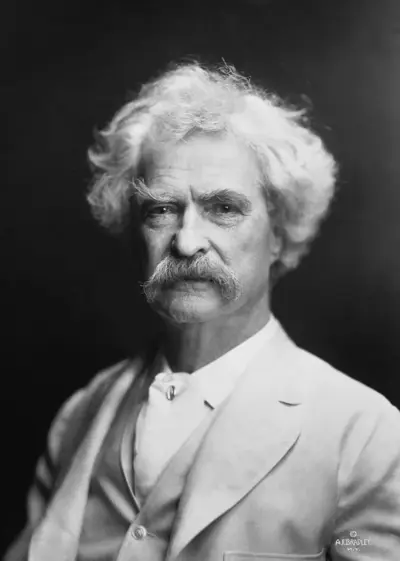
Samuel Langhorne Clemens, known by his pen name Mark Twain, was an American writer, humorist, entrepreneur, publisher, and lecturer. He was lauded as the "greatest humorist the United States has produced," and William Faulkner called him "the father of American literature". His novels include The Adventures of Tom Sawyer (1876) and its sequel, the Adventures of Huckleberry Finn (1884), the latter often called "The Great American Novel".
