Agobard Quotes
The wretched world lies now under the tyranny of foolishness; things [witches and witchcraft] are believed by Christians of such absurdity as no one ever could aforetime induce the heathen to believe.
Agobard, ~769-840, Saint & Roman Catholic Archbishop of Lyons, France, Against the Absurd Opinion of the Vulgar touching Hail and Thunder
Sourced by: Eigen's Political and Historical Quotations

He was writing about the superstitions that there were specific people—witches and warlocks—whose magic could bring hail, thunder and other natural phenomena. At the time he wrote this most educated clerics believed in witchcraft and magic.

He was an overt atheist; there were many non believers in Europe at the time but few were overt. He also wrote under the name of Jean Baptiste de Mirabaud.


Spinoza was one of the most feared intellectuals in human history—feared that is by the established power structures. He is the only known person who was excommunicated by the Catholics, the Jews and the Muslims—all were forbidden to read his works. He was the enemy of authority and advocated personal reason as the guide for men.

Samuel Langhorne Clemens, 1835-1910
Spinoza’s ideas were considered so radical and dangerous that he was the only man in history who was excommunicated by the Catholics, the Jews and the Muslims.


This generally is considered to be the first explicit atheistic writing coming out of a Christian country.


He was an overt atheist; there were many non believers in Europe at the time but few were overt. He also wrote under the name of Jean Baptiste de Mirabaud.


He was too ill to read the speech himself and it was read by James Wilson for him.

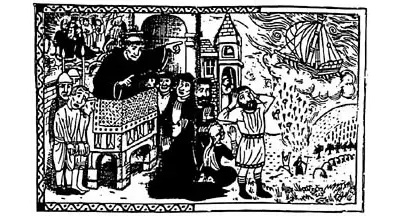
Agobard of Lyon (c. 779–840) was a Spanish-born priest and archbishop of Lyon, during the Carolingian Renaissance. The author of multiple treatises, ranging in subject matter from the iconoclast controversy to Spanish Adoptionism to critiques of the Carolingian royal family, Agobard is best known for his critiques of Jewish religious practices and political power in the Frankish realm. He was succeeded by Amulo of Lyons.
