Baruch Spinoza Quotes
The main threat to freedom comes from church ministers who depend upon fear and superstitions to gain and to keep power
Spinoza was one of the most feared intellectuals in human history—feared that is by the established power structures. He is the only known person who was excommunicated by the Catholics, the Jews and the Muslims—all were forbidden to read his works. He was the enemy of authority and advocated personal reason as the guide for men.
Benedict Spinoza, 1632-1677, Dutch Philosopher, Tractatus Politicus, 1670
Sourced by: Eigen's Political and Historical Quotations


The Roman Catholic Clergy as well as the Vatican was quite corrupt in Luther’s time which was one of the reasons for his reform effort. Throughout history some clerics have abused their positions and roles and acted as impediments to the faith in their own religions.

Ingersoll was considered to be the greatest orator and political thinker of his day, but his overt atheistic views curtailed his elected political career.


Executed by the English for his part in the Easter Uprising. His observations seem even more prescient as later theocracies like Iran ruined their societies and progress and twisted the Islamic religion. Ireland’s independence did not separate the state from the control and influence of the Roman Catholic Church despite the warnings of Connolly and others. However, conflict with the Church in 2010 over the church sexually assaulting children and impeding the civil authorities from investigating and protecting the criminals led to a reexamination and a diminution of the role of the church in Ireland.

Spinoza was one of the most feared intellectuals in human history—feared, that is, by the established power structures. Spinoza’s ideas were considered so radical and dangerous that he was the only man in history who was excommunicated by the Catholics, the Jews and the Muslims. This quotation is an example of why the religions were so fearful of his ideas. Essentially, he stated that Priests, Pastors, Rabbis, Imams and all clerics have no monopoly on understanding, knowledge, or wisdom. Each man was to think for himself and clerics should have to prove their claims and convince people, not ask them to have faith in their ideas and instructions. Spinoza himself was a religious Jew and produced all his work to try and persuade others. He challenged all clerics of all religions to do the same. When people started to listen to Spinoza, the clerics wanted to get rid of his influence. Therefore they banned all from talking to him and above all banned his books and other writings.

The classic dilemma is that religious moderates and scientists do not argue to force everyone to follow the dictates of science, but in almost all societies and nations, religious fundamentalists strive to force their beliefs on all and make disagreement illegal.


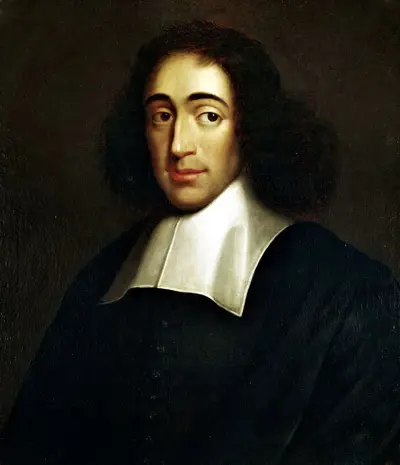
Baruch (de) Spinoza was a Dutch philosopher of Portuguese Sephardi origin. One of the early thinkers of the Enlightenment and modern biblical criticism, including modern conceptions of the self and the universe, he came to be considered one of the great rationalists of 17th-century philosophy. Inspired by the groundbreaking ideas of René Descartes, Spinoza became a leading philosophical figure of the Dutch Golden Age. Spinoza's given name, which means "Blessed", varies among different languages. In the Netherlands he used the Portuguese name Bento. In his Latin and Dutch works, he used Latin: Benedictus de Spinoza.
