Anna Jameson Quotes
In morals what begins in fear usually ends in wickedness; in religion what begins in fear usually ends in fanaticism. Fear, either as a principle or a motive, is the beginning of all evil.
Jameson, Anna. A Commonplace Book of Thoughts, Memories, and Fancies. Longman, Brown, Green, and Longmans, 1854, p. 29.

Some scientists are religious believers. Many are not. However, relatively few hold the position that Dawkins does that religion is and has been an evil force in the world. These argue that religions and religious factionalism has caused as many deaths as epidemics and pandemics and is an evil for society. While that argument has been historically true in much of the world, religious conflict deaths has actually decreased in frequency over the last century and may be at a world-wise low as a percentage of the world population. With the exception of Islamic fundamentalist extremism, there is no religious group that advocates religious violence and has a majority of any country. Moderate Muslims have never before been in greater numbers, so it can be argued that modern society and most religions have been reforming themselves over the years.


Spinoza was one of the most feared intellectuals in human history—feared that is by the established power structures. He is the only known person who was excommunicated by the Catholics, the Jews and the Muslims—all were forbidden to read his works. He was the enemy of authority and advocated personal reason as the guide for men.


This is an excellent quotation to illustrate the differences that exist over what is right and wrong and what is a sin. Smith is very clear that there are differences.


The Torah comprises the first 5 books of the Bible (Old Testament). The Arab countries of the Middle East are not alone in having to content with ultra-religious clerics who want to control the government and use it to impose religious law on the entire population. Israel also has the problem. In the Arab countries to deny being religion is to put yourself in danger including risking your life. So no one really knows what proportion of the population supports the religious imposition from the government. In Israel, however, this is easily determined by polls. The majority of Israelis are secular Jews. Of the religious Jews, the majority of them believe in extensive separation between the state and the religion. But there is a minority of ultra-orthodox which would have Israel to be a Theocracy. They are a minority but they are politically very strong. They receive large financial support from extremely wealthy Americans, have religious political parties, are extremely passionate advocates, and are willing to devote huge amounts of time to make Israel a more religious state and ideally a theocracy. Ironically, there is a great religious and philosophical similarity between the extremist Jews of Israel and the extremists Muslims in many of the Arab nations. They both want a theocracy. The only difference is which religion should the Theocracy represent.


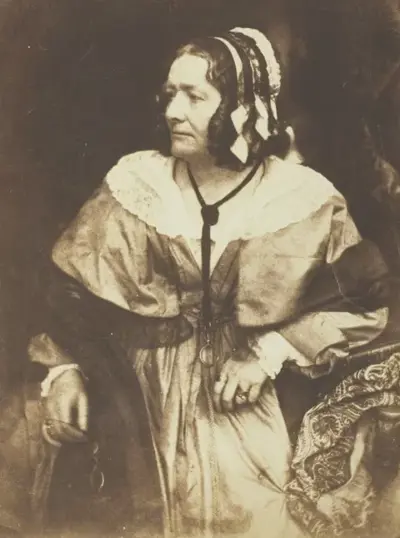
Anna Brownell Jameson was the first Anglo-Irish art historian. Born in Ireland, she migrated to England at the age of four, becoming a well-known British writer and contributor to nineteenth-century thought on a range of subjects including early feminism, art history (particularly sacred art), travel, Shakespeare, poets, and German culture. Jameson was connected to some of the most prominent names of the period including Fanny Kemble, Elizabeth Barrett-Browning and Robert Browning, Harriet Martineau, Ottilie von Goethe (the daughter-in-law of Goethe), Lady Byron, Charles and Elizabeth Eastlake, and Barbara Leigh Smith Bodichon.
