David Hume Quotes
Liberty of thinking, and of expressing our thoughts, is always fatal to priestly power…
David Hume, 1711-1776, Scottish Philosopher & Historian, The philosophical works of David Hume: Including all the essays, and exhibiting the more important alterations and corrections in the successive editions published by the author
Sourced by: Eigen's Political and Historical Quotations

Spinoza was one of the most feared intellectuals in human history—feared that is by the established power structures. He is the only known person who was excommunicated by the Catholics, the Jews and the Muslims—all were forbidden to read his works. He was the enemy of authority and advocated personal reason as the guide for men.

The editorial was in response to Congressional hearings held by J. Parnell Thomas of the House Un-American Activities Committee whereby Hollywood producers and directors were questioned about their political beliefs.


The Roman Catholic Clergy as well as the Vatican was quite corrupt in Luther’s time which was one of the reasons for his reform effort. Throughout history some clerics have abused their positions and roles and acted as impediments to the faith in their own religions.


Note the absolutism of the word unbounded.


Ingersoll was considered to be the greatest orator and political thinker of his day, but his overt atheistic views curtailed his elected political career.
Spinoza was one of the most feared intellectuals in human history—feared, that is, by the established power structures. Spinoza’s ideas were considered so radical and dangerous that he was the only man in history who was excommunicated by the Catholics, the Jews and the Muslims. This quotation is an example of why the religions were so fearful of his ideas. Essentially, he stated that Priests, Pastors, Rabbis, Imams and all clerics have no monopoly on understanding, knowledge, or wisdom. Each man was to think for himself and clerics should have to prove their claims and convince people, not ask them to have faith in their ideas and instructions. Spinoza himself was a religious Jew and produced all his work to try and persuade others. He challenged all clerics of all religions to do the same. When people started to listen to Spinoza, the clerics wanted to get rid of his influence. Therefore they banned all from talking to him and above all banned his books and other writings.

Islam had been the center of intellectual thought in the world, until the clerics had decided that innovation itself was a sin and one that called for the death penalty. Although most non-Muslim religions went through stages of death for religious dissent. However, the Koran deals with every part of society. There is no separation of church and state. All knowledge is in the Koran the fundamentalist believes and anyone who expresses a new idea is not only wrong and a heretic, but is dangerous and must be executed. It is therefore not very surprising that the Islamic contributions to science, medicine, and the arts has been so small. The Islamic fundamentalists are opposed by Muslim modernists who try to change the Islamic culture but they are on the minority. Most religions have gone through bad earlier periods where dissent was heresy and warranted death. Fundamentalist Islam is the only one which bans original thought of any kinds even it does not contradict established doctrine.


Later published under the pseudonym Silence Dogood in the New England Courant, July 9, 1722. Cato originated the quotation in Ancient Rome. A millennium later, Ben Franklin picked it up and made it and made it very popular. Note that it was very common in early America for publishers and writers to copy materials from others and publish them under their own name. America was a major intellectual property pirate in its early years copying and printing much and rarely giving credit and never paying an author's royalty--not unlike some of the Asian nations today.

The Adams administration had passed the Alien and Sedition Acts which severely curtailed freedom of speech and of the press despite the First Amendment which clearly prohibited that.
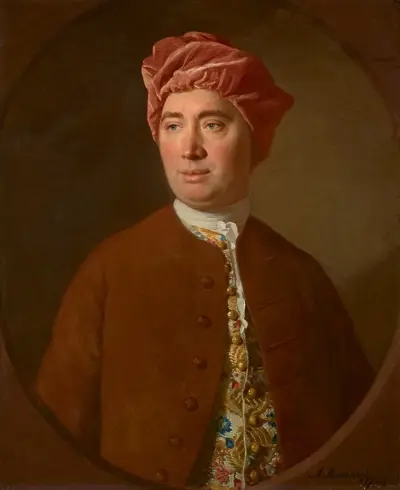
David Hume, Hume strove to create a naturalistic science of man that examined the psychological basis of human nature. Hume argued against the existence of innate ideas, positing that all human knowledge derives solely from experience. This places him with Francis Bacon, Thomas Hobbes, John Locke, and George Berkeley as a British Empiricist.
