Ernest Renan Quotes
To be able to think freely, a man must be certain that no consequence will follow whatever he writes.
Renan, Ernest. Recollections of My Youth. G. P. Putnam's Sons, 1883, p. 205.


Ingersoll was considered to be the greatest orator and political thinker of his day, but his overt atheistic views curtailed his elected political career.

Later published under the pseudonym Silence Dogood in the New England Courant, July 9, 1722. Cato originated the quotation in Ancient Rome. A millennium later, Ben Franklin picked it up and made it and made it very popular. Note that it was very common in early America for publishers and writers to copy materials from others and publish them under their own name. America was a major intellectual property pirate in its early years copying and printing much and rarely giving credit and never paying an author's royalty--not unlike some of the Asian nations today.


The editorial was in response to Congressional hearings held by J. Parnell Thomas of the House Un-American Activities Committee whereby Hollywood producers and directors were questioned about their political beliefs.


Adams himself, when President, led the passage of the Alien & Sedition Act which were a major restriction on freedom of speech that was on the books until Thomas Jefferson pardoned all those convicted. There were many other restrictions which over the years were wiped away by policy and court opinion.

The Adams administration had passed the Alien and Sedition Acts which severely curtailed freedom of speech and of the press despite the First Amendment which clearly prohibited that.


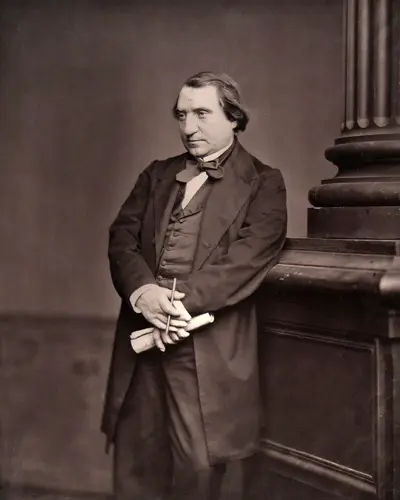
Joseph Ernest Renan was a French Orientalist and Semitic scholar, expert of Semitic languages and civilizations, historian of religion, philologist, philosopher, biblical scholar and critic. He wrote influential and pioneering historical works on the origins of early Christianity, and espoused popular political theories especially concerning nationalism and national identity. Renan is credited as being among the first scholars to advance the now-discredited Khazar theory, which held that Ashkenazi Jews were descendants of the Khazars, Turkic peoples who had adopted Jewish religion and migrated to Western Europe following the collapse of their khanate.
