Ma Jian Quotes
To become self-aware, people must be allowed to hear a plurality of opinions and then make up their own minds. They must be allowed to say, write and publish whatever they want. Freedom of expression is the most basic, but fundamental, right. Without it, human beings are reduced to automatons.
Ma, Jian. Interview by Index on Censorship, vol. 37, no. 2, 2008.


In 2005 an Egyptian writer, Usama Anwar Ukasha, criticized one of the Prophet’s companion’s role for causing dissention and divisiveness in Islamic history. Some called for his legal punishment for slandering a holy figure (see {588714}) and a law case was brought to force him to divorce his wife—so that she would not be “contaminated by his heretical thoughts. Al-Bana argued for freedom of thought and speech on such subjects. His view was particularly important since he was the brother of Hassan Al-Bana, the founder of the Muslim Brotherhood, a powerful fundamentalist organization. Note that Al-Bana’s call for intellectual freedom does not go so far as to say that it should be legal to criticize The Prophet Muhammad and it illustrates how far even modern Islam has to go to meet reasonable standards of freedom of thought and speech.

Said, one of the leading American academic intellectuals and an Arab, was together with many other Muslim intellectuals, anguished at the lack of basic intellectual freedom in most Muslim nations and all Arab countries. The only Middle Eastern country in which Arabs had freedoms of expression political and otherwise was at the time, ironically Israel.


Spinoza’s ideas were considered so radical and dangerous that he was the only man in history who was excommunicated by the Catholics, the Jews and the Muslims.
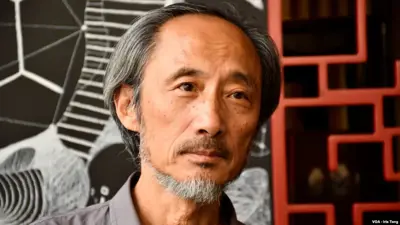
Ma Jian is a Chinese-born British writer.
