George Orwell Quotes
The enemies of intellectual liberty always try to present their case as a plea for discipline versus individualism. The issue truth-versus-untruth is as far as possible kept in the background.
Orwell, George. "The Prevention of Literature." Polemic, no. 2, Jan. 1946, p. 5.


In 2005 an Egyptian writer, Usama Anwar Ukasha, criticized one of the Prophet’s companion’s role for causing dissention and divisiveness in Islamic history. Some called for his legal punishment for slandering a holy figure (see {588714}) and a law case was brought to force him to divorce his wife—so that she would not be “contaminated by his heretical thoughts. Al-Bana argued for freedom of thought and speech on such subjects. His view was particularly important since he was the brother of Hassan Al-Bana, the founder of the Muslim Brotherhood, a powerful fundamentalist organization. Note that Al-Bana’s call for intellectual freedom does not go so far as to say that it should be legal to criticize The Prophet Muhammad and it illustrates how far even modern Islam has to go to meet reasonable standards of freedom of thought and speech.


Ingersoll was considered to be the greatest orator and political thinker of his day, but his overt atheistic views curtailed his elected political career.


Islamic modernists like Serageldin are many among the educated Muslims but their views are often drowned out by the violence and extremist statements of the fundamentalists.


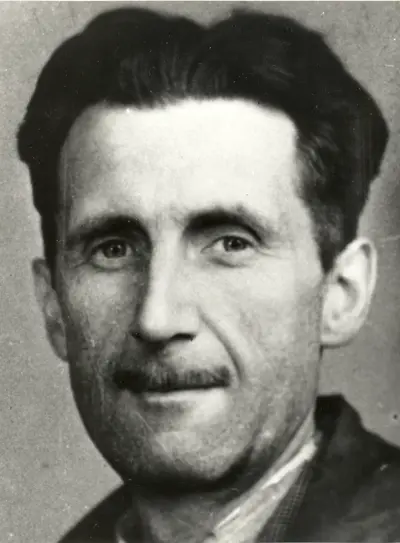
Eric Arthur Blair, known by his pen name George Orwell, was an English novelist, essayist, journalist and critic. His work is characterised by lucid prose, biting social criticism, opposition to totalitarianism, and outspoken support of democratic socialism.
