David Hume Quotes
Liberty of thinking, and of expressing our thoughts, is always fatal to priestly power, and to those pious frauds on which it is commonly founded.
Hume, David. "Of the Liberty of the Press." Essays, Moral, Political, and Literary. Edited by Eugene F. Miller, Liberty Fund, 1987, p. 11.


Later published under the pseudonym Silence Dogood in the New England Courant, July 9, 1722. Cato originated the quotation in Ancient Rome. A millennium later, Ben Franklin picked it up and made it and made it very popular. Note that it was very common in early America for publishers and writers to copy materials from others and publish them under their own name. America was a major intellectual property pirate in its early years copying and printing much and rarely giving credit and never paying an author's royalty--not unlike some of the Asian nations today.


The Adams administration had passed the Alien and Sedition Acts which severely curtailed freedom of speech and of the press despite the First Amendment which clearly prohibited that.

Ingersoll was considered to be the greatest orator and political thinker of his day, but his overt atheistic views curtailed his elected political career.


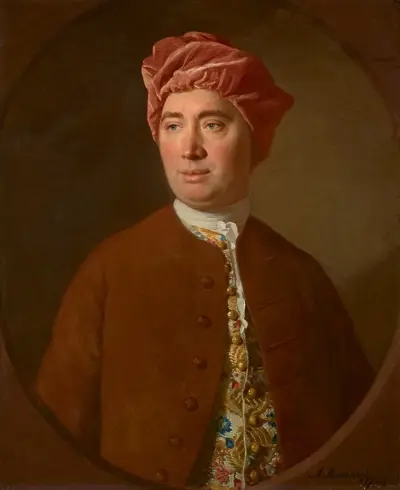
David Hume, Hume strove to create a naturalistic science of man that examined the psychological basis of human nature. Hume argued against the existence of innate ideas, positing that all human knowledge derives solely from experience. This places him with Francis Bacon, Thomas Hobbes, John Locke, and George Berkeley as a British Empiricist.
