John Milton Quotes
Give me the liberty to know, to utter, and to argue freely according to conscience, above all liberties.
John Milton, 1608-1674, English Writer, Areopagitica,1644
Sourced by: Eigen's Political and Historical Quotations

This quotation was used ten years later by Virginia which, in convention, passed a resolution objecting to the Alien & Sedition Acts. The drafter of the original resolution was James Madison.

Berger, an elected Congressman, was denied his seat after he had written an editorial against the First World War {587982} and been convicted under the then existing law. The House vote was 311 to 1. The 1 was Voigt. Berger was re-elected again anyway. Finally, the Supreme Court overturned his conviction and the House seated Burger. The one had been right; the 311, wrong.


Ingersoll was considered to be the greatest orator and political thinker of his day, but his overt atheistic views curtailed his elected political career.


Adams himself, when President, led the passage of the Alien & Sedition Act which were a major restriction on freedom of speech that was on the books until Thomas Jefferson pardoned all those convicted. There were many other restrictions which over the years were wiped away by policy and court opinion.


This was a decade before the Constitutional Convention in Philadelphia. You can imagine the distress of Vermonters when the U. S. Constitution was written with no provision for absolute freedom of speech which they had had for a over a decade. They would not ratify the U, S, Constitution without the understanding that there would be a Bill of Rights added with the First Amendment.


The Scientific Project that developed the Atomic Bomb. Oppenheimer was the great physicist who directed the successful development of the atomic bomb so as to build the weapon before Hitler did in World War II. However, as the technology evolved, he had doubts as to the wisdom of creating even more powerful hydrogen weapons. His viewpoint was hurting the administration’s policy of rapid unlimited nuclear weapons development, and he was the victim of a character assassination whereby his security clearance was withdrawn. The “father” of the atomic bomb was the first American casualty of atomic weapons development.

Ingersoll was considered to be the greatest orator and political thinker of his day, but his overt atheistic views curtailed his elected political career.

The Adams administration had passed the Alien and Sedition Acts which severely curtailed freedom of speech and of the press despite the First Amendment which clearly prohibited that.

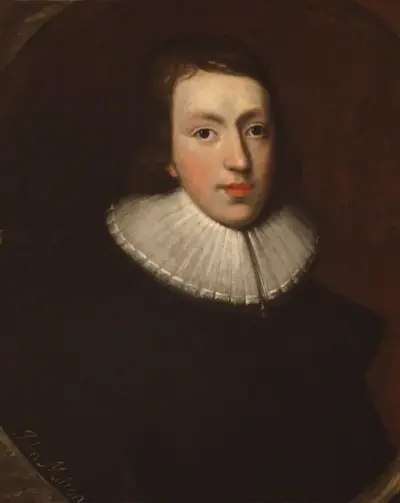
John Milton was an English poet and intellectual who served as a civil servant for the Commonwealth of England under its Council of State and later under Oliver Cromwell. He wrote at a time of religious shifts and political instability, and is best known for his epic poem Paradise Lost (1667). Written in blank verse, Paradise Lost is widely considered to be one of the greatest works of literature ever written.
