Charles Spurgeon Quotes
Is it not proven beyond all dispute that there is no limit to the enormities which men will commit when they are once persuaded that they are keepers of other men's consciences? To spread religion by any means, and to crush heresy by all means is the practical inference from the doctrine that one man may control another's religion. Given the duty of a state to foster some one form of faith, and by the sure inductions of our nature slowly but certainly persecution will occur. To prevent for ever the possibility of Papists roasting Protestants, Anglicans hanging Romish priests, and Puritans flogging Quakers, let every form of state-churchism be utterly abolished, and the remembrance of the long curse which it has cast upon the world be blotted out for ever.
This is a particularly interesting historical quotation because it succinctly gives a history of the various horrors of religious strife in British history—a history that was very well known to the American Founding Fathers and the general American Colonial population. This history was the major driver behind the public insistence for the Bill of Rights and the 1st Amendment which erected a wall of separation between church and state with government never favoring or abetting any particular religion.
Charles Spurgeon, 1834–1892, British Baptist Minister, The Inquisition, 1868
Sourced by: Eigen's Political and Historical Quotations

New Ross was under siege by Cromwell and his English Parliamentarian troops. After two days, the town tried to negotiate terms of surrender and one of the main things they asked for was freedom of religion to practice Roman Catholicism. This famous response set the stage for religious bigotry over the next years. Cromwell’s reasons for not allowing Catholicism to be practiced was not only one of religious zeal. At the time, the Roman Catholic Church was a major geopolitical power under a Pope who commonly supported or even dispatched troops for geopolitical and religious ends. The Vatican was particularly resentful of England for separating from the Church and asserting that the King of England was the head of the Church and not the Pope. Therefore Cromwell and many Englishmen had to deal with the reality that every practicing Catholic in the realm was a potential spy, traitor, and/or rebel. This fear of control of countries by the Pope strongly affected America, and was responsible for the defeat of the first Catholic Presidential Candidate, Al Smith. It was also a major factor in the election of John F. Kennedy so he dealt with it head on.

Wesley had been to Island several times and was interested in affairs there. He was a strong advocate of freedom of religion but the violence of the earlier religious conflict made him very wary of the Irish Roman Catholics who seemed to him particularly prone to religious violence.


This was the beginning of the inquisition.

Ingersoll was considered to be the greatest orator and political thinker of his day, but his overt atheistic views curtailed his elected political career.

Williams was the first theologian who not only advocated religious toleration but argued that Christianity demanded it and the separation of church and state.

There were then efforts by a few to form a Christian Party.

1st Viscount Bolingbroke. This is the argument that was and still is given by most theocracies and nations opposed to pluralism. It was also a quotation which with the American founders were familiar and were targeting this view when they demanded the 1st Amendment.
While the Visigoths had some very advanced legal principles, this law, quoted in its entirety is typical of the nations that were part of the Catholic world. The church and its doctrines were immune from any possible criticism, explicit or implicit. This is the most formalized and sophisticated compendium of laws of the so-called “barbaric peoples” of Europe. The compilation was in many ways a documentation of the traditional laws of the Visigoths that had evolved over hundreds of years.
The letter was in response to the King’s letter commanding him and all the other governors to massacre all the Protestants in his district. Montmorrin, a Catholic, died suddenly and shortly thereafter. It is supposed he and one other objector (Viscount Orthez) were poisoned by order of King Charles. All the other governors obeyed and 50,000 Protestants were murdered in the Massacre of Saint Bartholomew.

Both Puritans and Quakers were persecuted and physically abused in England by the Anglican Church. The Puritans as soon as they became dominant in part of the American colonies began persecuting Quakers. The Quakers who were the majority in the Pennsylvania colony, however were tolerant of other religions. This history was another of the many reasons the Founding Fathers wanted no established church. A “scorpion” was a type of whip that was particularly painful.


Hamilton had studied with Martin Luther at Wittenberg and returned to Scotland where he converted many from the Catholic Church. He was offered a chance to recant and spare his life but he refused. He became the first Protestant Martyr in Scotland and his death brought many new converts.

The origins of the extreme religious intolerance of Spain occurred centuries before the excesses of the Spanish Inquisition. Before the Conference the Visigoths and their king had been converted to Christianity but not all cared for the new religion.
Not all the relations between Irish Catholic and Protestants were hostile. There was a commonality in their Irish nationality and many protestants—especially the educated and more sophisticated—were opposed to the restrictions imposed by England on the rights of the Roman Catholic to practice their religion. See {639274} for another example.


This is a remarkable quotation. Here was a leading minister of the Established Church of England who is arguing that there should be no established church insofar as religious belief is concerned. Essentially this is what England has developed. The Anglican Church is still the established church but only for purposes of state cerimonies and the religion of the Royal Family. The establishment has nothing to do with lawmaking, or common religious belief or inhibition of the many other religions in England and there is complete freedom of conscience.


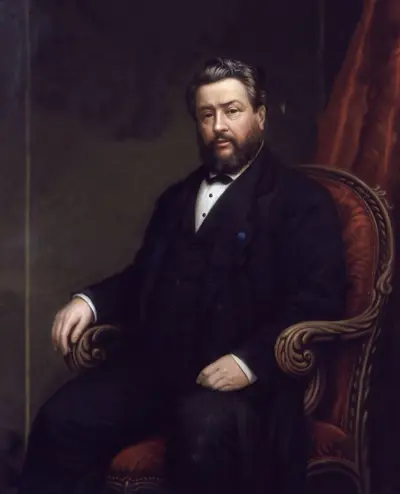
Charles Haddon Spurgeon was an English Particular Baptist preacher. Spurgeon remains highly influential among Christians of various denominations, among whom he is known as the "Prince of Preachers". He was a strong figure in the Reformed Baptist tradition, defending the 1689 London Baptist Confession of Faith, and opposing the liberal and pragmatic theological tendencies in the Church of his day.
