Robert G. Ingersoll Quotes
Happily for us, there was no church strong enough to dictate to the rest. Fortunately for us, the colonists not only, but the colonies differed widely in their religious views. There were the Puritans who hated the Episcopalians, and Episcopalians who hated the Catholics, and the Catholics who hated both, while the Quakers held them all in contempt. There they were, of every sort, and color and kind, and how was it that they came together? They had a common aspiration. They wanted to form a new nation. More than that, most of them cordially hated Great Britain; and they pledged each other to forget these religious prejudices, for a time at least, and agreed that there should be only one religion until they got through, and that was the religion of patriotism. They solemnly agreed that the new nation should not belong to any particular church, but that it should secure the rights of all.
Ingersoll was considered to be the greatest orator and political thinker of his day, but his overt atheistic views curtailed his elected political career.
Robert Green Ingersoll, 1833-1899, Attorney General of Illinois (Republican), Centennial Oration, 1876
Sourced by: Eigen's Political and Historical Quotations

This is a particularly interesting historical quotation because it succinctly gives a history of the various horrors of religious strife in British history—a history that was very well known to the American Founding Fathers and the general American Colonial population. This history was the major driver behind the public insistence for the Bill of Rights and the 1st Amendment which erected a wall of separation between church and state with government never favoring or abetting any particular religion.

Note that in addition to getting rid of the authority of the King, New York—over a decade before the Bill of Rights and the First Amendment, provided for a ban on an established church or favoring one Christian sect over another. Even then New York was a multi religious and multi ethnic society with its strong Dutch tradition along with the English tradition. New York did not go as far as the First Amendment would do later in terms of freedom of religion. NY only mentioned Christian sects. However they did implement separation of church and state and an establishment clause. See {621429} for another clause that ensures separation of church and state.


This publication was one of the best selling in the entire history of America. Rarely has a single publication been read by as high a proportion of a population. Those who support the maintenance of a strict separation of Church and State in America often point to this quotation and the popularity of Common Sense as evidence that not only were the founding fathers in favor of strict separation but so was the general Colonial American public.
At the time there was an issue of religious freedom that is in public discourse: It emanated from the Obama Care law which required employers to provide health insurance that does not discriminate against women by refusing to disallow coverage for birth control (pills, diaphragms, etc.) This legislation covered the employees of general institutions run by religions such as schools, hospitals, and retirement communities. Roman Catholics and other religions which viewed birth control as a sin were put in a position where they had to pay for something that they regarded as sinful. So the church did not have complete religious freedom. However, if these institutions would deny to their employees a basic right that the law says belongs to all institutions. If an exception would be made for birth control what about blood transfusions. The Jehovah’s Witnesses believe that autologous blood transfusions are contrary to the world of God. So what if institutions they run decided to not cover these transfusions in their insurance policies? Or a Jewish University or a Muslim cultural center decided not to cover medical procedures in hospitals that serve pork? There have been many examples where one religion’s freedom has been curtailed slightly when they conflict with individual rights or other rights. Plural marriage for Mormons and Muslims are against the law. Christian Scientists have been forced to provide medical care for some members even though their religion prohibits it. There is no solution that will not curtail someone’s rights under some circumstances.

Kennedy was being hurt be fears that as a Catholic, he would be beholden to the Pope and the Catholic Bishops. There were many protestants who believed that the Catholic Church was antithetical to democracy and some who even believed that Catholicism was the religion of Satan. Kennedy decided to confront the issue head on.

Both Puritans and Quakers were persecuted and physically abused in England by the Anglican Church. The Puritans as soon as they became dominant in part of the American colonies began persecuting Quakers. The Quakers who were the majority in the Pennsylvania colony, however were tolerant of other religions. This history was another of the many reasons the Founding Fathers wanted no established church. A “scorpion” was a type of whip that was particularly painful.

France, like the other European nations had suffered through the bloodbaths and civil and other wars including the Protestant Reformation, the Holocaust and others. They. like the Untied States chose a separation of church and state—a secular government to combat the inner and intrareligious bloodbaths that have historically killed millions.

Lopez and Elizer were Jews who had escaped the persecution in Portugal to come to America. They and other non-Christians could live and work in Rhode Island but could not vote or hold public office by a previous decision of the Rhode Island Assembly. See {619707}.The Jews had petitioned for their civil rights.


Jefferson drafted the law which became the basis for the First Amendment to the Constitution. Others wanted change in some of Jefferson’s language to be Christian Centric but the delegates rejected that idea. See {623696}. The separation of church and state was not to be total. The state and the law was required to protect religion—all religions including those thought to be heretical.


This historical quote is important because it shows that there was great dissention about the celebrating of Christmas even among different Christian sects. Traditionally, the celebration of Christmas in a government building or school would have offended half the Christian population. In early America, Christmas celebration was legally prohibited in some states and required in others. This was one of the reasons that the Founding Fathers wrote the First Amendment into the Constitution. In modern times, some critics accuse the requirements that Christmas celebration in public facilities as being anti-Christian. But the problem has been with America since before the Constitution.


Madison was a deist, but was firm that religion was to be an individual matter and not an area in which the state ought be involced.

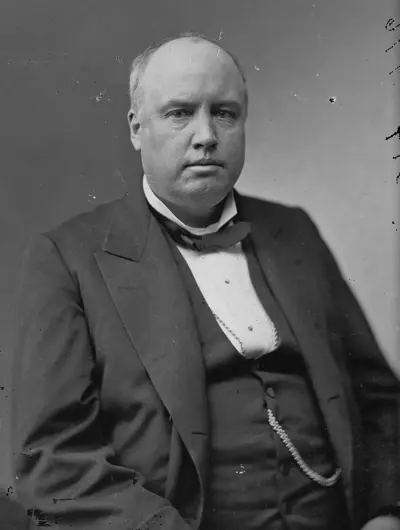
Robert Green "Bob" Ingersoll was an American lawyer, a Civil War veteran, political leader, and orator of the United States during the Golden Age of Free Thought, noted for his broad range of culture and his defense of agnosticism. He was nicknamed "The Great Agnostic". Ingersoll was considered to be the greatest orator and political thinker of his day, but his overt atheistic views curtailed his elected political career.
