EDMUND RANDOLPH
(Edmund Jennings Randolph | Edmund Jenings Randolph)
From the beginning, the issue of whether the country should have a standing army or depend on the militia and the citizen soldier has been controversial. There is a , romantic American myth about the Militiamen in Colonial and Revolutionary America—the citizen soldiers who would leave their farms and rise to the military necessity of the day. However, not only were the militia very hard to muster to duty, but most actually didn’t own or have experience with firearms, and the prevailing opinion of knowledgeable military leaders from George Washington on down was that the militia were not very good soldiers. See {613015}, {613016}, {613022}, {613027}, {621987}, {621988}, {613030}, {613033}, & {613056}
Randolph was one of the delegates who opposed a Presidency of a single man.
This is one of the clearest statements showing that the founding Fathers did not see the Constitution as a mechanism that would deal with all details of all problems in the future. It was to contain only the essential principles,
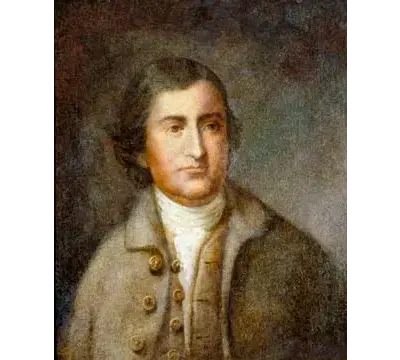
Edmund Jennings Randolph was an American attorney and politician. He was the 7th Governor of Virginia, and, as a delegate from Virginia, he attended the Constitutional Convention and helped to create the national constitution while serving on its Committee of Detail. He was the 1st United States Attorney General and subsequently the 2nd Secretary of State during George Washington's presidency.
