Edmund Randolph Quotes
To insert essential principles only, lest the operation of government should be clogged by rendering those provisions permanent and unalterable which ought to be accommodated to times and events.
This is one of the clearest statements showing that the founding Fathers did not see the Constitution as a mechanism that would deal with all details of all problems in the future. It was to contain only the essential principles,
Edmund Jenings Randolph, 1753-1813, Aide-de-camp to General George Washington, Member of the Continental Congress, Delegate to the Constitutional Convention, Governor of Virginia, U. S. Attorney General & U. S. Secretary of State, Statement in presenting the first draft of the Constitution to the Constitutional convention, 1787
Sourced by: Eigen's Political and Historical Quotations


In 1953 the Senator had proposed a Constitutional amendment that would severely curtail the treaty making powers of the President. President Eisenhower actively opposed Bricker and the right wing of his own party. The Senator was outraged. Despite Bricker’s complaining, the public and the Congress sided with the President.

This quotation supports the concept of judicial interpretation of the Constitution in the light of new events or discoveries.


From this quotation, {615902} and {615901} it is clear that the framers of the Constitution intended the treaty making powers to be shared by the President and the Senate. In practice, in modern times treaties are usually initially negotiated by diplomats under the supervision of the President and the Senate gets to concur or not in the ratification process. However, there have been a number of treaty failures including the League of Nations where the lack of coordination has resulted in a situation where the Senate had to accept or reject something which the President had negotiated and the Senate rejected the treaty.

This is a classic type of fallacious political logic. The author claims that there are no powers in the constitution to make laws in a number of important areas of our society. What is true, is that there is no explicitly and uniquely specified statements in the Constitution regarding the areas he specified (and some he didn’t like education). However the power to make laws in these areas comes from the “Commerce Clause” where the Federal Government was given the power to regulate Interstate Commerce. And that is what the Federal Government does make laws about. Food that is sold in the state where it is grown is regulated by the states. But interstate agriculture is. Medicines and weapons are also sold and transported in interstate commerce. Even housing is in part covered as financing and mortgages, building materials, working conditions of the building companies are part of Interstate Commerce. A succession of Congresses have recognized this and so has every Supreme Court in our history. McManus however believes that all these legislators and judges have been wrong and worse, part of a conspiracy to subvert the Constitution. See {630683} for his tendency to see conspiracies in politics.


Parliament had developed a formal mechanism of removing officials in extreme circumstances. It was borrowed for the U. S. Constitution. See {584256}.

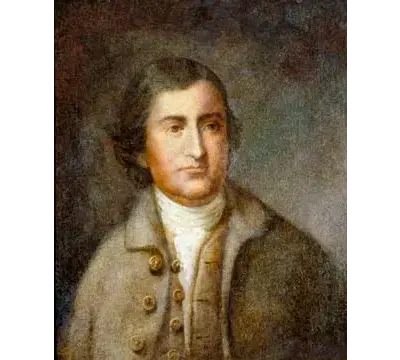
Edmund Jennings Randolph was an American attorney and politician. He was the 7th Governor of Virginia, and, as a delegate from Virginia, he attended the Constitutional Convention and helped to create the national constitution while serving on its Committee of Detail. He was the 1st United States Attorney General and subsequently the 2nd Secretary of State during George Washington's presidency.
