George Fox Quotes
Why should any man have power over any other man's faith, seeing Christ Himself is the author of it?
George Fox, 1624-1691, English founder of the Society of Friends (Quakers), A journal or historical account of the life, travels, sufferings, Christian experiences, and labour of love in the work of the ministry: of that ancient, eminent and faithful servant of Jesus Christ
Sourced by: Eigen's Political and Historical Quotations

Quintus Septimius Florens Tertullianus


Prior to Vatican II, freedom of conscience was not explicit in Catholic Doctrine. The controlling view had been that of Pope Pius IX a hundred years earlier. See {612299}.

A portion of this quote can be found in the Jefferson Memorial in Washington, D.C.


This appears to be one of the first religious groups to withdraw and separate from a state church.


Backus was the first of the American clerics to espouse the position that in order for there to be a Christian nation, the state must be separate from the Church.

The modernity of this ancient leader is striking. For another example see his view on the importance of engendering supportive public opinion: XXX

The wording was rejected and the delegates insisted upon the original proposed language: “Well aware that Almighty God hath created the mind free …” This is a very important historical quotation because it shows that Henry and a few others wanted to make the society Christian centric, However, the majority insisted that it be non-sectarian. Many of the delegates rejecting the “Jesus Christ” language were themselves practicing Christians, but they were aware of the terrible religious wars and strife in Europe and between Christians and Muslims as well as the persecution of Jews, Quakers, and other sects; they did not want that in America so they rejected the idea of an established Christian Church or culture.


This is a particularly interesting historical quotation because it succinctly gives a history of the various horrors of religious strife in British history—a history that was very well known to the American Founding Fathers and the general American Colonial population. This history was the major driver behind the public insistence for the Bill of Rights and the 1st Amendment which erected a wall of separation between church and state with government never favoring or abetting any particular religion.
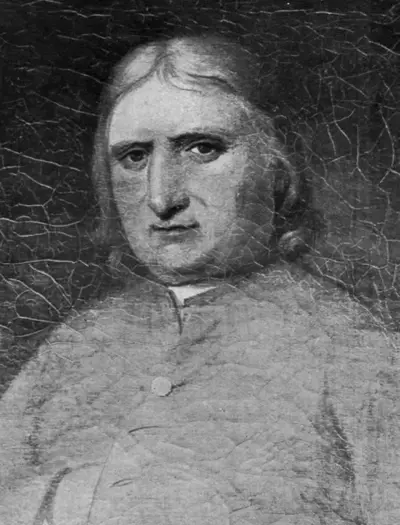
George Fox was an English Dissenter, who was a founder of the Religious Society of Friends, commonly known as the Quakers or Friends. The son of a Leicestershire weaver, he lived in times of social upheaval and war. He rebelled against the religious and political authorities by proposing an unusual, uncompromising approach to the Christian faith. He travelled throughout Britain as a dissenting preacher, performing hundreds of healings, and often being persecuted by the disapproving authorities. In 1669, he married Margaret Fell, widow of a wealthy supporter, Thomas Fell; she was a leading Friend. His ministry expanded and he made tours of North America and the Low Countries. He was arrested and jailed numerous times for his beliefs. He spent his final decade working in London to organise the expanding Quaker movement. Despite disdain from some Anglicans and Puritans, he was viewed with respect by the Quaker convert William Penn and the Lord Protector, Oliver Cromwell.
