Muhammad Quotes
There is no compulsion in religion.
Muhammad, 571-632, Founder of Islam, Koran
Sourced by: Eigen's Political and Historical Quotations


Quintus Septimius Florens Tertullianus


It is an error to say that. It is an error to say that He was the last Pope to hold temporal power. Years later, the Vatican rejected this view and adopted the modern concept of freedom of conscience. See {612714}.


This book is endorsed by major religious organizations of all faiths as well as National School Boards Association, National Education Association, National PTA, National Association of Secondary School Principals, National Association of Elementary School Principals, American Association of School Administrators and others. It is used as a guideline by most schools systems in the United States.

Noah was the first Jewish Ambassador in America. See {627936} for his variation of Madison’s point.

Those who claim that the founding fathers contemplated religion as a critical component of government often point to this article of the South Carolina Constitution. However, they ignore the almost simultaneous passage of the New York constitution as in {612166}. When the framers of the Constitution met in 1787 in Philadelphia the separation of church and state issue was not really resolved and awaited the Bill of Rights where the separatists won out.


These words are inscribed on the West Front of the state's Capitol in Providence


His protest was focused on Middle East policies which he believed did not value the lives of Muslims as highly as Christians and Jews. The irony of this protest is that United States policy claims to value all life equally as do virtually all industrialized democracies. Omeish however is unusual among world Islamic leaders and politicians in that he values Christian and Jewish life as much as Muslim. Most, typically value Muslims almost exclusively and many advocate the killing of Christians and Jews.

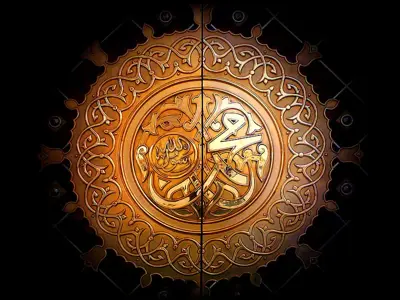
Muhammad was an Arab religious, social, and political leader and the founder of Islam. According to Islamic doctrine, he was a prophet, sent to preach and confirm the monotheistic teachings of Adam, Abraham, Moses, Jesus, and other prophets. He is believed to be the final prophet of God in all the main branches of Islam, though some modern denominations diverge from this belief. Muhammad united Arabia into a single Muslim polity, with the Quran as well as his teachings and practices forming the basis of Islamic religious belief.
