Pope Benedict XVI Quotes
A robust democratic society depends on its ability to uphold and protect religious freedom -- a basic right inherent in the very dignity of the human person. It is therefore essential to safeguard citizens who belong to religious minorities from acts of violence. Such protection not only accords with human dignity but also contributes to the common good.
Benedict XVI, (Joseph Alois Ratzinger), Roman Catholic Pope, “Work Tirelessly for Peace, Justice and a Better Future,” Address to Ayesha Riyaz, the new ambassador to the Holy See from Pakistan, June 1, 2007
Sourced by: Eigen's Political and Historical Quotations


Henry of Navarre. This edict made the Huguenots and other Protestants legal in France whereas only 26 years earlier 50,000 of them had been slaughtered in France by the Catholics. It wasn’t a century before the Catholics reneged. See {617765}.

Despite this clear statement, later the Colonial legislature withdrew the franchise from Roman Catholics. See {624149}. Despite this temporary restriction of religious freedom, Rhode Island and Connecticut were far ahead of the other New England colonies in freedom of conscience.

Samuel Langhorne Clemens, 1835-1910
In one of the historical ironies of the 12th century, a Christian sect preferred the rule of the Muslims than their Christian brethren—on the grounds of religious tolerance. It illustrates the changes that take place over time. By the 21st century, it was the Christians who were thought of as tolerant and the Muslims as the opposite.


This was the beginning of the inquisition.

It is an error to say that. It is an error to say that He was the last Pope to hold temporal power. Years later, the Vatican rejected this view and adopted the modern concept of freedom of conscience. See {612714}.

Prior to Vatican II, freedom of conscience was not explicit in Catholic Doctrine. The controlling view had been that of Pope Pius IX a hundred years earlier. See {612299}.
Henry of Navarre

Martin wanted William Howard Taft to answer questions about his religious beliefs. Taft was TR’s selection to be his successor. Ironically, a starting with John F. Kennedy, many presidential candidates have been asked about their religious belief’s and have answered whereas Roosevelt would have them not reply to such inquiries.
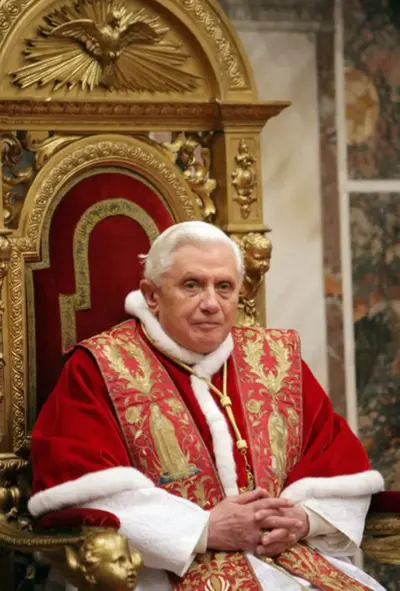
Pope Benedict XVI is a retired prelate of the Catholic Church who served as the head of the Church and the sovereign of the Vatican City State from 2005 until his resignation in 2013. Benedict's election as pope occurred in the 2005 papal conclave that followed the death of Pope John Paul II. Benedict chose to be known by the title "pope emeritus" upon his resignation.
