Thomas Arnold Quotes
All societies of men, whether we call them states or churches, should make their bond to consist in a common object and a common practice, rather than in a common belief; in other words, their end should be good rather than truth. We may consent to act together, but - we cannot consent to believe together
This is a remarkable quotation. Here was a leading minister of the Established Church of England who is arguing that there should be no established church insofar as religious belief is concerned. Essentially this is what England has developed. The Anglican Church is still the established church but only for purposes of state cerimonies and the religion of the Royal Family. The establishment has nothing to do with lawmaking, or common religious belief or inhibition of the many other religions in England and there is complete freedom of conscience.
Thomas Arnold, 1795–1842, English Professor of Modern History, Oxford University, Protestant Minister & Reformer of the Anglican Church, Introductory Lectures on Modern History, Oxford University, December 1841
Sourced by: Eigen's Political and Historical Quotations

This is a particularly interesting historical quotation because it succinctly gives a history of the various horrors of religious strife in British history—a history that was very well known to the American Founding Fathers and the general American Colonial population. This history was the major driver behind the public insistence for the Bill of Rights and the 1st Amendment which erected a wall of separation between church and state with government never favoring or abetting any particular religion.


At the time the Algerians leading the impendence movement were very secular, and were committed to modernity, multiculturalism and religious freedom and tolerance. Within Algerian Muslim society, there has been a constant battle against the right wing Islamic extremists and terrorists.


Her sister, Mary, the previous Queen, had over 200 Englishmen burned at the stake for their Protestant beliefs. Elisabeth wanted no part of the government trying to determine or regulate the religious beliefs of Englishmen.
At the time there was an issue of religious freedom that is in public discourse: It emanated from the Obama Care law which required employers to provide health insurance that does not discriminate against women by refusing to disallow coverage for birth control (pills, diaphragms, etc.) This legislation covered the employees of general institutions run by religions such as schools, hospitals, and retirement communities. Roman Catholics and other religions which viewed birth control as a sin were put in a position where they had to pay for something that they regarded as sinful. So the church did not have complete religious freedom. However, if these institutions would deny to their employees a basic right that the law says belongs to all institutions. If an exception would be made for birth control what about blood transfusions. The Jehovah’s Witnesses believe that autologous blood transfusions are contrary to the world of God. So what if institutions they run decided to not cover these transfusions in their insurance policies? Or a Jewish University or a Muslim cultural center decided not to cover medical procedures in hospitals that serve pork? There have been many examples where one religion’s freedom has been curtailed slightly when they conflict with individual rights or other rights. Plural marriage for Mormons and Muslims are against the law. Christian Scientists have been forced to provide medical care for some members even though their religion prohibits it. There is no solution that will not curtail someone’s rights under some circumstances.


Quintus Septimius Florens Tertullianus. This quote is historically very important as it is one of the first expressions of religious tolerance. Tragically, this principle was ignored by most Christians for over a millennium. Some Christians still ignore it. See {626754} for a modern example.


New Lanark was a Utopian commune organized by Owen.


Jefferson drafted the law which became the basis for the First Amendment to the Constitution. Others wanted change in some of Jefferson’s language to be Christian Centric but the delegates rejected that idea. See {623696}. The separation of church and state was not to be total. The state and the law was required to protect religion—all religions including those thought to be heretical.

Williams was the first theologian who not only advocated religious toleration but argued that Christianity demanded it and the separation of church and state.


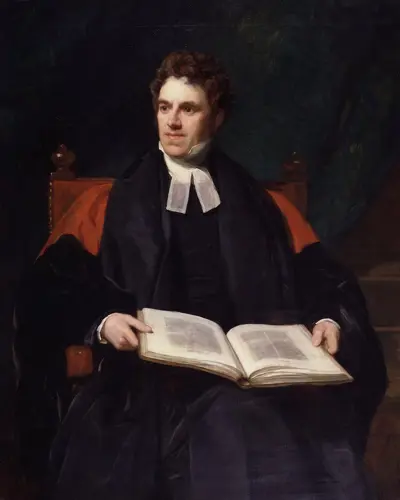
Thomas Arnold was an English educator and historian. Arnold was an early supporter of the Broad Church Anglican movement. He was the headmaster of Rugby School from 1828 to 1841, where he introduced a number of reforms that were widely copied by other prestigious public schools. His reforms redefined standards of masculinity and achievement.
