Robert Owen Quotes
As there are a very great variety of religious sects in the world, it is particularly recommended, as a means of uniting the inhabitants of the village into one family, that while each faithfully adheres to the principles which he most approves, at the same time all shall think charitably of their neighbors respecting their religious opinions, and not presumptuously suppose that theirs alone are right.
New Lanark was a Utopian commune organized by Owen.
Robert Owen, 1771-1858, Welsh Social Reformer, Rules and Regulations for the Inhabitants of New Lanark, 1800
Sourced by: Eigen's Political and Historical Quotations


Head of the Sikh Religion. His teaching was that deeds determined the man, not the professed belief and that the existing religions turned man against man.


Many, if not most, non-Muslim scholars and thinkers very much disagree with Hamid on this point. The great exceptions of Islam are almost 1,000 years in the past. Current Islam, they argue, is not more exceptional than the beliefs of modern Mongolia which dominated most of the known world centuries ago, but has little that deserves special respect in the 21st country beyond the general respect which is owed to all religions and nationalities. With the exception of Turkey, Islamic nations are for the most part, backward, and virtually no other non-Muslim nations try to emulate them in any way.

This quotation illustrates that a narrow orthodox view of Islam is not the only one in Arab nations. Khaled is not an obscure cleric, but a popular television personality. While his views are considered heresy by many orthodox Muslims, the narrow view is by no means universal. Orthodox Islamists believe that God has commanded that all mankind be Muslims and the ones who are not are either ignorant so need to be “educated”, or evil and therefore should be killed. However, Muhammad ordained that an exception should be made for “Children of the Book”—Jews and Christians who revere the Old Testament. This was at a time when Christians would not allow any other form of worship but Christianity. Christianity, Judaism and most other religions have become tolerant of other religions and allow open alternative worship. Islam which early on led the way to tolerance, has in many countries gone back to the intolerance that existed amongst many Christians at the time of Muhammad.


Quintus Septimius Florens Tertullianus. This quote is historically very important as it is one of the first expressions of religious tolerance. Tragically, this principle was ignored by most Christians for over a millennium. Some Christians still ignore it. See {626754} for a modern example.

She was the first member of European royalty to embrace the Bahai faith. This faith is positive and supportive of all other faiths—an unusual characteristic for a religion. It even speaks well of Islam where literal interpretations of Sharia—Islamic Law—require that all Bahais be put to death. In Iran, they were still murdering Bahais in the 21st century.
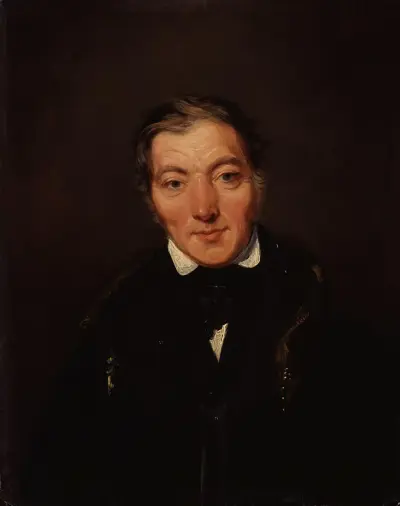
Robert Owen, a Welsh textile manufacturer, philanthropist and social reformer, was one founder of utopian socialism and the cooperative movement. He is known for efforts to improve factory working conditions for his workers and promote experimental socialistic communities. In the early 1800s, he became wealthy as an investor and eventual manager of a large textile mill at New Lanark, Scotland. He had initially trained as a draper in Stamford, Lincolnshire, and worked in London before relocating aged 18 to Manchester and becoming a textile manufacturer. In 1824, Owen travelled to America and invested most of his fortune in an experimental socialistic community at New Harmony, Indiana, a preliminary model for Owen's Utopian society. It lasted about two years; other Owenite Utopian communities met similar fates. In 1828, Owen returned to settle in London, where he continued to champion the working class, led the development of cooperatives and the trade union movement, and supported the passage of child labour laws and free co-educational schools.
