Muhammad Quotes
The difference of opinion in my community is a divine mercy.
Muhammad, 571-632, Prophet and Founder of Islam, Quoted in The Wilson Quarterly, Winter 2002
Sourced by: Eigen's Political and Historical Quotations

New Lanark was a Utopian commune organized by Owen.


Although chief executives of most other countries are commonly abused in the national legislature, Mexico had no had a serious opposition much less public derision of the President before then.


This included the non-Muslim Arabs and the Jews.

Many, if not most, non-Muslim scholars and thinkers very much disagree with Hamid on this point. The great exceptions of Islam are almost 1,000 years in the past. Current Islam, they argue, is not more exceptional than the beliefs of modern Mongolia which dominated most of the known world centuries ago, but has little that deserves special respect in the 21st country beyond the general respect which is owed to all religions and nationalities. With the exception of Turkey, Islamic nations are for the most part, backward, and virtually no other non-Muslim nations try to emulate them in any way.

This statement was made after he had led the Muslim Ottoman Turkish Army to success in capturing Constantinople—Byzantium, Istanbul—bringing the Byzantine Empire (Eastern Roman Empire) to an end. He had his sights set on the Western Roman Empire next which was the remainder of what they knew of as the world then.


After Independence, the original credo of the Indonesian hero and leader was slowly ignored. The Muslim majority established Islam as the dominant religion and began to create laws that discriminated against Christians, Hindus, Buddhists, and Jews. The ethnic Chinese had been very successful in business and commerce and soon they were discriminated against and even physically attacked in Pogroms.


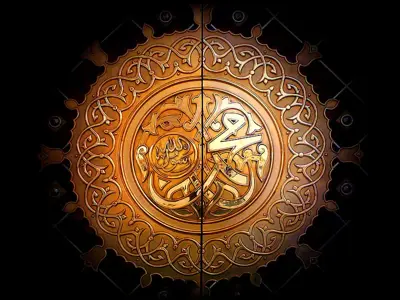
Muhammad was an Arab religious, social, and political leader and the founder of Islam. According to Islamic doctrine, he was a prophet, sent to preach and confirm the monotheistic teachings of Adam, Abraham, Moses, Jesus, and other prophets. He is believed to be the final prophet of God in all the main branches of Islam, though some modern denominations diverge from this belief. Muhammad united Arabia into a single Muslim polity, with the Quran as well as his teachings and practices forming the basis of Islamic religious belief.
