Will Durant Quotes
That differences of race, color, and creed are natural, and that diverse groups, institutions, and ideas are stimulating factors in the development of man; That to promote harmony in diversity is a responsible task of religion and statesmanship; That since no individual can express the whole truth, it is essential to treat with understanding and good will those whose views differ from our own; That by the testimony of history intolerance is the door to violence, brutality and dictatorship; and That the realization of human interdependence and solidarity is the best guard of civilization.
Will Durant, 1885-1981, Historian, Quoted in The Congressional Record, October 1, 1945
Sourced by: Eigen's Political and Historical Quotations


If we can reach unity between all the components of the people, the canals of terrorism will dry up.
Nouri Kamel Mohammed Hassan al-Maliki. This quotation is very ironic. Maliki was a Shiite Muslim—one of the majority in Iraq that had been ruled by the brutal regime of the minority Sunnis. When the United States invaded Iraq and deposed Saddam Hussein and his Sunni regime. Once elected to office he frequently made statements like this urging a pluralistic society which included the Shiites, the Sunnis, and the Kurds. However he became more and more of a dictator {640493} and did everything possible to discriminate against and oppress the minority Sunnis and Kurds. His statements of ethnic and religious unity were made to keep obtaining American and other international aid.


Lebanon is a country divided into religious sects which have a long history of animosity, distrust, violence among them. Few leaders were as candid as Jumblatt.


Her research showed that authoritarian personality people tended to be intolerant, but if they were in a highly structured culture with unifying norms and themes they would be more comfortable and less intolerant.

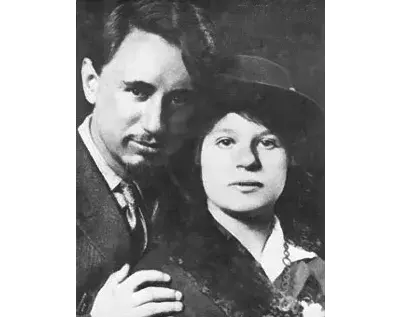
William James Durant was a Russian born, historian, and philosopher. He became best known for his work “The Story of Civilization,” and acclaimed 11 volume series written over 50 years in collaboration with his wife, Ariel Durant, and published between 1935 and 1975. He was earlier noted for The Story of Philosophy (1926), described as "a groundbreaking work that helped to popularize philosophy". They were awarded the Pulitzer Prize for General Non-Fiction in 1968 and in 1977, the Durants were presented with the Presidential Medal of Freedom.
