Sidney Hook Quotes
Religious tolerance has developed more as a consequence of the impotence of religions to impose their dogmas on each other than as a consequence of spiritual humility in the quest for understanding.
Sidney Hook, 1902-1989, Political Philosopher, “Religious Liberty From the Viewpoint of a Secular Humanist,” Earl Raab, Religious Conflict in America, 1964
Sourced by: Eigen's Political and Historical Quotations


One of the great historical religious puzzles is how Islam evolved from its origin of respect for other religions, to one where a large number of Islamic leaders preach that not only is Islam the only true religion but all other religions are enemies of Islam, and the preaching of hatred for Christians, Jews, Bhai, Budhists and other religions.


New Lanark was a Utopian commune organized by Owen.


The major religions differ when it comes to conversion. Buddhism, Judaism, Hinduism, and some Christian Religions do not aggressively seek converts but will accept converts who come themselves. Other Christian religions and Islam aggressively try and convert others and see it as their religious duty to do so.

Many, if not most, non-Muslim scholars and thinkers very much disagree with Hamid on this point. The great exceptions of Islam are almost 1,000 years in the past. Current Islam, they argue, is not more exceptional than the beliefs of modern Mongolia which dominated most of the known world centuries ago, but has little that deserves special respect in the 21st country beyond the general respect which is owed to all religions and nationalities. With the exception of Turkey, Islamic nations are for the most part, backward, and virtually no other non-Muslim nations try to emulate them in any way.


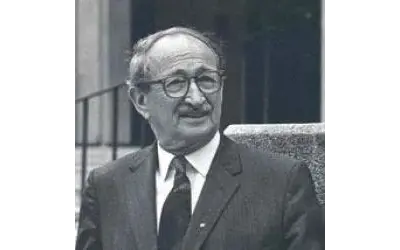
Sidney Hook was an American philosopher of the pragmatist school known for his contributions to the philosophy of history, the philosophy of education, political theory, and ethics. After embracing communism in his youth, Hook was later known for his criticisms of totalitarianism, both fascism and Marxism–Leninism. A pragmatic social democrat, Hook sometimes cooperated with conservatives, particularly in opposing Marxism–Leninism. After World War II, he argued that members of such groups as the Communist Party USA and Leninists like democratic centralists could ethically be barred from holding the offices of public trust because they called for the violent overthrow of democratic governments.
