Pliny the Younger Quotes
I have been not a little hesitant as to whether there should be any distinction on account of age or no difference between the very young and the more mature; whether pardon is to be granted for repentance, or, if a man has once been a Christian, it does him no good to have ceased to be one; whether the name itself, even without offenses, or only the offenses associated with the name are to be punished. .
It was a crime to be a Christian. However, it is interesting that the Governor and the emperor would be concerned with this “crime” in much the same way as we today might discuss the issue of juvenile crime, repentance and recidivism. What is most dramatic to the modern reader is that religious profession was a crime, and is was so just like any other crime of the day. This is a view that most societies have held in the past and some still do today. See {618038} for the Emperor’s response. This exchange is the earliest writing that refers to Christians as problems.
Pliny the Younger, 62-113, Roman Orator & Author, Governor of Pontus and Bithynia Letter to the Emperor Trajan
Sourced by: Eigen's Political and Historical Quotations

See related quote for the initiating letter.


Gregory the Great. The particular offences under discussion were incest which was common among the English people before they had been Christianized. The responsibility for acts “in ignorance of the law” has been debated as long as there has been law. Gregory’s view is remarkably contemporary.
In August of 1572 Catholics in Paris led by the Marshall and his soldiers attacked the homes of all known Huguenots, murdering the inhabitants. Tavannes rode through the streets of Paris on his horse shouting the first quotation to his troops who would murder the helpless Protestants. The frenzy spread to the countryside. When it was over 50,000 innocent, unsuspecting Protestants had been murdered. When asked how he, a military marshal felt about such a one sided action against unarmed civilians he responded with the second quotation. The event came to be known as the Massacre of Saint Bartholomew as it commenced on that Saint’s day.
Vasilii Ivanovich Belavin. head of the church. Several years later when he had been ousted by pro Communist clerics, the then Metropolitan removed the curse and excommunication. Because he was responsible for the Russian Orthodox Church in North America he developed the complementary title of ‘Enlightener Of America’


Abdul Rahman had converted from Islam to Christianity 16 years before. Conversion from Islam is a capital crime under Sharia Law. Rahman was charged but the judge demonstrating the tolerance of Islamic law said that Rahman would be given an opportunity to change his mind and re-embrace Islam and if he did so, he would be converted and not killed.


In 1877 Wasburn was dropped from the List of Ministers by the Unitarian Church. He had become very critical of organized and orthodox religion of all kinds.

The major targets of this law were the Puritans who would not attend the normal Church of England services but had their own, usually in a private home.

Henry of Navarre. The practice of kidnapping children from parents of the other faith and baptizing them was rampant.


See {618216} for a seemingly contradictory quotation by White.

The worst war crimes and atrocities of the Civil War took place at Andersonville. 13,000 Union prisoners of war were killed there. Capt, Henry Wirtz, the prison commandant, was tried and executed after the war.
In an orthodox Muslim nation, freedom of religion as a right is impossible.
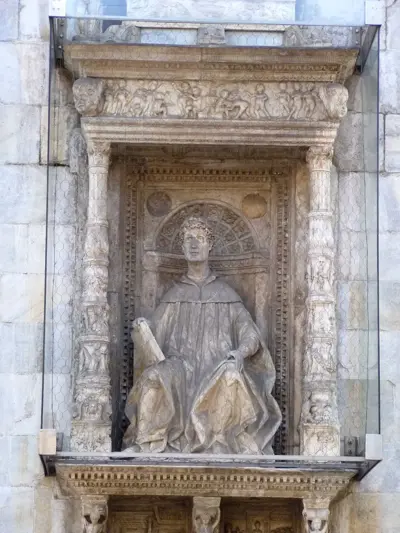
Gaius Plinius Caecilius Secundus, born Gaius Caecilius or Gaius Caecilius Cilo (61 – c. 113), better known as Pliny the Younger (/ˈplɪni/), was a lawyer, author, and magistrate of Ancient Rome. Pliny's uncle, Pliny the Elder, helped raise and educate him.
