Elizabeth I Quotes
In every parish three or four discreet men … shall be appointed by the ordinaries [regular ministers] diligently to see that all the parishioners duly resort to their church upon all Sundays and holy days
Elizabeth I, 1533-1603, Queen of England, Injunction, June 1559
Sourced by: Eigen's Political and Historical Quotations


Clerics of the age were often combinations of fund raisers and tax collectors.

The major targets of this law were the Puritans who would not attend the normal Church of England services but had their own, usually in a private home.
It is this proclamation and others like it that caused many of the American Founding Fathers to include the doctrine of separation of church and state. In this case, and many others, the government actually proscribed and controlled the prayers and the liturgy. See {617532} where the government proscribes the proportion of revenues that must be spent on the poor.


This historical quote is important because it shows that there was great dissention about the celebrating of Christmas even among different Christian sects. Traditionally, the celebration of Christmas in a government building or school would have offended half the Christian population. In early America, Christmas celebration was legally prohibited in some states and required in others. This was one of the reasons that the Founding Fathers wrote the First Amendment into the Constitution. In modern times, some critics accuse the requirements that Christmas celebration in public facilities as being anti-Christian. But the problem has been with America since before the Constitution.

The King assumed the role of head of the Church of England.


This verse has been one of the bases of Muslim theocratic states like Iran’s claim to legitimacy. The word “govern” is sometimes translated as “judge.” In the context of the 6th century, there were no separation of powers as we know them and judging, governing and legislating were melded.

He was the only English Pope. The act of invasion had been sanctified earlier in Adrian’s Papal Bull. See {610518}. Henry’s invasion was successful but the occupation and reform was a disaster which has ramifications to this day.

In effect this was one of the earliest civil Blue Laws.
Carroll was writing to Troy during the time of the question of Catholic emancipation in England. Here he is clearly alluding to the British form of government. Carroll never missed the opportunity to champion religious freedom as manifested in the U.S. Constitution. For an earlier example of his praise for religious freedom, see {596933}.

See {611241}, {611246}, {611442}. While the issues with Cromwell were essentially political, there were substantial theological and cultural issues between the Quakers and other protestant sects which even extended across to the New World. See {612011}

Gregory the Great. “Emoluments” included the income from all lands and other church property, gifts and tithes, and income of any sort. This formula characterized the division of resources for the better part of Christian history. By today’s standard, the proportion for these Bishops (there were those who chose poverty) and his household seems astoundingly high—his income and sustenance was the equal of all the priests in the bishopric. It illustrates the affluence of the bishops who were major forces in their territories. One of the rationales for such an affluent bishop (the assets were not all personal but he had control of them) was that he should be at least the equal of any in the area including kings and nobles for he was to have as much influence as they. It is difficult today to look at modern bishops and realize how their role, power, relative wealth, and influence has changed. Bishops had their own armies, judiciary, accountants, attorneys and were a government unto themselves.
Gregory the Great. The particular offences under discussion were incest which was common among the English people before they had been Christianized. The responsibility for acts “in ignorance of the law” has been debated as long as there has been law. Gregory’s view is remarkably contemporary.
Gregory the Great. In the earlier years of the Roman Catholic Church it was more catholic in the sense that is looked to incorporate outside elements wherever they thought there might be benefit. The rigidity of which leaders of the Reformation would later complain had not yet set in.


1st Viscount Bolingbroke. This is the argument that was and still is given by most theocracies and nations opposed to pluralism. It was also a quotation which with the American founders were familiar and were targeting this view when they demanded the 1st Amendment.

Embury, a Methodist preacher from England, was urged by Heck to preach in America. He protested that he had neither church building nor congregation.
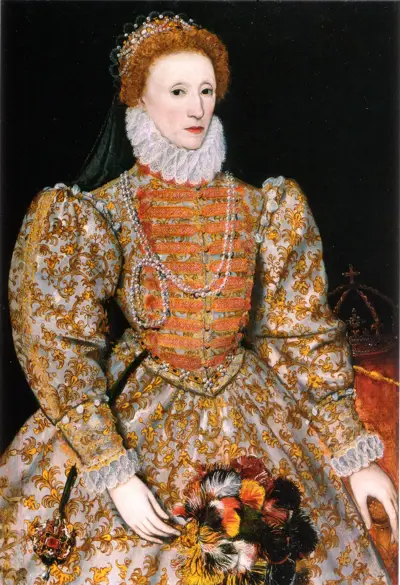
Elizabeth I was Queen of England and Ireland from 17 November 1558 until her death in 1603. Sometimes called the Virgin Queen, Gloriana or Good Queen Bess, Elizabeth was the last of the five monarchs of the House of Tudor.
