Thaddeus Stevens Quotes
Abolition—Yes! abolish everything on the face of the earth but this Union; free every slave—slay every traitor—burn every rebel mansion, if these things be necessary to preserve this temple of freedom to the world and to our posterity.
Thaddeus Stevens, 1792-1868, U. S. Congressman (Whig and Republican, PA), Titular Republican party leader, Acceptance Speech of his Republican Nomination for Congress, September 1, 1862
Sourced by: Eigen's Political and Historical Quotations

As just one example of Southern States' reasons, see {583044}. Many of the Northern States had passed laws declaring everyone in the state was free and making it illegal to return or assist in the returning of escaped slaves. The Southerners got the Federal Fugitive Slave Act passed which required all Americans to assist in recapturing escaped slaves. It was the Northern States who claimed states' rights were being trampled. The South was vehemently opposed to States' Rights when it came to allowing individual states to decide who was free and who was not. The Southerners had only one fundamental reason for secession—the maintenance of the Negro slavery system on which much of their economy depended as did their sociology, culture, and way of life.

This was one of the several early unofficial Emancipations that was issued in the Civil War.

This is an important quotation because it shows that slavery was the principle reason that the South succeeded and began their rebellion. In the early 20th century, there was a movement to make the Confederacy and the rebellion more noble by promoting the idea that the Civil War was fought by the South for more lofty reasons such as States Rights, Original Construction, different economic philosophies and the like. This was a more noble cause then the right to deny other human beings their rights, to own other human beings who they could beat, torture, sexually use and even murder them was a pretty selfish and demeaning reason to have started a rebellion that would then cost more Americans their lives than any other American conflict. The succession documents and others of the Southern States and the Confederacy make it clear that slavery was THE issue and fleeting references to any of the others were only made to complain about the potential effect on abolition and the refusal of the abolitionist states to cease aiding and protecting fugitive slaves.

Although escaped slaves could not fight for the North, they could be very useful on road building and other military engineering projects needing labor. Every time a slave escaped, it diminished the military engineering labor of the Confederates by one but added to that of the Union. Pinkerton and others however engaged many escaped slaves who volunteered for an incredibly dangerous mission. They returned back to the Southern lines into the slave work gangs, and organized slave escapes of groups of Blacks. In addition, many of them, by observing and overhearing the Confederate soldiers gained information regarding supply and troop levels and movements, and this they brought back to the Union officers. Those that were caught were executed as spies. Escaped slaves were espionage and covert operations agents before they were allowed to be soldiers.


The general issued a military order emancipating slaves in Florida, Georgia and South Carolina. President Abraham Lincoln rescinded the order feeling it was too premature and it would cause the slave states that stayed in the Union--Delaware, Maryland, and Kentucky--to go over to the Confederates.

At the time of the American Revolution there were strong abolitionist forces working against slaver and the slave trade. Southern American slave-owners, the political leadership of the South, feared that England would force slavery reforms on their colonies. Hence, severance from England eliminated that threat. In retrospect, they were quite right for it was England which outlawed the slave trade and led the worldwide anti-slavery movement which had little effect on the new independent America and the political bias in favor of the south of the American compact caused slavery to survive in America, long after the vast majority of the population would have it ended. It took the Civil War to do it.

This fear was great among many who were abolitionists as potentially there might be mass slaughter of all Southern whites.


This Civil War recruiting poster was described by the Free Library of Philadelphia as “Civil War recruitment print targeting African Americans by evoking the freedoms granted by the Emancipation Proclamation. Depicts a montage of symbolic scenes centered around an African American Union soldier triumphantly holding up a sword and an American flag with the banner "Freedom to the Slave." He stands near broken shackles upon a tri-color flag adorned with a coiled snake. The flag is tugged upon by one of three joyous slaves freed by an African American soldier. Other scenes depict an African American man reading a newspaper on a rocking chair near a plow and child, African American children entering a "Public School" near a church, and a regiment of "U.S. Colored Troops" marching across a battlefield strewn with dead bodies.”


She was one of the early abolitionists. Despite the Southern attempted repression of information of slave resistance, some of the facts emerged and were well known in the North. The South tried to suppress these incidents lest other slaves get ideas from it. Also the Southerners often maintained that Africa was so primitive and underdeveloped, that the slaves were better off in America; these actions of rebellion belied this notion.

This prophecy written in the later years of Jefferson’s life turned out to be all too true. St. Domingo was an Island in the Caribbean where slavery produced a bloody war. The American Civil War would be far worse.

As a key member of Lincoln’s cabinet, William H. Seward was most concerned with preserving The Union. However, since the Constitution was written in 1787, there had been compromises made with the pro slavery forces of the South to give them proportionally more political power and to avoid interfering with the institution of slavery. The Dred Scott Supreme Court decision forced the Northern States to actively cooperate in enforcing and maintaining slavery. Large numbers of abolitionists had reached their limit and wanted no more compromises regarding slavery. Mrs. Seward was one of those. This quotation also illustrates the influence that some women had in politics even though women could not vote. Frances Seward was very much a political partner with her husband who was favored to beat Lincoln for the Republican Presidential nomination.
Fremont and some of the Radical Republicans wanted Lincoln immediately to declare the slaves of the rebelling states free. As a major general in charge of an area, he wrote a military order emancipating all the slaves in his jurisdiction. President Lincoln countermanded the order as soon as he found out. He wanted Fremont to only free the slaves whose owners were actively working against the union. Lincoln needed to hold the border states like Maryland in the Union and was working on a plan whereby slave owners who were loyal to the Union would be economically compensated when their slaves were freed. If loyal slaveholders in Fremont’s area would lose their slaves with no compensation, Lincoln feared that the otherwise loyal border states would be driven to the confederacy thus shifting the balance of power. Lincoln had his own plan for emancipation and would not allow Fremont to alter that. As a result of this speech, the Radical Republicans nominated Fremont to run against Lincoln. For a few weeks he looked like he would run, but then he and Lincoln made a deal. Lincoln fired Montgomery Blair, Fremont’s arch enemy, from the cabinet, and Fremont withdrew from the election.

Washington was from Virginia, the largest of the slave states, and he himself owned slaves. In his will he emancipated all his slaves. Most of his fellow Southern Slave owners however not only disagreed about the abolition of slavery but were adamant that slavery spread so that the abolitionists never attain a majority.

Butler was at the time the Union general in charge of Louisiana. He had on his hand a large group of slaves whose owners had abandoned the area. There was no emancipation yet. He wrote for instructions. The result was the first actual emancipation of slaves.


As an entertainer she had toured much of the world and seen American slavery and that of some other nations. She became a staunch abolitionist and like entertainers in the 20th and 21st centuries she used her celebrity to give anti-slavery lectures and perform for audiences where she donated the proceeds of the event to the abolition cause. She is a particularly interesting political figure in that she seems to be one of the first entertainers to perform for a social cause and become an activist.
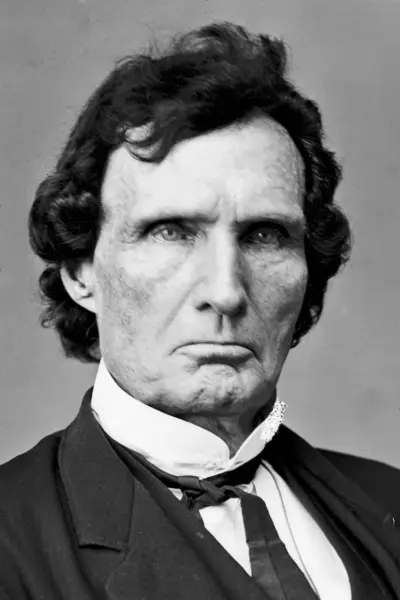
Thaddeus Stevens was a member of the United States House of Representatives from Pennsylvania. He was one of the leaders of the Radical Republican faction of the Republican Party during the 1860s. A fierce opponent of slavery and discrimination against African Americans, Stevens sought to secure their rights during Reconstruction, leading the opposition to U.S. President Andrew Johnson. As chairman of the House Ways and Means Committee during the American Civil War, he played a leading role, focusing his attention on defeating the Confederacy, financing the war with new taxes and borrowing, crushing the power of slave owners, ending slavery, and securing equal rights for the Freedmen.
