Upton Sinclair Quotes
I am a person who has never used violence himself. My present opinion is that people who have obtained the ballot should use it and solve their problems in that way. In the case of peoples who have not obtained the ballot, and who cannot control their states, I again find in my own mind a division of opinion, which is not logical, but purely a rough practical judgment. My own forefathers got their political freedom by violence; that is to say, they overthrew the British crown and made themselves a free Republic. Also by violence they put an end to the enslavement of the black race on this continent.
Upton Sinclair, 1878-1968, Novelist and candidate for California governor (Democrat and Socialist), Interview with Rene Fulop-Miller, March 24, 1923
Sourced by: Eigen's Political and Historical Quotations


This phrase was also to be used over 100 years later by Malcolm X. See {624101} and {38291}.


This was one of the first calls for a slave strike in America.


This speech is often referred to as the “Ballot or the Bullet” speech. It was the first time that Malcolm X used the “Ballot or the Bullet”. He was not the first African American to use the “Ballot or the Bullet” phrase. See {624102} for a use over 100 years ago. However, he was really arguing to allow Blacks to vote in the South where it was almost impossible at the time. There was no Voting Rights Act at that time and it was his actions that helped pass one shortly thereafter.

This is an important quotation because it shows that slavery was the principle reason that the South succeeded and began their rebellion. In the early 20th century, there was a movement to make the Confederacy and the rebellion more noble by promoting the idea that the Civil War was fought by the South for more lofty reasons such as States Rights, Original Construction, different economic philosophies and the like. This was a more noble cause then the right to deny other human beings their rights, to own other human beings who they could beat, torture, sexually use and even murder them was a pretty selfish and demeaning reason to have started a rebellion that would then cost more Americans their lives than any other American conflict. The succession documents and others of the Southern States and the Confederacy make it clear that slavery was THE issue and fleeting references to any of the others were only made to complain about the potential effect on abolition and the refusal of the abolitionist states to cease aiding and protecting fugitive slaves.

This quotation was documented by an FBI illegal wiretap of King and his associates. The illegal wiretap had been insisted upon by FBI Director J. Edgar Hoover who was a racist and somewhat of a paranoid about communists. However, Attorney General, Robert F. Kennedy personally approved the illegal wiretap.

Black Natives with property had voted and served on juries. This was abhorrent to the Afrikaners whom Rhodes wanted as political allies so he switched his position on native suffrage.

She was one of the early abolitionists. Despite the Southern attempted repression of information of slave resistance, some of the facts emerged and were well known in the North. The South tried to suppress these incidents lest other slaves get ideas from it. Also the Southerners often maintained that Africa was so primitive and underdeveloped, that the slaves were better off in America; these actions of rebellion belied this notion.

He was the first American citizen who was assassinated by the Central Intelligence Agency by means of a drone attack. He was a major recruiter for Al Qaeda, and he preached to 3 of the 9-11 terrorists.


This was one of the several early unofficial Emancipations that was issued in the Civil War.

This fear was great among many who were abolitionists as potentially there might be mass slaughter of all Southern whites.

The issue was the voting franchise for Negroes in the aftermath of the Civil War.

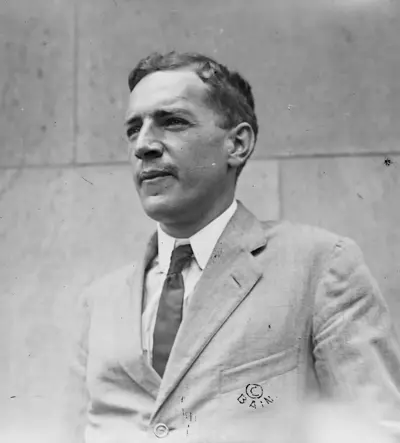
Upton Beall Sinclair Jr. was an American writer, political activist and the 1934 Democratic Party nominee for Governor of California who wrote nearly 100 books and other works in several genres. Sinclair's work was well known and popular in the first half of the 20th century, and he won the Pulitzer Prize for Fiction in 1943.
