South Carolina Quotes
They have encouraged and assisted thousands of our slaves to leave their homes; and those who remain, have been incited by emissaries, books and pictures to servile insurrection.
This is an important quotation because it shows that slavery was the principle reason that the South succeeded and began their rebellion. In the early 20th century, there was a movement to make the Confederacy and the rebellion more noble by promoting the idea that the Civil War was fought by the South for more lofty reasons such as States Rights, Original Construction, different economic philosophies and the like. This was a more noble cause then the right to deny other human beings their rights, to own other human beings who they could beat, torture, sexually use and even murder them was a pretty selfish and demeaning reason to have started a rebellion that would then cost more Americans their lives than any other American conflict. The succession documents and others of the Southern States and the Confederacy make it clear that slavery was THE issue and fleeting references to any of the others were only made to complain about the potential effect on abolition and the refusal of the abolitionist states to cease aiding and protecting fugitive slaves.
South Carolina, Secession Document, December 24, 1860
Sourced by: Eigen's Political and Historical Quotations

While this assessment was true up until the 1980s. By the 21st century there were almost no serious historians who thought that the motivation of the Confederate States for the Civil War was anything but slavery and the economic impact that abolition might bring. However, one of your advantages having this collection of historical quotations is that you can see for yourself why the Southern states say they were seceding. This following are four of the official secession resolution documents. Read these and you will see that all the claims that there were other major reasons for secession are just attempts to make the Confederacy a little less brutal and greedy. See {621371}, {619793}, {621372}, {621375}

This is an important quotation because it shows that slavery was the principle reason that the South succeeded and began their rebellion. In the early 20th century, there was a movement to make the Confederacy and the Southern rebellion more noble by promoting the idea that the Civil War was fought by the South for more lofty reasons than greed and slavery such as States Rights, original construction, different economic philosophies and the like. This was a more noble cause then the right to deny other human beings their rights, to own other human beings who they could beat, torture, sexually use and even murder them was a pretty selfish and demeaning reason to have started a rebellion that would then cost more Americans their lives than any other American conflict. The succession documents and others of the Southern States and the Confederacy make it clear that slavery was THE issue and fleeting references to any of the others were only made to complain about the potential effect on abolition and the refusal of the abolitionist states to cease aiding and protecting fugitive slaves.

This fear was great among many who were abolitionists as potentially there might be mass slaughter of all Southern whites.

She was one of the early abolitionists. Despite the Southern attempted repression of information of slave resistance, some of the facts emerged and were well known in the North. The South tried to suppress these incidents lest other slaves get ideas from it. Also the Southerners often maintained that Africa was so primitive and underdeveloped, that the slaves were better off in America; these actions of rebellion belied this notion.

This is an important quotation because it shows that slavery was the principle reason that the South succeeded and began their rebellion. In the early 20th century, there was a movement to make the Confederacy and the rebellion more noble by promoting the idea that the Civil War was fought by the South for more lofty reasons such as States Rights, Original Construction, different economic philosophies and the like. This was a more noble cause then the right to deny other human beings their rights, to own other human beings who they could beat, torture, sexually use and even murder them was a pretty selfish and demeaning reason to have started a rebellion that would then cost more Americans their lives than any other American conflict. The succession documents and others of the Southern States and the Confederacy make it clear that slavery was THE issue and fleeting references to any of the others were only made to complain about the potential effect on abolition and the refusal of the abolitionist states to cease aiding and protecting fugitive slaves.


Although escaped slaves could not fight for the North, they could be very useful on road building and other military engineering projects needing labor. Every time a slave escaped, it diminished the military engineering labor of the Confederates by one but added to that of the Union. Pinkerton and others however engaged many escaped slaves who volunteered for an incredibly dangerous mission. They returned back to the Southern lines into the slave work gangs, and organized slave escapes of groups of Blacks. In addition, many of them, by observing and overhearing the Confederate soldiers gained information regarding supply and troop levels and movements, and this they brought back to the Union officers. Those that were caught were executed as spies. Escaped slaves were espionage and covert operations agents before they were allowed to be soldiers.


This was part of his presentation to Northern influential business men showing them what he claimed was the New South. He was particularly complimentary about the negro Christian viewpoint that inhibited revenge or retaliation for their terrible treatment. The favorable lines about Negroes were well received by Northerners. However, they were mostly unaware of his racist views he expressed when in the South. See Quotation 643649.


Much of the South was so insular that people knew nothing about the notion of abolition and just assumed that no one would ever consider freeing the slaves. Many never knew that it was the South that first fired on the Union troops and flag. If the North won the war, the assumption was that Northerners would then own the plantations and the valuable slaves. In reality, while all slaves were emancipated in the South, very few plantations and farms were confiscated from their Southern owners by Northerners despite the fact that there was political pressure in the North to confiscate the land of all rebels who had committed treason and use the value to repay the Union bonds and care for the wounded Union veterans and the widows of dead Union Soldiers. Eggleston was an accomplished writer who had served in the Confederate army of the Civil War. 20 year after the war he wrote a series of articles for the prestigious Northern Atlantic Monthly trying to convey the war from the Southerner’s point of view.


There was little thought of emancipating slaves or their value to the South by the senior officers of the Union Army at the beginning of the war. The Secretary of War changed that. See {629183}for a typical Union General’s view at the beginning of the war.


The general issued a military order emancipating slaves in Florida, Georgia and South Carolina. President Abraham Lincoln rescinded the order feeling it was too premature and it would cause the slave states that stayed in the Union--Delaware, Maryland, and Kentucky--to go over to the Confederates.

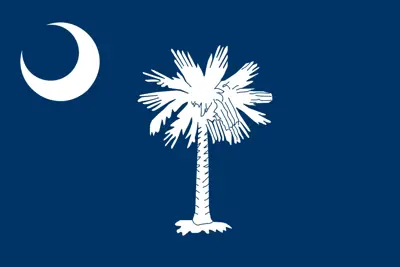
South Carolina (/ˌkærəˈlaɪnə/ (listen)) is a state in the Southeastern region of the United States. It is bordered to the north by North Carolina, to the southeast by the Atlantic Ocean, and to the southwest by Georgia across the Savannah River. South Carolina is the 40th most extensive and 23rd most populous U.S. state. In 2019 its GDP was $213.45 billion. South Carolina is composed of 46 counties. The capital is Columbia with a population of 133,273 in 2019; while its largest city is Charleston with a 2019 population of 135,257. The Greenville–Anderson–Mauldin metropolitan area is the largest in the state, with a 2018 population estimate of 906,626.
