Alan Pinkerton Quotes
Although as yet prevented from taking up arms in defense of their rights, these colored men banded themselves together to further the cause of freedom, to succor the escaping slave, and to furnish information to loyal commanders of the movements of the rebels.
Although escaped slaves could not fight for the North, they could be very useful on road building and other military engineering projects needing labor. Every time a slave escaped, it diminished the military engineering labor of the Confederates by one but added to that of the Union. Pinkerton and others however engaged many escaped slaves who volunteered for an incredibly dangerous mission. They returned back to the Southern lines into the slave work gangs, and organized slave escapes of groups of Blacks. In addition, many of them, by observing and overhearing the Confederate soldiers gained information regarding supply and troop levels and movements, and this they brought back to the Union officers. Those that were caught were executed as spies. Escaped slaves were espionage and covert operations agents before they were allowed to be soldiers.
Alan Pinkerton, 1819–1884, Head of Civil War Union Intelligence, America’s First Private Detective, 1862
Sourced by: Eigen's Political and Historical Quotations

This Civil War recruiting poster was described by the Free Library of Philadelphia as “Civil War recruitment print targeting African Americans by evoking the freedoms granted by the Emancipation Proclamation. Depicts a montage of symbolic scenes centered around an African American Union soldier triumphantly holding up a sword and an American flag with the banner "Freedom to the Slave." He stands near broken shackles upon a tri-color flag adorned with a coiled snake. The flag is tugged upon by one of three joyous slaves freed by an African American soldier. Other scenes depict an African American man reading a newspaper on a rocking chair near a plow and child, African American children entering a "Public School" near a church, and a regiment of "U.S. Colored Troops" marching across a battlefield strewn with dead bodies.”

As just one example of Southern States' reasons, see {583044}. Many of the Northern States had passed laws declaring everyone in the state was free and making it illegal to return or assist in the returning of escaped slaves. The Southerners got the Federal Fugitive Slave Act passed which required all Americans to assist in recapturing escaped slaves. It was the Northern States who claimed states' rights were being trampled. The South was vehemently opposed to States' Rights when it came to allowing individual states to decide who was free and who was not. The Southerners had only one fundamental reason for secession—the maintenance of the Negro slavery system on which much of their economy depended as did their sociology, culture, and way of life.


This is an important quotation because it shows that slavery was the principle reason that the South succeeded and began their rebellion. In the early 20th century, there was a movement to make the Confederacy and the rebellion more noble by promoting the idea that the Civil War was fought by the South for more lofty reasons such as States Rights, Original Construction, different economic philosophies and the like. This was a more noble cause then the right to deny other human beings their rights, to own other human beings who they could beat, torture, sexually use and even murder them was a pretty selfish and demeaning reason to have started a rebellion that would then cost more Americans their lives than any other American conflict. The succession documents and others of the Southern States and the Confederacy make it clear that slavery was THE issue and fleeting references to any of the others were only made to complain about the potential effect on abolition and the refusal of the abolitionist states to cease aiding and protecting fugitive slaves.

When the first Southern States seceded, each appointed a whose job it was to persuade the other Southern States to also secede. In this case Hale was marketing secession to Kentucky which with Maryland were the only two Southern States to reject what they regarded as treason and rebellion. The importance of the quotation however is in his argument which was all based on enmity to racial equality and abolition. Later Southern apologists would argue that the Civil War was fought, not about slavery and racism butt about different philosophies of government. See {623715} .

Much of the South was so insular that people knew nothing about the notion of abolition and just assumed that no one would ever consider freeing the slaves. Many never knew that it was the South that first fired on the Union troops and flag. If the North won the war, the assumption was that Northerners would then own the plantations and the valuable slaves. In reality, while all slaves were emancipated in the South, very few plantations and farms were confiscated from their Southern owners by Northerners despite the fact that there was political pressure in the North to confiscate the land of all rebels who had committed treason and use the value to repay the Union bonds and care for the wounded Union veterans and the widows of dead Union Soldiers. Eggleston was an accomplished writer who had served in the Confederate army of the Civil War. 20 year after the war he wrote a series of articles for the prestigious Northern Atlantic Monthly trying to convey the war from the Southerner’s point of view.

This was one of the several early unofficial Emancipations that was issued in the Civil War.
There indeed were although the Southerners tended to exaggerate the numbers. However, the more slavery was debated, the more many of the abolitionists came to believe that insurrection and slave rebellion was not only morally justified but was the only recourse that was left by the racist intransigence of the Southern slave holders and politicians.

In what turned out to be a tragic prediction of things to come:

Lincoln had promised amnesty to Southerners who would pledge loyalty to the Union. What many feared was that this would include slave owners re-enslaving their former "property," or that the government would allow them to do so in order to stop the rebellion.


Benjamin was the Confederacy’s strongest proponent for use of Negro troops in exchange for a promise of freedom. Ironically, the racial prejudice of the Southern soldier may well have doomed the South’s last chance for independence. Lee, although he personally favored such a course of action, could not get a general sentiment from the army as a whole.

This quotation provides knowledge of two areas of Fugitive Slave contributions to the Union War effort. Most people erroneously think that the Fugitive Slaves were only put to work in unskilled labor battalions. However, many were skilled at construction. Most interesting however is the role Blacks played as spies for the Union Army—a fact of with which many historians are ignorant.

This quotation is very important for in the 20th century Southern revisionists made a major effort to ennoble the Confederate cause by claiming that Slavery and the desire to keep Blacks in bondage and unequal was just of byproduct of the reason for secession—States Rights and the decentralization of government. Many of the school history books were changed to reflect this claim. However, each of the seceding states left a legislative record of secession and the reasons for it. In all cases, Slavery and the preservation of Slavery in the South was the central and in most cases the only reason stated. In this case, Texas made its reasons clear. There was nothing noble therein but racism and racial exploitation.
This is an important quotation because it shows that slavery was the principle reason that the South succeeded and began their rebellion. In the early 20th century, there was a movement to make the Confederacy and the Southern rebellion more noble by promoting the idea that the Civil War was fought by the South for more lofty reasons than greed and slavery such as States Rights, original construction, different economic philosophies and the like. This was a more noble cause then the right to deny other human beings their rights, to own other human beings who they could beat, torture, sexually use and even murder them was a pretty selfish and demeaning reason to have started a rebellion that would then cost more Americans their lives than any other American conflict. The succession documents and others of the Southern States and the Confederacy make it clear that slavery was THE issue and fleeting references to any of the others were only made to complain about the potential effect on abolition and the refusal of the abolitionist states to cease aiding and protecting fugitive slaves.
This is an important quotation because it shows that slavery was the principle reason that the South succeeded and began their rebellion. In the early 20th century, there was a movement to make the Confederacy and the rebellion more noble by promoting the idea that the Civil War was fought by the South for more lofty reasons such as States Rights, Original Construction, different economic philosophies and the like. This was a more noble cause then the right to deny other human beings their rights, to own other human beings who they could beat, torture, sexually use and even murder them was a pretty selfish and demeaning reason to have started a rebellion that would then cost more Americans their lives than any other American conflict. The succession documents and others of the Southern States and the Confederacy make it clear that slavery was THE issue and fleeting references to any of the others were only made to complain about the potential effect on abolition and the refusal of the abolitionist states to cease aiding and protecting fugitive slaves.

There was little thought of emancipating slaves or their value to the South by the senior officers of the Union Army at the beginning of the war. The Secretary of War changed that. See {629183}for a typical Union General’s view at the beginning of the war.

The reason for secession was the threat to slavery, which was a great threat to the slave-owners of the South. However, the non slave-owners had a very strong vested interest in maintaining slavery in that most Southerners had been brought up with such a negative view of Blacks that they were paranoid of Black equality or even worse some Blacks in positions of authority over whites. At the time, it was the Republican Party that was the advocate for minority equality and the Democratic Party embraced the racists. The parties would flip flop after the Civil Rights Act of 1964 ending legal segregation was passed by a Democratic President and a Democratic Majority Congress.


One of the puzzles of American Civil War history has been how the poor whites of the South (who provided most of the military manpower that fought and died in the Civil War) were persuaded to fight against a much stronger, more highly industrialized, and more affluent few, that had many more soldiers. One of the main reasons, though difficult for us to understand today, was that the Southern leadership actually persuaded the Southerners that men from the North were cowards and lacked the character, virtue or will to fight. The general “party line” of the South was that one Southern solder was worth more than 5 Northern Soldiers,
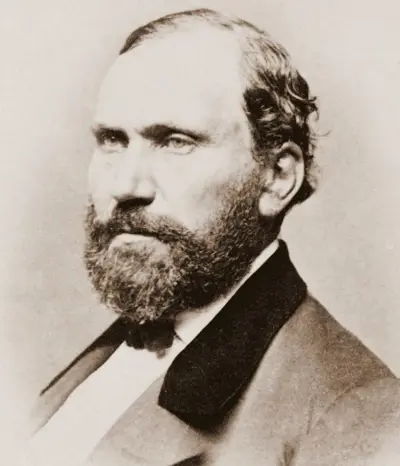
Allan J. Pinkerton was a Scottish–American detective and spy, best known for creating the Pinkerton National Detective Agency.
