Henry Lewis Benning Quotes
What was the reason that induced Georgia to take the step of secession? This reason may be summed up in one single proposition. It was a conviction . . . that a separation from the North was the only thing that could prevent the abolition of her slavery. . . . If things are allowed to go on as they are, it is certain that slavery is to be abolished. . . . By the time the North shall have attained the power, the black race will be in a large majority, and then we will have black governors, black legislatures, black juries, black everything. . . . The consequence will be that our men will be all exterminated or expelled to wander as vagabonds over a hostile Earth, and as for our women, their fate will be too horrible to contemplate even in fancy.
The reason for secession was the threat to slavery, which was a great threat to the slave-owners of the South. However, the non slave-owners had a very strong vested interest in maintaining slavery in that most Southerners had been brought up with such a negative view of Blacks that they were paranoid of Black equality or even worse some Blacks in positions of authority over whites. At the time, it was the Republican Party that was the advocate for minority equality and the Democratic Party embraced the racists. The parties would flip flop after the Civil Rights Act of 1964 ending legal segregation was passed by a Democratic President and a Democratic Majority Congress.
Henry Lewis Benning, 1814-1875, Georgia Politician and Confederate General, Speech, Virginia Secession Convention, 1861
Sourced by: Eigen's Political and Historical Quotations


Phelps was a Copperhead Democrat who was a virulent racist, an enemy of Lincoln and supported McClellan against Lincoln in 1864. His extreme disrespect for the President and his racism was not appreciated in Vermont, and Phelps not only failed to help McClellan but destroyed his own credibility in his home state of Vermont. Phelps had been practicing law in New York City where there was a large Copperhead, racist and anti-Lincoln part of the population there.

The first sentence is inscribed on the Jefferson Memorial in Washington DC. The last two sentences are rarely quoted.

When the first Southern States seceded, each appointed a whose job it was to persuade the other Southern States to also secede. In this case Hale was marketing secession to Kentucky which with Maryland were the only two Southern States to reject what they regarded as treason and rebellion. The importance of the quotation however is in his argument which was all based on enmity to racial equality and abolition. Later Southern apologists would argue that the Civil War was fought, not about slavery and racism butt about different philosophies of government. See {623715} .

As just one example of Southern States' reasons, see {583044}. Many of the Northern States had passed laws declaring everyone in the state was free and making it illegal to return or assist in the returning of escaped slaves. The Southerners got the Federal Fugitive Slave Act passed which required all Americans to assist in recapturing escaped slaves. It was the Northern States who claimed states' rights were being trampled. The South was vehemently opposed to States' Rights when it came to allowing individual states to decide who was free and who was not. The Southerners had only one fundamental reason for secession—the maintenance of the Negro slavery system on which much of their economy depended as did their sociology, culture, and way of life.


Newsletter of the United Sons of Confederate Veterans

This quotation is very important for in the 20th century Southern revisionists made a major effort to ennoble the Confederate cause by claiming that Slavery and the desire to keep Blacks in bondage and unequal was just of byproduct of the reason for secession—States Rights and the decentralization of government. Many of the school history books were changed to reflect this claim. However, each of the seceding states left a legislative record of secession and the reasons for it. In all cases, Slavery and the preservation of Slavery in the South was the central and in most cases the only reason stated. In this case, Texas made its reasons clear. There was nothing noble therein but racism and racial exploitation.


One of the puzzles of American Civil War history has been how the poor whites of the South (who provided most of the military manpower that fought and died in the Civil War) were persuaded to fight against a much stronger, more highly industrialized, and more affluent few, that had many more soldiers. One of the main reasons, though difficult for us to understand today, was that the Southern leadership actually persuaded the Southerners that men from the North were cowards and lacked the character, virtue or will to fight. The general “party line” of the South was that one Southern solder was worth more than 5 Northern Soldiers,
This was art of the Nixon "Southern Strategy" to alienate the white supremacists and racists from the Democratic Party with Civil Rights legislation and rhetoric, and get most of them to become Republicans. But as Phillips observed, when Negroes began voting in significant numbers in the South the party switching really accelerated.


Buying furniture and equipment for Negro schools was perceived by the White Population as “squandering public funds”. Web returned with the Militia but no one would testify against the Klan. Huggins left the area and went to the North. The Klan did not kill him, but they accomplished their objective of intimidating all the local people Black and White so that Negro schools would not be furnished and getting rid of the only White who tried to improve Negro schools. The methods of terrorists have not changed much since then.


Religion has been on both sides of the racism issue. In general, slavery the world over and in the American South needed the support of mainstream religions. At the same time, religion has been one of the major forces for abolition. The two mainstream Protestant religions of the South, the Baptists and the Methodists split from their Northern brethren in the 19th century over the slavery issue, and they have never united.

This quotation is very interesting historically. Despite the fact that Washington DC was a thoroughly racially segregated city, and the Southern racists controlled much of Congress, Blacks as well as whites were welcome in the Congressional galleries, and they attended many debates. Slavery and equality were not just debated in the 1850s but the issue was in constant friction from the earliest Congress.

Wilson, a history and government professor and college president before politics, was has been accused of being one of the most racist Presidents since Reconstruction. Prior to his Presidency, the Federal Government had been making steady progress in hiring African Americans. Under Wilson there was a wholesale firing of a large proportion of them. Some apologists argue that his League of Nations and other major aspirations required the votes and cooperation of Southern Senators who insisted that many of the blacks be terminated. At the same time, the KKK was near the zenith of its membership and political power and was an intimidating force. Wilson’s home state of New Jersey not only had a large KKK membership but there were lynching of Blacks in his own state and when Governor and President he never asked for any anti-lynching legislation.
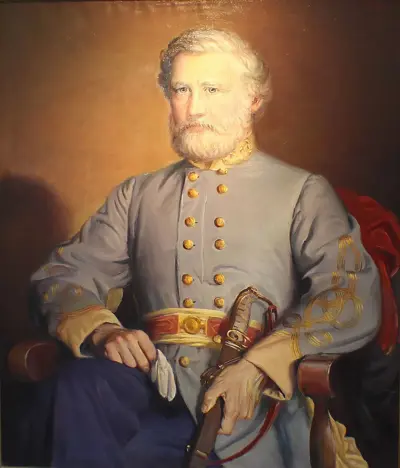
Henry Lewis Benning was a general in the Confederate States Army. He also was a lawyer, legislator, and judge on the Georgia Supreme Court. He commanded "Benning's Brigade" during the American Civil War. Following the Confederacy's defeat at the end of the war, he returned to his native Georgia, where he lived out the rest of his life. Fort Benning is named after him.
