Martin Delany Quotes
I want to tell you one thing. Do you know that if it was not for the Black man this war never would have been brought to a close with success to the Union, and the liberty to your race? I want you to understand that. Do you know it? Do you know it?...
Martin Delany, 1812-1885, Union Army Major, Physician, Explorer, Freemen’s Bureau Representative, and Black Nationalist, Speech to a group of 500 freed slaves, St. Helena Island, South Carolina, July 23, 1865
Sourced by: Eigen's Political and Historical Quotations

This Civil War recruiting poster was described by the Free Library of Philadelphia as “Civil War recruitment print targeting African Americans by evoking the freedoms granted by the Emancipation Proclamation. Depicts a montage of symbolic scenes centered around an African American Union soldier triumphantly holding up a sword and an American flag with the banner "Freedom to the Slave." He stands near broken shackles upon a tri-color flag adorned with a coiled snake. The flag is tugged upon by one of three joyous slaves freed by an African American soldier. Other scenes depict an African American man reading a newspaper on a rocking chair near a plow and child, African American children entering a "Public School" near a church, and a regiment of "U.S. Colored Troops" marching across a battlefield strewn with dead bodies.”


Much of the South was so insular that people knew nothing about the notion of abolition and just assumed that no one would ever consider freeing the slaves. Many never knew that it was the South that first fired on the Union troops and flag. If the North won the war, the assumption was that Northerners would then own the plantations and the valuable slaves. In reality, while all slaves were emancipated in the South, very few plantations and farms were confiscated from their Southern owners by Northerners despite the fact that there was political pressure in the North to confiscate the land of all rebels who had committed treason and use the value to repay the Union bonds and care for the wounded Union veterans and the widows of dead Union Soldiers. Eggleston was an accomplished writer who had served in the Confederate army of the Civil War. 20 year after the war he wrote a series of articles for the prestigious Northern Atlantic Monthly trying to convey the war from the Southerner’s point of view.


Lincoln had promised amnesty to Southerners who would pledge loyalty to the Union. What many feared was that this would include slave owners re-enslaving their former "property," or that the government would allow them to do so in order to stop the rebellion.


One of the puzzles of American Civil War history has been how the poor whites of the South (who provided most of the military manpower that fought and died in the Civil War) were persuaded to fight against a much stronger, more highly industrialized, and more affluent few, that had many more soldiers. One of the main reasons, though difficult for us to understand today, was that the Southern leadership actually persuaded the Southerners that men from the North were cowards and lacked the character, virtue or will to fight. The general “party line” of the South was that one Southern solder was worth more than 5 Northern Soldiers,

These lines were quoted by W. E. B. Dubois in his The Souls of Black Folk, 1905

Washington and his staff had throughout the Revolution wanted to enlist Negroes but were thwarted by the Southern and conservative blocs of the Continental Congress when they tried it in the South. However, they finally succeeded in Rhode Island. Other states followed when it was clear that the Rhode Island experiment had been successful. See {614120} for the policy statement of the legislature and {614119} for the motto and a picture of the Negro regiment. This was however not the first Black military unit in North America. The Loyalist Governor of Virginia had formed a regiment comprised of slaves who he emancipated. See {636965}.


On his deathbed he claimed to Kelly that he had been offered command of the Army of the Potomac but was not willing to "pay the price" which he claimed was to accept the terms. Pleasonton, always more of a bureaucrat than an ideologue or strong leader, like many Union officers, only wanted to defang the South so that they could not threaten the rest of the states but was not convinced that "crushing" the rebels was worth the cost or that slavery or the reelection of Lincoln was worth it. There is no independent verification of his receiving the offer, but what is more likely was as the Cavalry Commander of the Army of the Potomac he was "sounded out" on the subject.

The Confederacy was looking to develop sympathy for the their cause, even within the Catholic Church which many Southern Protestants were very prejudiced against. Davis, himself, however, had attended Catholic schools as a youth and almost converted to Catholicism. Reading this letter today we are fascinated by the fact that Davis could ensure the Pope that “everyone” in the Confederacy could enjoy “temorial” rights and also the “free exercise of his religion.” Blacks, a very large proportion of the Southern population, could of course enjoy neither. Davis did not even cover himself by saying :every citizen”. He said “everyone” an absurdity even then, but Jefferson, an otherwise intelligent man, was so prejudiced that he did not consciously realize that he was lying to the Pope whom he respected greatly.

President Lincoln and Several of the Commanding Union Generals had declared that black slaves were free during the midst of the Civil War under the legal theory that if the slaves were property of the rebels, then they cold be seized as “contraband” and removed from the control of those who had committed treason. The question was, what would happen to those now free Negroes after the war? Many Negro leaders were anxious that if there were surrender, then the status quo ante might prevail and the Negroes—many have who had fought for the Union might be returned to slavery. This speech by the Secretary of State alarmed them further. This is why the Emancipation Proclamation was so important and even that might have been overturned by a subsequent President. This is why Lincoln, the white radical Republicans and the Black leadership placed so much emphasis on passing the 13th Amendment.

After the Civil War and Reconstruction, the American nation was still bitterly divided intelelctually, socially, emotionally and poliotically. In an effort to bring more unity to America, most of the power stucture and the influentials of the nation began to avoid those issues that would divide North and South and try and promote a narrative that both sides might be able to live with. And this is what Zeitz describes in this quotation. America went through a period of Revisionist History that even in the 21st century was held by many people. It wasn't until the middle of the 20th century that the real history and narrative of the Civil War and Reconstrution emerged from the few academics who had all along criticized the fabricated narritive that did unify the country at the cost of historical accuracy and truth. Many scholars point out that the price that America paid for this unity was the Jim Crow era and a century of legalized racism. Much of the nation was built on the labor of Negro slaves and the victims of the slavery era, also bore the brunt of American unity and reconcilliation.


Although escaped slaves could not fight for the North, they could be very useful on road building and other military engineering projects needing labor. Every time a slave escaped, it diminished the military engineering labor of the Confederates by one but added to that of the Union. Pinkerton and others however engaged many escaped slaves who volunteered for an incredibly dangerous mission. They returned back to the Southern lines into the slave work gangs, and organized slave escapes of groups of Blacks. In addition, many of them, by observing and overhearing the Confederate soldiers gained information regarding supply and troop levels and movements, and this they brought back to the Union officers. Those that were caught were executed as spies. Escaped slaves were espionage and covert operations agents before they were allowed to be soldiers.

Lincoln, just before the Civil War, quoted Jefferson that if slavery were not ended in America the results would be disastrous. But Lincoln at the time probably did not imagine how right Jefferson was, and Jefferson himself probably 1 how terrible the Civil War would be.
Some Lincoln critics point to this quotation to illustrate their belief that Lincoln’s emancipation of slaves was not based on deeply held personal moral convictions but was the result of pragmatic political forces pure and simple. Others believe that this statement to Greeley represented a political tactic to hold Maryland and Kentucky—then slave states—in the Union, but that Lincoln was waiting for the right time to adopt a policy of making emancipation paramount.

That is the way he was killed. The phrase, “We are bound to believe that, anyhow” indicates that Stuart really realized how futile the Southern war effort would be but loyalty and patriotism required him to suspend his rational belief structure.
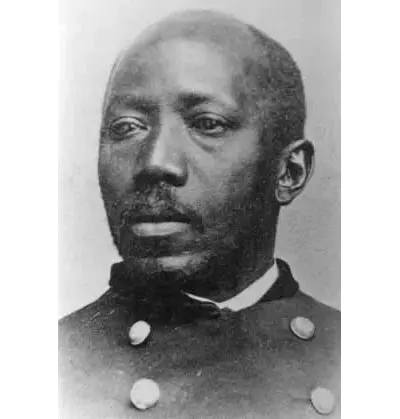
Martin Robison Delany was an African-American abolitionist, journalist, physician, soldier, and writer, and arguably the first proponent of black nationalism. Delany is credited with the Pan-African slogan of "Africa for Africans."
