Elizabeth Cady Stanton Quotes
Our "pathway" is straight to the ballot box, with no variableness nor shadow of turning...We demand in the Reconstruction suffrage for all the citizens of the Republic. I would not talk of Negroes or women, but of citizens.
Elizabeth Cady Stanton, 1815-1902, First President, National Woman Suffrage Association, Letter to Thomas Wentworth Higginson, January 13, 1868
Sourced by: Eigen's Political and Historical Quotations

The issue was the voting franchise for Negroes in the aftermath of the Civil War.

He was referring to Negroes who did not then have the fight to vote.


This was the last public speech that Lincoln made before he was shot.

In 1974 President Richard Nixon resigned, and President Ford was required to name a successor as Vice President. The Ugandan President urged the selection of a Black:


First female presidential candidate & first divorcee to run for that office. The half to which she was referring were the females, who by many narrow laws were unable to participate in the intellectual and political life of the country. At the time, women could not even vote.


Hunt gave as an example Mary Smith of Stanmore. This quotation is very interesting in the history of women’s suffrage. Hunt was a strong advocate for Universal Suffrage (See {616653}.) At the time, even men had to be a taxpayer and own a sufficient amount of property to vote. Less than 20% of the population of Britain were allowed to vote. The argument at the time was that the husband would represent the family’s interest at the ballot box and there was no need for women to vote. But by facing parliament with the logical inconsistency of its position, he was able to make his point, although there were very few women like Mary Smith who were single and had the economic resources to qualify. Most widows remarried so even if they had economic resources, there was a man who could assume the then perceived role of head of the household.


This was a classic debate over universal male suffrage. Rainborough had made a forceful argument for equality as a spokesperson for the Levellers in this famous debate. Ireton (See {619711}) eloquently gave the classic counter-argument that property owners had much more at stake and therefore should have much more of a say on governmental affairs. Early America actually sided with Ireton but modern America holds with Rainborough.

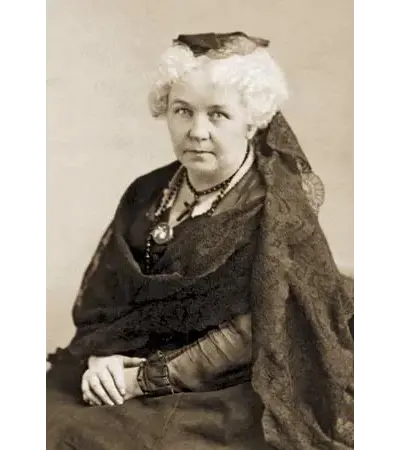
Elizabeth Cady Stanton was a leader of the women's rights movement in the U.S. during the mid- to late-1800s. She was the main force behind the 1848 Seneca Falls Convention, the first convention to be called for the sole purpose of discussing women's rights, and was the primary author of its Declaration of Sentiments. Her demand for women's right to vote generated a controversy at the convention but quickly became a central tenet of the women's movement. She was also active in other social reform activities, especially abolitionism.
