Ignatius Valentine Chirol Quotes
Turkey of her own free will … has cast away the sword with which she had rallied the enemies of western civilization to her support; she has abolished the Khalifate upon which she based her claim to the leadership of Islam; she has deposed both Khalif and Sultan and driven into exile every member of the House of Othman that had ruled over her in unbroken succession for nearly six and a half centuries since the Turkish hordes … swept down from their remote Central Asian homelands to build up the Ottoman Empire.
Ignatius Valentine Chirol, 1852–1929, British Historian, Journalist & Diplomat, “The Downfall of the Khalifate”, Foreign Affairs, June 1924
Sourced by: Eigen's Political and Historical Quotations

This quotation illustrated the extreme polarization between the current fundamentalist Muslims, and the Muslim modernists and the West. Kamal Ataturk, the great leader and stateman who is the father of modern Turkey, is castigated by the author for leading the new Turkish parliament to depose the Caliph – the civil and religious autocrat, one of whom reigned from after the death of Muhammad till his abolishment in 1924. Most of the rest of the world credits Ataturk with being one of the great leaders of all time—one who led a democratic revolution which transformed Turkey into the only Muslim secular democracy, requiring pubic secular European type education for all children, giving women the right to vote (before the U. S. even), adopting a European alphabet and dress, and outlook on life—creating most remarkably a total cultural revolution with virtually no loss of life. No revolutionary leader, before or since has led so extensive a political and cultural revolution, and it was a bloodless revolution. Turkey, into the 21st century, was by far the most powerful, industrialized, scientific and modern nation of Muslims in the world and others were far behind. Yet many Islamic theologian still castigate Atatork for his great achievements as being against the will of God.

Bulgaria was under the control of the Ottoman Turkish Empire. Levski always made it clear that Muslims were welcome in the Bulgaria that would be created after the Revolution. Most Muslims did not believe him, and many could not understand the concept of a nation without the Sultan who was the political AND religious head of Islam the world over. Essentially for many Muslims there can be no such thing as separation of church and state. To two cannot be distinct.

The Byzantine emissary had pointed out that Mehmed’s predecessors had signed a treaty agreeing to “consult” with Constantinople before building any fortified structure in the area surrounding Constantinople. Mehmed was only 19 years old at this time. His intention f building a fort was to have a platform from which to attack and capture Constantinople itself which he did 2 years later. Earlier, the Eastern Roman Empire was much stronger and the Ottoman sultans were more cautious in dealing with them. However, the various Christian factions were all feuding with each other, and Mehmed II, despite his youth, was much better organized and was a better leader than his predecessors.

This newspaper was an English language organ published by General Allenby’s British and Allied forces in the Middle East. Prior to the war, the Middle East was all part of the Ottoman Empire. However, the Ottoman Turks sided with Germany in WWI and their Middle East dominions were targets for the allied military strategy.

Sharif Husain was the leader of the Hashemite Tribes who had agreed with the British to lead a Hashemite Arab revolt against the Ottoman Turks in exchange for the Hashimites to have their own independent state—Jordan. This also explains the close relationship between Jordan and Britain. The notion of enslavement to the British illustrates a blind spot that the Ottoman Empire had in its waning years. The Ottoman Sultan had the power of life and death over everyone in the empire, and Istanbul appointed all public officials for all jurisdictions, and made laws that applied to all. The Hashemites would instead have their own nation, make their own laws and would by subject to British foreign policy to the extent that the British guaranteed their independence from the Sultan and the Ottomans. They regarded it as freedom and not slavery.

This is an amazing quotation in the sense that it shows the absolute manner in which the Ottoman Turkish Empire ruled the Islamic World in the Middle East and North Africa. The Sultan and Caliph had absolute rule over both the civil and religious areas of the Islamic world. In this decree, the Caliph actually gave an entire nation to his loyal servant, Muhammad Ali, who had acted as Governor of Egypt for the Sultan. Muhammad Ali was neither a Turk or an Egyptian. He was an Albanian, racially and ethnically totally different from the nation that became his. From then on, Muhammad Ali’s children would inherit the Egyptian throne. And they did and his dynasty lasted until the revolution in 1923. The Ottoman Empire was far more controlling and arbitrary than the British Empire and lasted much longer as the Ottoman Caliph controlled the Islamic religion as well as the civil nations.
The last Caliph of the Muslims was removed in 1924 as part of the Turkish Reform. The position has had attraction for many Muslim leaders who saw themselves in the role, but since 1924, nationalism and modernism and the lack of an effective international Muslim leader has precluded it. This anti-revolutionary sentiment of the Islamic political state that is so traditional, may in part account for the Islamic tolerance of autocratic regimes. Note that the distinction between religious responsibilities and civil are important. Tyranny must be tolerated but not blasphemy or heresy. Traditional Muslims provide more tolerance and forbearance for a leader’s civil failings than religious. But Muslims were not the only people to do this. A British prime minister had a view with the same conservative logic. See {639130}. The ancient Jewish Macabean revolt against the Jewish king was all based on failure to perform required religious duties of sacrifice as opposed to tyranny and poor government which also existed. Popes excommunicated Kings for religious reasons, not because of their civil failures at governing. Holding rulers accountable for civil performance is a relatively new concept yet is indispensible in a modern democracy.


The neo-conservative expectation of the American invasion of Iraq almost a century later was essentially the same, and the false expectation led to the same kind of failure as the George W. Bush debacle of the early 21st century.

The palace, which had belonged to the Ottoman Caliphs, who were called “Shadows of Allah on Earth”.
The caliphate was abolished by the Turkish republic in 1924
This quotation illustrates that not all Islamic nations were authoritarian and discriminatory and that Turkey after the Ataturk reforms became a modern, free, democratic state.

At the time hundreds of thousands of Armenians were being massacred by the Turks. Some atrocities were spontaneous, many were committed under orders, and many were triggered by Turkish leaders who whipped up the resentment and hate for the non-Muslim Armenians and then forced unarmed Armenians into areas where the Muslim Turks themselves were short of food and supplies. See {626835} for one of the several admissions of the intended genocide.

Mark Twain referring to and reflecting on his encounter with the Sultan of Turkey, Abdul Aziz.

Greece had always coveted Anatolia which was a part of the Ottoman Empire but had been in antiquity a Greek dominated area. Further, people of Greek ethnicity and culture, who hundreds of years ago use to be the vast majority were after the hundreds of years of Ottoman rule and migration were then the largest minority in Anatolia. After the Turks lost the First World War as a consequence of their allying with Germany, and had been stripped of its Arab territories and was determined to keep the territories that they still had. Also, Turkey had just undergone a revolution and the old order was displaced. Venizelos and the Greeks saw this as an opportunity to get back Anatolia and sent a military invasion force to land at Smyrna (Ismir to the Turks), the largest city of Anatolia where despite the Greek minority in all of Anatolia, Greeks were a small majority in Smyrna and many of the ethnic Greeks not only aided the Greeks once they had landed but participated in atrocities against the minority of Turkish Muslims of Smyrna. The Ambassador was then trying to rationalize the heavy hand with which the Turks dealt with the indigenous Greeks many of whom were guilty and many of whom were not.

Mehmet’s father Murat had just died. There was a custom in Islam that the new Sultan have all his brothers executed so that there would be absolute certainty who was the legitimate Sultan and that dissenting forces should not rally around another son of the old Sultan to have a regime change and/or a civil war. Stability and certainty in the line of succession was critical to the Muslims in that the Sultan was not only the civil ruler, but the highest religious authority as well. He had the power of the Christian Pope and the Holy Roman Emperor together. The struggle between the Sunnis and the Shiites which has overwhelmed Islamic unity was originally all about who the successor to Muhammad would be.

The Ottoman Turks had just conquered the city of Constantinople including the Eastern Roman Empire in their domain. They would be the dominant power in the area until the First World War when they made the mistake of siding with the Germans and the Ottoman Empire was broken up in the Treaty of Versailles.
In one of the historical ironies of the 12th century, a Christian sect preferred the rule of the Muslims than their Christian brethren—on the grounds of religious tolerance. It illustrates the changes that take place over time. By the 21st century, it was the Christians who were thought of as tolerant and the Muslims as the opposite.

In 1453 the Ottoman Turks shocked Christendom by capturing Constantinople, the capital of the Byzantine Eastern Christian Empire. It was always perceived as a religious conflict between Christians and Muslims but that is an over simplification of a very complex sociological, religious, and political historical period. As this quotation shows us there were many Christians aiding the Muslim side. There were also many Muslims fighting on the Christian side.

Rome & the Roman Catholic Church Islam, led by the Ottoman Turks, were in a constant state of tension against the Christian World of Europe. However there had been a huge schism in Christianity where the Christian Roman Empire was split in two—a Western (Latin) Empire led by the Roman Catholic Church in Rome, and the Eastern (Greek) Roman Empire led by the Orthodox Church headquartered in Constantinople (Byzantium). The two churches were not only in a theological conflict but violence broke out and the armies of the two religious empires attacked each other now and then. This was a great advantage to the Muslims who were essentially unified under the Ottoman Turkish Sultan. Manuel knew that the reunification of Christianity was about the worst thing that could happen from the geopolitical view of the Ottomans and they always placed a high priority on doing whatever they could to magnify the stress between the two Christian empires. Manual and the Orthodox hierarchy were absolutely opposed to union as the schism had been precipitated by them to begin with. However, Manuel knew that the hatred of the East and the Orthodox Church was so great amongst the Latins that even if some of the Roman Catholic leadership might be interested in healing the schism and having a “unity in Christ”, the kings and nobles of the Western European nations would never accept unity and would scuttle the negotiations. This quotation is an excellent example of the kind of complex, foreign policy and political intriguing that caused our language to have an adjective—byzantine—which is in common use today.

Turkey, in a disastrous foreign policy decision unilaterally withdrew from a major treaty and joined Germany in WWI in exchange for German support of Turkey’s treaty withdrawal. It led to the dissolution of the Ottoman Turkish Empire when Germany was defeated in WWI. Historically, it shows how easy it is for a nation to abrogate a treaty which illustrates how ephemeral treaties actually are. See De Gaulle’s wonderful quotation on this point—{138034}.
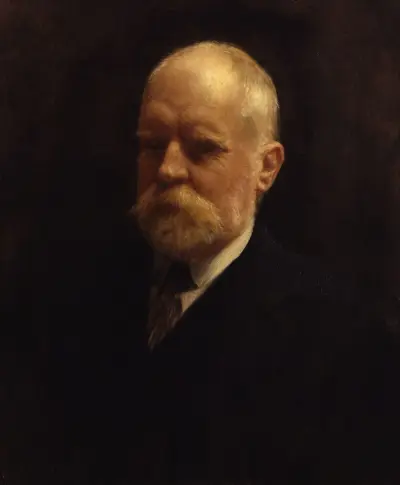
Sir Ignatius Valentine Chirol was a British journalist, prolific author, historian and diplomat.
