Vasil Levski Quotes
We're not driving away the Turkish people nor their faith, but the Sultan and his laws.
Bulgaria was under the control of the Ottoman Turkish Empire. Levski always made it clear that Muslims were welcome in the Bulgaria that would be created after the Revolution. Most Muslims did not believe him, and many could not understand the concept of a nation without the Sultan who was the political AND religious head of Islam the world over. Essentially for many Muslims there can be no such thing as separation of church and state. To two cannot be distinct.
Vasil Levski, 1837–1873, Bulgarian Revolutionary and National Hero, Идеи за свободна България
Sourced by: Eigen's Political and Historical Quotations

This quotation illustrated the extreme polarization between the current fundamentalist Muslims, and the Muslim modernists and the West. Kamal Ataturk, the great leader and stateman who is the father of modern Turkey, is castigated by the author for leading the new Turkish parliament to depose the Caliph – the civil and religious autocrat, one of whom reigned from after the death of Muhammad till his abolishment in 1924. Most of the rest of the world credits Ataturk with being one of the great leaders of all time—one who led a democratic revolution which transformed Turkey into the only Muslim secular democracy, requiring pubic secular European type education for all children, giving women the right to vote (before the U. S. even), adopting a European alphabet and dress, and outlook on life—creating most remarkably a total cultural revolution with virtually no loss of life. No revolutionary leader, before or since has led so extensive a political and cultural revolution, and it was a bloodless revolution. Turkey, into the 21st century, was by far the most powerful, industrialized, scientific and modern nation of Muslims in the world and others were far behind. Yet many Islamic theologian still castigate Atatork for his great achievements as being against the will of God.

In 1856 Turkey and its Ottoman Empire was struggling with new ideas and attempts to reform before they were hopelessly engulfed by modernism. A set of reform laws were passed in February of 1856 which horrified the conservatives and traditionalists. But interestingly the orthodoxy of the Greek minority were unhappy with their legal elevation if it meant that all would be equal. The Minister’s description of opposition to the reforms was somewhat self-serving in that he opposed most of the reforms and wanted to maintain the traditional Islamic state.
In one of the historical ironies of the 12th century, a Christian sect preferred the rule of the Muslims than their Christian brethren—on the grounds of religious tolerance. It illustrates the changes that take place over time. By the 21st century, it was the Christians who were thought of as tolerant and the Muslims as the opposite.

There were times and places where the Ottoman Turks forced Islam upon conquered peoples. However, much of the time, they operated with a pragmatic tolerance so that they could govern smoothly. The non-Muslims were always second class citizens however. See {635095} for another example.


Actually, there was no initial concern or protest. The New York Boards voted unanimously to approve th project, Then one woman started complaining to the media and there were a number of people who also opposed the construction of a Then Islamaphobic people joined the protest, Many politicians observed that in Saudi Arabia, the nation from which most of the 9-11 attackers came from, it is but the country, it is illegal to bring a Bible into tnot only illegal to build a Christian Church or Jewish Synagogue ANYWHERE in the nation while America already has thousands of Mosques, Most other Islamic countries make it difficult if not impossible for a non Muslims to build a place of worship. Bloomberg reminded Americans that there was no objection that the government Constitutionally could make to the proposed mosque. Although other nations may prohibit religious construction, America was unique in adopting our First Amendment, the Separation of Church and State, and while a number of countries since have emulated America, most nations have not reached the point where they have matured sufficiently to realize the importance of separation of church and state. The fact that other nations do not follow American fundamental political principles which our founding Americans adopted, certainly does not mean that we should emulate them and abandon that which has made America such a great country and an example to the world. Ironically, the Muslim Imam in charge of the building project.

Bangladesh had fared very poorly as a part of Pakistan. When it revolted and became independent, it adopted a secular government whereas Pakistan had been, and is, a heavily Islamic state. However, the vast majority of Bengalis were Muslim and some were extreme fundamentalists. Rahman was under constant pressure to make the government more “Islamic” and while he did so somewhat, he tried to advocate for separation of church and state. Bangladesh is not as extreme as Pakistan which is not yet a theocracy but religious forces dominate every aspect of the society.


Ironically, without the word “wicked” most people would regard the first sentence as a good description of elements of a modern democracy. It illustrates that for the Islamic fundamentalist democracy substitutes the rule of man for the rule of God, freedom of speech allows heresy and blasphemy to to uttered and communicated, and religion which is supposed to inform and direct politics. So what is good for the lover of democracy is the very thing that is bad for Islam. This is not a uniquely Islamic viewpoint. It has been and is held by fundamentalist Christians and Jews as well who would return to Biblical law punishing blasphemy and heresy with death and have religion drive all politics.
Turkey under its great leader, Ataturk, underwent a major cultural revolution. Although Turkey is overwhelmingly Muslim, its constitution provides that it be a secular state with compulsory public non-sectarian education. They adopted a European style law and prohibited Sharia (Islamic law). The nation thrived as no other Muslim country has. Muslims, the world over, are divided on Turkey. For this Sheikh its secular government is an insult to Islam because there is complete separation of mosque and state. For others it is the model which all Muslim countries should emulate.

While not in the Koran, this attributed statement is the basis for the ban on non-Muslims going on a Hajj and going to the most holy Muslim places—Mecca, Mina, Muzdalifa, and Arafat as well as the anti-religious hostility to all religions but Islam which is present in some Muslim countries.


This quotation which appears absurd on the surface given Iran’s terrible record with religious minorities provides insight to Islamic orthodox thought. For the orthodox Muslim, Sharia—Koranic Law—is the basis of the society. God defines the rights of people and their obligations. Whatever rights are provided by Sharia, Khomeini and some others wished to provide them equally to religious minorities also. However, those rights do not include the right to criticize the Islamic law or the leaders who implement it. That would be heresy if done by a Muslim, a Christian, or a Jew. A Christian church may not erect a public cross or ring bells on Sunday. That is prohibited by the Koran and is imposed on all. Bahai religious adherents are tracked down in the Islamic Republic and are often executed. ‘What about their rights?’ they ask. The answer is that the Bahai were Muslims who have become “backsliders” and heretics, and under Sharia, they must be executed for heresy; they are deemed to be heretical Muslims and not members of a minority religion.

Abdul Rahman, Afghan citizen, had converted from Islam to Christianity 16 years before. Conversion from Islam is a capital crime under Sharia Law which was the law of Afghanistan even after the Taliban had been overthrown. He was jailed and threatened with death. Statements like this and others made directly to the government persuaded the Afghan politicians to go against their mullahs who demanded the death penalty as is proscribed by Islamic Law—Sharia. The judges tried to get Rahman to recant and he would not (see {589518}). So they finally decided that he must be mentally insane and therefore could not be tried, and the problem was solved that way.

At the time the Algerians leading the impendence movement were very secular, and were committed to modernity, multiculturalism and religious freedom and tolerance. Within Algerian Muslim society, there has been a constant battle against the right wing Islamic extremists and terrorists.


The Byzantine emissary had pointed out that Mehmed’s predecessors had signed a treaty agreeing to “consult” with Constantinople before building any fortified structure in the area surrounding Constantinople. Mehmed was only 19 years old at this time. His intention f building a fort was to have a platform from which to attack and capture Constantinople itself which he did 2 years later. Earlier, the Eastern Roman Empire was much stronger and the Ottoman sultans were more cautious in dealing with them. However, the various Christian factions were all feuding with each other, and Mehmed II, despite his youth, was much better organized and was a better leader than his predecessors.

He led an Islamic rebellion against the Quinn Dynasty which ended in his beheading in 1873. Since the Christians were also a minority, he tried to form an alliance with them. Hatred of Christians is not endemic to Islam—politics affect the situation also. His tomb is shown in the graphic.

This seemingly academic quotation became extremely important over 200 years after it was written because it documents the historical presence of the Rohingya Muslim people in the Arakan province of Burma (Myanmar) which is mostly very orthodox Buddhist. In 1982, the Burmese government revoked the citizenship of the Rohingya on the grounds that they were illegal immigrants from bordering Bangladesh and had no historical roots in Burma. This quotation shows that this claim was untrue.

This was a remarkable public statement for its time. No other political leader of an Islamic country would dare claim that people have a right to be atheists. Very few would even suggest that people should be free to choose their own religion.
The last Caliph of the Muslims was removed in 1924 as part of the Turkish Reform. The position has had attraction for many Muslim leaders who saw themselves in the role, but since 1924, nationalism and modernism and the lack of an effective international Muslim leader has precluded it. This anti-revolutionary sentiment of the Islamic political state that is so traditional, may in part account for the Islamic tolerance of autocratic regimes. Note that the distinction between religious responsibilities and civil are important. Tyranny must be tolerated but not blasphemy or heresy. Traditional Muslims provide more tolerance and forbearance for a leader’s civil failings than religious. But Muslims were not the only people to do this. A British prime minister had a view with the same conservative logic. See {639130}. The ancient Jewish Macabean revolt against the Jewish king was all based on failure to perform required religious duties of sacrifice as opposed to tyranny and poor government which also existed. Popes excommunicated Kings for religious reasons, not because of their civil failures at governing. Holding rulers accountable for civil performance is a relatively new concept yet is indispensible in a modern democracy.
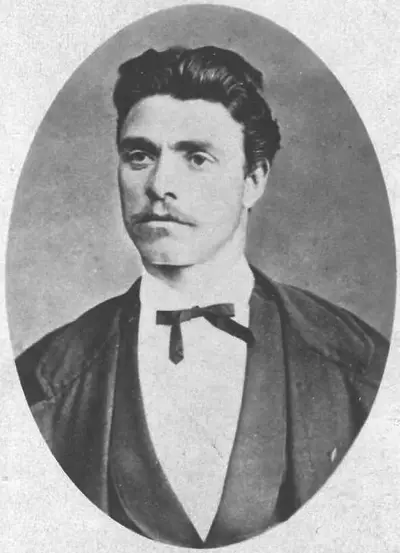
Vasil Levski (Bulgarian: Васил Левски, spelled in old Bulgarian orthography as Василъ Лѣвскій, pronounced [vɐˈsiɫ ˈlɛfski]), born Vasil Ivanov Kunchev, was a Bulgarian revolutionary and is a national hero of Bulgaria today. Dubbed the Apostle of Freedom, Levski ideologised and strategised a revolutionary movement to liberate Bulgaria from Ottoman rule. Levski founded the Internal Revolutionary Organisation, and sought to foment a nationwide uprising through a network of secret regional committees.
