Ruhollah Khomeini Quotes
We have in reality, no choice but to destroy those systems of government that are corrupt in themselves and also entail the corruption of others, and to overthrow all treacherous, corrupt, oppressive and criminal regimes. This is the duty that all Muslims must fulfill, in every one of the Muslim countries, in order to achieve the triumphant political revolution of Islam.
Ruhollah Khomeini, 1900-1989, Iranian Cleric [Ayatollah] & Revolutionary Leader, Quoted in Robin Wright, Sacred Rage, 1985
Sourced by: Eigen's Political and Historical Quotations


He was the first American that who was assassinated by the Central Intelligence Agency by means of a drone attack. He was a major recruiter for Al Qaeda and he preached to 3 of the 9-11 terrorists.


Southerners complained that abolitionists were advocating revolution. While most did not, some did advocate mass rebellion. The fact that Remond was himself a Black, created even more distress to the South.
This is a very important quotation as it shows the logic of many Islamic terrorists. To them Jihad is not terror regardless of what means are used. If the cause is just, like driving unbelievers from what they call Islamic land, then the violence is Jihad and is not only moral but is obligatory for a good Muslim. However if the cause is not moral—like invading someone else’s land, then the same actions are terrorism. The rest of the world defines terrorism by the means of the struggle—not the righteousness of the cause. Suicide Bombing which kills civilians shopping or at a wedding reception is terrorism whether the political or other end is good or bad. At the same time, members of the Muslim brotherhood often when they are speaking to Westerners or the media say that they are opposed to terrorism. The terrorism they are opposed to does not include to them does not include the terrorism of 9-11, the kidnapping and beheading of journalists, or bombing innocent civilians. That is why they can fund and support Hamas—the Palestinian component of the Muslim Brotherhood and still say they oppose terrorism. The occupation is the major offence they must rectify. The reality is that every group of people currently in the Middle East, is descended from peoples who occupied land by conquest and then were conquered by others. In Christ’s time, for example, Jerusalem and the area population was virtually all Jewish but the Romans had conquered and controlled the land. Some of the Jews became Christians, and they both shared the land because Christians then considered themselves to be a sect of Judaism. Then there were many conquests and re-conquests. The city has changed hands by force 44 different times. The Israelis were the last to capture it, The Jewish people were also amongst the earlier conquests, and the Palestinians argue that they inhabited the land even before Islam. Compared to Jerusalem, the problem of who has the right to the old Cherokee land in Georgia today is simple.
He was in many ways centuries ahead of his time with constructive ideas for any people and age. However, this was one of the exceptions. Unfortunately it became the norm for most Islamic countries even to modern times. Essentially, a bad ruler in this Islamic doctrine can be removed only if he does not follow Islam. For just being unjust or incompetent, revolution is not allowed and prayer is the only recourse. That is one of the major reasons that there have been so few Arab uprisings and revolutions although there have been many assassinations for alleged religious apostasy or insufficiency.


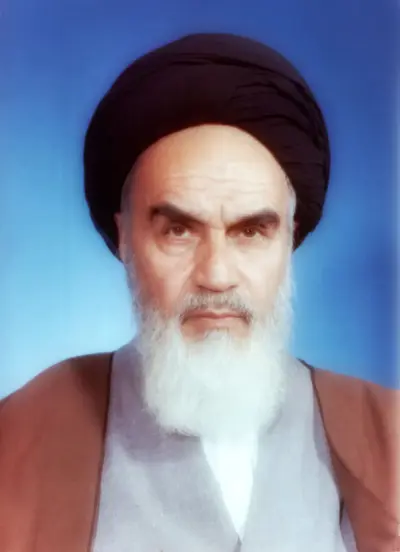
Sayyid Ruhollah Musavi Khomeini, also known in the Western world as Ayatollah Khomeini, was an Iranian political and religious leader. He was the founder of the Islamic Republic of Iran and the leader of the 1979 Iranian Revolution, which saw the overthrow of the last Shah of Iran, Mohammad Reza Pahlavi, and the end of the 2,500-year-old Persian monarchy. Following the revolution, Khomeini became the country's Supreme Leader, a position created in the constitution of the Islamic Republic as the highest-ranking political and religious authority of the nation, which he held until his death. Most of his reign was taken up by the Iran–Iraq War of 1980–1988. He was succeeded by Ali Khamenei on 4 June 1989.
