Ahmed Rustem Bey Quotes
it was no less natural that Turkey, taking her stand on the right of conquest, which to this day forms an essential part of the conventional public law of the civilized world, should have viewed the revolutionary movement among her Greek subjects in the light of a criminal enterprise to be resented and combated with all the greater force …
Greece had always coveted Anatolia which was a part of the Ottoman Empire but had been in antiquity a Greek dominated area. Further, people of Greek ethnicity and culture, who hundreds of years ago use to be the vast majority were after the hundreds of years of Ottoman rule and migration were then the largest minority in Anatolia. After the Turks lost the First World War as a consequence of their allying with Germany, and had been stripped of its Arab territories and was determined to keep the territories that they still had. Also, Turkey had just undergone a revolution and the old order was displaced. Venizelos and the Greeks saw this as an opportunity to get back Anatolia and sent a military invasion force to land at Smyrna (Ismir to the Turks), the largest city of Anatolia where despite the Greek minority in all of Anatolia, Greeks were a small majority in Smyrna and many of the ethnic Greeks not only aided the Greeks once they had landed but participated in atrocities against the minority of Turkish Muslims of Smyrna. The Ambassador was then trying to rationalize the heavy hand with which the Turks dealt with the indigenous Greeks many of whom were guilty and many of whom were not.
Ahmed Rustem Bey, 1862-1935 Turkish Ambassador to the United States, “The Future of the Oecumenical Patriarchate”, Foreign Affairs, July 1925
Sourced by: Eigen's Political and Historical Quotations

The Ottoman Turks, at war with Russia, exterminated a large proportion of the Armenian population of the then Turkish Empire. Some of the ethnic Armenians were working with Armenians in greater Russia and thus were a risk to the Turks. However, they starved, shot, beat, hung, and bayoneted hundreds of thousands of ethnic Armenians, wiping out entire villages and towns. Despite the fact that women and little children were all killed, Modern Turkey even into the 21st century refused to admit that this was a genocide even though there was ample documentation to prove it was not spontaneous but government ordered by the “Young Turks” then controlling Turkey. See {620603} and {612638} for examples. The modern Turks maintain the view expressed during the genocide that Armenians were a threat to Turkish Independence.


At its largest, the Ottoman Turkish Empire included all of the Middle East, most of North Africa, much of Russia, and Europe right up to the walls of Vienna.

Turkey, in a disastrous foreign policy decision unilaterally withdrew from a major treaty and joined Germany in WWI in exchange for German support of Turkey’s treaty withdrawal. It led to the dissolution of the Ottoman Turkish Empire when Germany was defeated in WWI. Historically, it shows how easy it is for a nation to abrogate a treaty which illustrates how ephemeral treaties actually are. See De Gaulle’s wonderful quotation on this point—{138034}.


Hobson, like Mark Twain in America, was a major critic of imperialism.

Chile with help from San Martin had ejected the Spanish. O’Higgins, the Chilean leader had joined up with San Martin and served under his command. The sectional rivalry bothered men like Carrera. Instead of seeing all the South Americans fighting the Spanish as allies as O’Higgins did, Carrera and his brothers refused to join a government of unity and they and their troops were just as dictatorial and cruel as the Spanish had been. O’Higgins gave Indians and Blacks equal rights with whites which distressed the aristocratic Carrera’s. Finally the Carrera’s tried to set up their own government, and the new Chilean government disarmed their militia and executed two of the three Carrera brothers who were leading the militia troops who were little more than thieves and brigands.

In one of the most unusual revolutions in world history, Brazil became independent from Portugal via a revolution led by the son of the Portuguese King and heir to the throne, Pedro I. Ironically the King of Portugal, John VI, in this famous quote, encouraged his son to lead the revolution. There were strong separatist sentiment in Brazil and the King thought it would be better to have an independent Brazil lead by a member of his family.

Ataturk had been a military hero, but was very much opposed to war and military adventurism not unlike the Dwight Eisenhower and Colin Powell type leaders. However, the one thing that he thought worth the sacrifice of his own and other Turkish lives was Turkish independence and sovereignty. Historically, the Ottoman Empire which Ataturk finally ended, had dominated half of Europe and all of the Mid East at the cost of sovereignty of other nations and Ataturk saw no more important virtue with dying for than national sovereignty. See {125322} and {584501}.

Earl of Cromer

Dulles lied to Congress. The CIA at the time was supplying planes and American pilots in support of an anti-Sukarno Government faction that was in armed revolt. It is not clear whether or not Dulles knew the truth when he had so testified.

At the time Turkey and the Ottoman Empire included Egypt and most of the Middle East, Chechnya, Georgia, Armenia, Usbekistan, Ajerbaijon, Greece, Albania, Serbia, Bosnia, Croatia and other countries.


The Japanese have always been very race conscious seeing themselves as the racial pinnacle of Asian peoples and others as inferior. The peoples of Okinawa were not the racially pure Japanese and MacArthur turned out to be right that protection of Okinawan rights, prerogatives, and dignity was much less important than for ethnic Japanese. It would not be until the last decade of the 20th century that Japanese public opinion was seriously concerned about the Okinawans. Even then, Japan’s independence and dignity as a sovereign nation appeared more important than the rights and dignity of the native Okinawans.


Ultranationalist Secret Organization. Unlike the Italian Black hand for whom it was named, the Serbs were not interested in money. The were a right wing death squad that assassinated all who opposed a single, unitary, Serbian nation. Dimitrijevic was executed in 1917.


This statement became known as "The Truman Doctrine." Truman asked for $400 million to help Greece and Turkey fight stave off armed Communist minorities destabilizing their governments.
The Turkish Ottoman Empire controlled most of the Middle East and at times Arab areas and tribes would revolt. Egypt was considered the prize of the Middle East. The Ottomans not only controlled the Middle East militarily and civilly, but also religiously. The Turkish Sultan was the spiritual leader of almost all of the Middle Eastern Muslims.

The Serbs were in a conflict with the Ottoman Muslims almost 1000 years ago. However, they have never seen that war as having ended. When the Albanian Muslims were breaking from the weakened Ottoman Empire, the Serbs not only wanted to dominate Albania, but also to extract vengeance for alleged wrongs committed by Ottoman Muslims hundreds of years earlier. This attitude existed through and after the Serbian war and the Kosovo Albanian population would not live under Serbian control given the Serb war crimes and atrocities perpetrated on Muslims—not only in the historical past but even in the Serbian War. Tucovic was one of the very few Serbs who not only argued that the Serbian policy of oppression of the Muslims was not only morally wrong but counter productive from the Serbian point of view. For many Serbs, Tucovic was considered a traitor.
This newspaper was an English language organ published by General Allenby’s British and Allied forces in the Middle East. Prior to the war, the Middle East was all part of the Ottoman Empire. However, the Ottoman Turks sided with Germany in WWI and their Middle East dominions were targets for the allied military strategy.
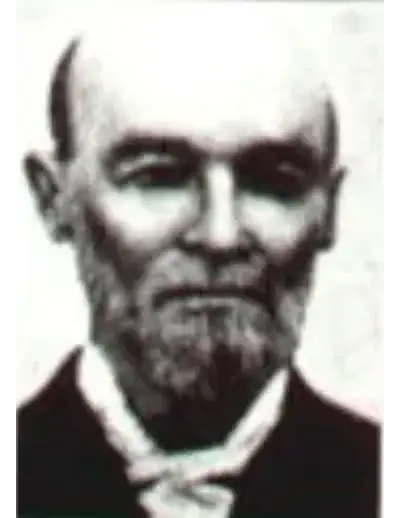
Ahmet Rüstem Bey (1862–1934), born Alfred Bilinski, was an Ottoman diplomat who served as last Ottoman ambassador to the United States in 1914. Despite neither of his parents being ethnically Turkish, he himself was an ardent Turkish nationalist. He was "exceptionally high-strung and outspoken" and had a "propensity to challenge people to duels". Prior to his appointment as ambassador, he had already served twice in the United States capital, both times leaving in a hurry.
