Turkey Quotes
The Ottoman Government has abrogated, as from the first of October next, the conventions known as the Capitulations, restricting the sovereignty of Turkey in her relations with certain powers. All privileges and immunities accessory to these conventions or issuing therefrom are equally repealed. Having thus freed itself from what was an intolerable obstacle to all progress in the Empire, the Imperial Government has adopted as the basis of its relations with the other powers the general principles of international law.
Turkey, in a disastrous foreign policy decision unilaterally withdrew from a major treaty and joined Germany in WWI in exchange for German support of Turkey’s treaty withdrawal. It led to the dissolution of the Ottoman Turkish Empire when Germany was defeated in WWI. Historically, it shows how easy it is for a nation to abrogate a treaty which illustrates how ephemeral treaties actually are. See De Gaulle’s wonderful quotation on this point—{138034}.
Turkey, Abrogation of Treaty Notification to the United States, September 10, 1914
Sourced by: Eigen's Political and Historical Quotations

See linked quotes for a North Korean example.

See {640105} and {640104} for more about the Capitulations Treaty.

Greece had always coveted Anatolia which was a part of the Ottoman Empire but had been in antiquity a Greek dominated area. Further, people of Greek ethnicity and culture, who hundreds of years ago use to be the vast majority were after the hundreds of years of Ottoman rule and migration were then the largest minority in Anatolia. After the Turks lost the First World War as a consequence of their allying with Germany, and had been stripped of its Arab territories and was determined to keep the territories that they still had. Also, Turkey had just undergone a revolution and the old order was displaced. Venizelos and the Greeks saw this as an opportunity to get back Anatolia and sent a military invasion force to land at Smyrna (Ismir to the Turks), the largest city of Anatolia where despite the Greek minority in all of Anatolia, Greeks were a small majority in Smyrna and many of the ethnic Greeks not only aided the Greeks once they had landed but participated in atrocities against the minority of Turkish Muslims of Smyrna. The Ambassador was then trying to rationalize the heavy hand with which the Turks dealt with the indigenous Greeks many of whom were guilty and many of whom were not.
See {585493},65902, and {585496}, for more quotations on this.

The treaty followed an aggressive military policy of Russia against the Ottomans on several fronts. Turkey then granted independence to the Crimea and ceded control of several key ports to Russia. This treaty was seen as a major humiliation of the Ottoman Empire and marked a turning point in the relations between Europe and the Middle East.

In the early 18th century, the succession to the Scottish and English Crowns was unclear. As a safety valve and check, this clause was adopted by the Scottish Parliament. This was one of the most radical and anti monarchy laws ever passed. It took the unilateral power of making war and peace from the king & established the principle of ratification of ALL treaties. The law did not last long. It was nullified by the Union between England & Scotland (1707), and the English Parliament specifically repealed the clause in the “Repeal of Certain Scotch Acts of 1707”. This clause, which only remained in force for 3 years, had a profound effect on the modern democracies. The American founding fathers were totally familiar with the recent English history & this law. So the American’s at the Constitutional Convention of 1787, built the principle into the new Constitution giving the Congress the power to Declare War and the Senate to ratify treaties as a check against Presidential power.

The Constitution was not drafted until 1787 and was ratified later. In the interim the young United States functioned under the Articles of Confederation, in a sense, our first Constitution. This clause established that the Federal Government should have the exclusive power and authority to conduct foreign affairs.


The Byzantine emissary had pointed out that Mehmed’s predecessors had signed a treaty agreeing to “consult” with Constantinople before building any fortified structure in the area surrounding Constantinople. Mehmed was only 19 years old at this time. His intention f building a fort was to have a platform from which to attack and capture Constantinople itself which he did 2 years later. Earlier, the Eastern Roman Empire was much stronger and the Ottoman sultans were more cautious in dealing with them. However, the various Christian factions were all feuding with each other, and Mehmed II, despite his youth, was much better organized and was a better leader than his predecessors.
Individual countries are bound only by the treaties and compacts that they have signed and ratified. So very often someone will allege that a country has violated international law, but that nation may not have signed the Treaty or Compact that binds them, so thy may not be in violation at all whereas some other country in similar circumstances would be. Also, many countries (including the United States) sign treaties but take exception to some of the provisions. Then there are not bound by that provision. This is what makes International Law so complicated and difficult to understand.


Lodge was particularly concerned that under the proposed treaty the United States would be obligated to support the League of Nations military efforts regardless of American public opinion or Congressional action.


The Christian Armenians, a minority in Turkey and its lands, were discriminated against like other non Muslim minorities in the Ottoman Empire. But during the Turkish War with Russia and WWI, some Armenians defected and served on the Russian side. Many Turkish citizens took revenge on Armenians by means of murder and torture. Soon, the extermination of the Armenians became the official “Young Turk” government policy. Hundreds of thousands of Armenians were killed outright, and about an equal number were “deported” to special areas. Many died of malnutrition along the forced march of Ethnic Cleansing. Others were murdered as they were deported. No one knows exactly how many Armenians were killed with estimates ranging from ½ million to 4 million. This was the first genocide of the 20th century. Unfortunately, American response was very weak and TR saw this as condonation. Modern Turkish leaders however, are in denial about the Armenian deaths. They claim that there was a war and food was scarce; the only Armenians killed, the claimed were proven Russian agents. They further claim that the Armenian behavior was in large part responsible for the forced deportations because of their lack of patriotism and unwillingness to help the Turkish authorities identify the Russian agents. Most Turks today are unaware of the Armenian Genocide as nothing is taught about the massacres in schools or other institutions. It is against the law in Turkey to even have an intellectual study of the Turkish behavior towards the Armenians, much less publish anything about it.
Germany was the major axis power of which Turkey was a partner in WWI. The Germans could easily have stopped the Turks from their genocidal attacks on the Armenians, but they considered it and chose not to. Likewise, the United States and other neutral nations did not make strong initial protests when the attacks started. Turkey was one of the largest empires of the world then and its Ottoman Empire controlled almost all of the Middle East and its oil.
The Christian Armenians, a minority in Turkey and its lands, were discriminated against like other non Muslim minorities in the Ottoman Empire. But during the Turkish War with Russia and WWI, some Armenians defected and served on the Russian side. Many Turkish citizens took revenge on Armenians by means of murder and torture. Soon, the extermination of the Armenians became the official “Young Turk” government policy. Hundreds of thousands of Armenians were killed outright, and about an equal number were “deported” to special areas. Many died of malnutrition along the forced march of Ethnic Cleansing. Others were murdered as they were deported. No one knows exactly how many Armenians were killed with estimates ranging from ½ million to 4 million. This was the first genocide of the 20th century. Modern Turkish leaders however, are in denial about the Armenian deaths. They claim that there was a war and food was scarce; the only Armenians killed, the claimed were proven Russian agents. They further claim that the Armenian behavior was in large part responsible for the forced deportations because of their lack of patriotism and unwillingness to help the Turkish authorities identify the Russian agents. Most Turks today are unaware of the Armenian Genocide as nothing is taught about the massacres in schools or other institutions. It is against the law in Turkey to even have an intellectual study of the Turkish behavior towards the Armenians, much less publish anything about it.

Kissinger and Nixon had just had a meeting with Golda Meir, the Israeli Prime Minister who had asked them to support the right of Russian Jews to emigrate to Israel. Kissinger himself was Jewish and Nixon’s closest confidant about world affairs. It is not clear whether or not this was another example of Kissinger pandering to Nixon’s prejudices which he did often. See {621138} for Nixon’s reply. This quotation was uncovered in 2010 when more of the Nixon White House tapes were released.


The Ottoman Turks, at war with Russia, exterminated a large proportion of the Armenian population of the then Turkish Empire. Some of the ethnic Armenians were working with Armenians in greater Russia and thus were a risk to the Turks. However, they starved, shot, beat, hung, and bayoneted hundreds of thousands of ethnic Armenians, wiping out entire villages and towns. Despite the fact that women and little children were all killed, Modern Turkey even into the 21st century refused to admit that this was a genocide even though there was ample documentation to prove it was not spontaneous but government ordered by the “Young Turks” then controlling Turkey. See {620603} and {612638} for examples. The modern Turks maintain the view expressed during the genocide that Armenians were a threat to Turkish Independence.
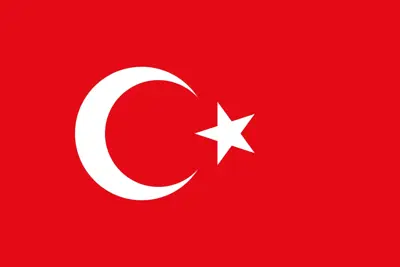
Turkey, officially the Republic of Turkey, is a transcontinental parliamentary republic in Eurasia, mainly on the Anatolian peninsula in Western Asia, with a smaller portion on the Balkan peninsula in Southeast Europe. Turkey is a democratic, secular, unitary, constitutional republic with a diverse cultural heritage.
