Alexander Nix Quotes
There's no question that the marketing and advertising world is ahead of the political marketing the political communications world.
Nix, Alexander. Interview with Ingrid Lunden. TechCrunch Disrupt London 2016, TechCrunch, 6 Dec. 2016.

Sinclair was a writer who had written about some of the worst scandals in American politics, leaned toward socialized democracy, and decided to run as a reform candidate in California where he lived. He won the Democratic primary easily even though he had no money, political experience, or backing. He terrified the Republicans who ran one of the dirtiest campaigns in American History to defeat him spending more money than in any election up to then including the Presidential elections. (for more details see {619613}) Sinclair lost, but it was close.


The ad, created by Tony Schwartz, only ran once, on September 7, 1964. It was so dramatic that News and other media replayed it and discussed it up until the election. LBJ’s opponent Barry Goldwater was a military hawk in the midst of the Cold war where nuclear war was everyone’s greatest fear. The Daisy ad was crystal clear and made overt what many Americans concern was about Goldwater. Johnson won in a landslide. See {586351} for the kinds of views that made Goldwater so vulnerable.


Television was a new campaign technique and the Democrats had been trying to broadcast entire Stevenson speeches. But the cost was very high and the Republicans who more quickly embraced the new political tool had been producing and running short 30 second and 1 minute advertisement “spots.” This was to the intellectuals of the day a very ethically questionable practice as it resembled advertising and marketing of consumer products. Ball in this quotation told the staff that in order to compete in the then new campaign world of television, the Democrats too would have to use “spots”—political TV advertisements. From this campaign onward, television would become the dominant political communications medium and “spots” became not only acceptable but became the dominant TV technique and the telecasting of entire speeches of the candidates would no longer be broadcast. See candidate Stephenson’s remark about the subject: #


This is a fascinating quotation because it illustrates how political attitudes have changed since then. Stevenson meant this to be an insult to and even a charge against the men who ran the Eisenhower administration and campaign but not the President personally. And that was the way that it was taken. Republicans were insulted and thought this was a scurrilous charge by a candidate who was down in the polls but wanted to throw “red meat” to his base. However, when we read the statement today, it doesn’t seem at all like an insult. As a matter of fact, there are few politicians today, of either party, who would not agree with the views that Stevenson accuses the Republican strategists of having. Arguably, the Democrats were historically very slow to arrive at he place the Republicans had achieved. But in 1956 it was almost unethical to use shows and advertising techniques to manipulate public opinion. Politicians had been doing it since the beginning of our Republic but it used to be something a little dirty—something to which no one wanted to public admit believing. Today, politicians of both parties are often criticized by their base and the pundits for not believing sufficiently in the importance of image manipulation and advertising. Today, virtually no politicians have any moral scruples about using the techniques, doing so overtly and being proud of their staffs for being good at it.

The really good campaign consultants / strategists, take the reality of the candidate identity and get the most out of the strengths. Attempts to remake of reshape the candidate almost always fail.


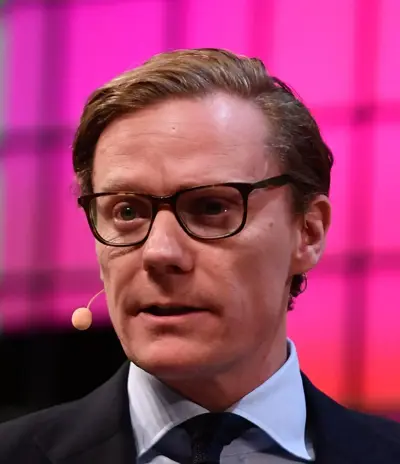
Alexander James Ashburner Nix is a British businessman, the former CEO of Cambridge Analytica and a former director of the Strategic Communication Laboratories (SCL) Group, a behavioural research and strategic communications consultancy, leading its elections division (SCL Elections). Cambridge Analytica and its parent SCL were involved in psychological warfare operations for the British military and involved in influencing hundreds of elections globally; Cambridge Analytica helped Leave.EU with its Brexit campaign, according to both Leave.EU and Cambridge Analytica staff. The company was also engaged by the Ted Cruz and Donald Trump campaigns during the 2016 US presidential election. The company also ran Kenyan President Uhuru Kenyatta's campaign.
