William O. Douglas Quotes
In matters relating to business, finance, industrial and labor conditions, health and the public welfare, great leeway is now granted the legislature, for there is no guarantee in the Constitution that the status quo will be preserved against regulation by government.
William O. Douglas, 1898-1980, U.S. Supreme Court Justice, Chairman, Security & Exchange Commission, Beauharnais v. Illinois, 1951
Sourced by: Eigen's Political and Historical Quotations

Virtually every advance for the working class in England (and the other countries including America) was labeled “socialism” by the conservative economic factions of the time. However, socialists were strong advocates of all these economic reforms and even in the 19th century their impact was recognized.

In 1905 President Roosevelt supported a Pure Food act. Business interests opposed it with such arguments as:


While this principle is widely accepted in modern America, in the early 20th century this was a view considered radical, socialist and even communistic by many of the leading businessmen in the nation. For a president to utter these words, much less a Republican President of a rich, upper class background.

Marshall did not crate this concept or some its phraseology out of whole cloth. See Rufus King {610245} for a Constitutional Convention basis for the statement.


See John Marshall's later (1803) use of the concept and term "repugnant." {606483}

There are many methods of voting in a legislative body. “Viva Voce” is Latin for “by Voice” and is often called a “Voice Vote”. Voting by ballot takes longer but had the advantage or disadvantage of secrecy. The theory was that if the New York Legislators could vote in a secret ballot, the lobbies and special interests would not be as influential since they would never know for sure—unless there were a unanimous vote—how any particular legislator voted. A further advantage is that Party Discipline could not be imposed and parties or “factions” as they were then called would be less powerful—a great concern of all the patriots who tended to distrust parties. The disadvantage was that the people who elected the legislator would never know how he voted. Note the frank admission that this was an “experiment”. Americans of the era realized that almost everything they were doing was a political experiment and this introduced a pragmatic force into structure and procedures of American politics.


This is a very important historical quotation because it clearly stated the left wing view of regulation. Large Business had been so unethical and illegal at the time that the majority of Americans and Congress, together with a Republican President, thought that it would be good to “weld” the growth and development of large companies to the Government. The right wing saw this as extreme Communism. Over time, when corporate greed and excesses had been controlled by government and was not as prevalent, the inhibition on growth and development of welding corporations to Government was recognized and a period of deregulation followed with most Americans not wanting to allow large companies to be completely deregulated and also not wanting them welded to the government. The extent of regulation has been the political contest with the extreme left and extreme right still holding to their ideological positions and sometimes paralyzing the middle as in the Obama administration.


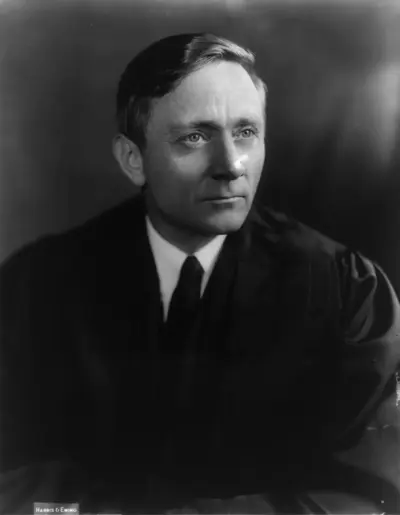
William Orville Douglas was an American jurist and politician who served as an associate justice of the Supreme Court of the United States. Nominated by President Franklin D. Roosevelt, Douglas was confirmed at the age of 40, one of the youngest justices appointed to the court. His term, lasting 36 years and 211 days (1939–75), is the longest in the history of the Supreme Court. In 1975, Time magazine called Douglas "the most doctrinaire and committed civil libertarian ever to sit on the court."
