Woodrow Wilson Quotes
Sanitary laws, pure food laws, and laws determining conditions of labor which individuals are powerless to determine for themselves are intimate parts of the very business of justice and legal efficiency.
Woodrow Wilson, 1856-1924, 28th President of the United States (Democrat, NJ), First Inaugural Address, March 4, 1913
Sourced by: Eigen's Political and Historical Quotations

The Ministry of Health had conducted inspections of Lebanese Restaurants, rarely done in the past, and found many with traces of human and animal feces in the food. Typically bribes would be paid to the inspectors but a new reform minister made honest inspections a high priority. Then when he made the results public and newspapers like this carried the message, most of the other government ministers were very upset as it held the country up to ridicule and greatly threatened the international reputation of the country for the finest food in the Middle East, and might further harm the Tourist business which their self-inflicted civil war had already damaged in the latter part of the 20th century and by the militarized standoff that had evolved since. See {642413} for the Health Minister’s statement triggering this headline.


One of his biggest opponents in this effort was Chancellor Otto von Bismarck-Schoenhausen, 1815-1898.


President Harrison had first brought the problem of injured workers having no protection or recourse to public attention {640537} Then Roosevelt’s term created legislation and the Congress passed it. The very conservative Supreme Court had declared the Employers’ Liability Act of 1906 unconstitutional, leaving no recourse of assistance for American railroad employees injured on their job through no fault of their own. Roosevelt was furious and he had the legislation redrafted to get around the Supreme Court objections. and that was passed in 1908 and was not overturned.

When TR was the NYC Police Commissioner, Riis had given him midnight tours of the precincts so Roosevelt could see for himself what the police were and were not doing. When he became Governor, his labor inspectors never reported the terrible sweatshop conditions that the newspapers were writing about. So TR asked Riis to arrange some personal “visits”. The two of them alone would show up at a sweatshop in the middle of the day and the governor would simply introduce himself to the owner, who dared not prohibit the Governor from coming in and then asking questions of workers and managers. Even in modern times that would not happen in a large state. The Governor then realized that the state labor inspectors were not doing their jobs and covering up the problems. Major changes took place.


Virtually every advance for the working class in England (and the other countries including America) was labeled “socialism” by the conservative economic factions of the time. However, socialists were strong advocates of all these economic reforms and even in the 19th century their impact was recognized.


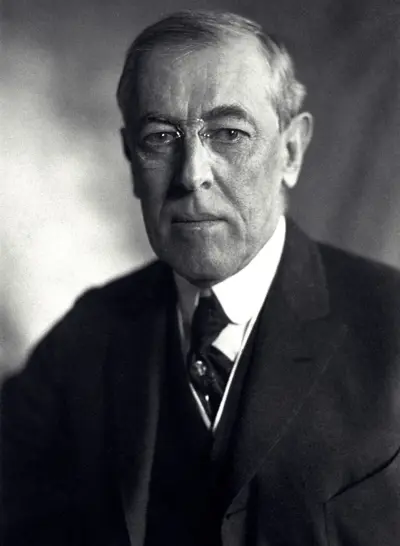
Thomas Woodrow Wilson was an American politician and academic who served as the 28th president of the United States from 1913 to 1921. A member of the Democratic Party, Wilson served as the president of Princeton University and as the 34th governor of New Jersey before winning the 1912 presidential election. As President, Wilson led the United States into World War I in 1917. He was the leading architect of the League of Nations, and his progressive stance on foreign policy came to be known as Wilsonianism. Scholars have generally ranked Wilson in the upper tier of U.S presidents, although he has been criticized for supporting racial segregation and white supremacy.
