Benjamin Robbins Curtis Quotes
restriction on the legislative power is not peculiar to the Constitution of the United States; it was borrowed from Magna Carta; was brought to America by our ancestors, as part of their inherited liberties, and has existed in all the States, usually in the very words of the great charter. It existed in every political community in America in 1787, when the ordinance prohibiting slavery north and west of the Ohio was passed
Benjamin Curtis, 1809-1874, U. S. Supreme Court Justice, Dissent, Dred Scott
Sourced by: Eigen's Political and Historical Quotations


Anti-slavery opponents had cited the equality argument of the Declaration of Independence to buttress their argument.

The Mystery was for many years the only Black Newspaper in America.


This is a classic type of fallacious political logic. The author claims that there are no powers in the constitution to make laws in a number of important areas of our society. What is true, is that there is no explicitly and uniquely specified statements in the Constitution regarding the areas he specified (and some he didn’t like education). However the power to make laws in these areas comes from the “Commerce Clause” where the Federal Government was given the power to regulate Interstate Commerce. And that is what the Federal Government does make laws about. Food that is sold in the state where it is grown is regulated by the states. But interstate agriculture is. Medicines and weapons are also sold and transported in interstate commerce. Even housing is in part covered as financing and mortgages, building materials, working conditions of the building companies are part of Interstate Commerce. A succession of Congresses have recognized this and so has every Supreme Court in our history. McManus however believes that all these legislators and judges have been wrong and worse, part of a conspiracy to subvert the Constitution. See {630683} for his tendency to see conspiracies in politics.


Bickel was then clerk to Justice Frankfurter.


Most people agree as to what the powers are that are “enumerated” in the Constitution. But there is endless difference of opinion as to what the “implied necessary and proper” powers are. However, this quotation establishes the greater powers of the Government to act in foreign affairs.
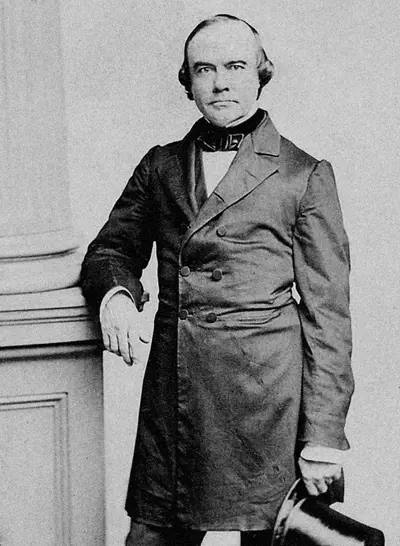
Benjamin Robbins Curtis was an American attorney and United States Supreme Court Justice. Curtis was the first and only Whig justice of the Supreme Court. He was also the first Supreme Court justice to have a formal legal degree and is the only justice to have resigned from the court over a matter of principle. He successfully acted as chief counsel for the Impeachment of U.S. President Andrew Johnson during the first presidential impeachment trial and is notable as one of the two dissenters in the Dred Scott decision.
