John Wycliffe Quotes
The power of pardon or of excommunication is possessed by the pope in no greater degree than by common priests, and that no man can be truly excommunicated unless he has first brought upon himself the condemnation of God.
John Wycliffe, c. 1320-1384, English religious reformer & Bible translator, Tract attacking the power of the Pope
Sourced by: Eigen's Political and Historical Quotations


King Henry VIII had left the Roman Catholic church and taken England and Ireland out also. He replaced the Pope as the head of the English and Irish churches. There was much opposition in Ireland and the priests were the most assertive opponents to the change and were still loyal to the Pope. Queen Elizabeth continued to have problems with the Priests. James I, Elizabeth’s successor, became fed up by the Roman Catholic Priests and therefor issued this Proclamation.

The Roman Catholic Church then maintained that salvation was dependent upon obedience to the Pope in all things civil and religious. See {595166} for the way that the Church at the time allowed some authority to civil authorities.

This notice of Excommunication was promulgated to the Catholic clergy in Ireland in May of 1538. It required all Roman Catholic leaders to size the property of Protestants or Catholics who sympathized with them. Those who did were then regarded as traitors by the Protestant King. The anti-Protestant feeling culminated with the massacre of about 100 Protestants who were drowned in Bann a few years later.


People of this era not only saw epidemics as the wrath of God, but also saw military catastrophe, invasion and raids as a punishment of God for the sins of the people of the area.

The letter was written at the behest of the Archbishop of Canterbury. The quotation appears to ratify the Pope’s unlimited power, but in actuality carves out an exception whereby the Pope’s authority might be challenged in the future. Specifically, it claims the Pope has not the authority to alter that which “by the word of God, has eternal validity.” Politically, this position put the pope in a box. By arguing against the proposition, the Pope would have to maintain that he should have the right to alter the word of God that had eternal validity which no pope wanted to state. By not challenging the doctrine, there was an opening by which the pope’s omnipotence could be challenged in the future.

He was stating for France what the English King James I had said a few decades earlier. See {616307}.

Pen name: Jack Nipps

Smith was the first Roman Catholic to run for President. He was very popular but there was a substantial amount of anti-Catholicism in America at the time. He lost, probably by the margin of the anti-Catholic vote.


Luther’s attitude toward the Catholic mass was the main reason the Protestant churches abolished the mass.

His response was to being asked whether he could do something with Russian Catholics to help Laval win favor with the Pope, to counter the increasing threat of Nazism. This quotation is often used as an example of Stalin’s disrespect for the Papacy. However, in this case, the Pope was extremely weak politically and some argue spiritually for he did not oppose Hitler and the Nazis very much. Defenders of the Papacy argue that Hitler had overwhelming force and little respect for the Pope, and ironically this was what Stain was referring to. Ironically, another Pope, John Paul, had a major part in bring down the Soviet Union and he had no divisions.

This was before the state had officially sanctioned and accepted the church. Most of the institutions were pagan and the kings had subjects of both religions with Christianity not yet dominant. Yet among Christians, the Church had government temporal power, even before the church was allied with the state.

The King had earlier replaced the Pope as the head of the English church. The references to money referred to a then common corruption of the Church whereby people could buy indulgences—religious papal pardons of past or future sins. This was a major revenue source for the Vatican and a major issue for Martin Luther and the Protestant Reformers some of who saw the pope as the Devil incarnate See {623153}. For Martin Luther’s view pf the practice and {626720}, {595195}, and {639436} for other contemporary views.


Spinoza’s ideas were considered so radical and dangerous that he was the only man in history who was excommunicated by the Catholics, the Jews and the Muslims. This was his observation after his first excommunications -- by his Jewish Congregation in Amsterdam.


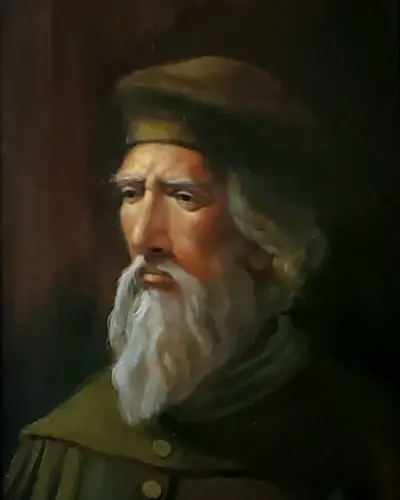
John Wycliffe was an English scholastic philosopher, theologian, biblical translator, reformer, priest, and a seminary professor at the University of Oxford. He became an influential dissident within the Roman Catholic priesthood during the 14th century and is considered an important predecessor to Protestantism.
