Al Smith Quotes
I never heard of these bulls and encyclicals and books.
Smith was the first Roman Catholic to run for President. He was very popular but there was a substantial amount of anti-Catholicism in America at the time. He lost, probably by the margin of the anti-Catholic vote.
Alfred E. Smith, 1873-1944, New York Governor & Democratic Presidential Candidate, Response when asked about the influence the papacy would have on the decisions he would make as a President, Quoted in McGreevy, Catholicism and American Freedom, 2003
Sourced by: Eigen's Political and Historical Quotations


King Henry VIII had left the Roman Catholic church and taken England and Ireland out also. He replaced the Pope as the head of the English and Irish churches. There was much opposition in Ireland and the priests were the most assertive opponents to the change and were still loyal to the Pope. Queen Elizabeth continued to have problems with the Priests. James I, Elizabeth’s successor, became fed up by the Roman Catholic Priests and therefor issued this Proclamation.

The Holy Roman Emperor and the Pope were at odds. The Pope had issued an edict staking out the powers of the Pope. King Henry called a conclave of clerics and deposed Pope Leo VII. The Pope Excommunicated Henry and deposed him as king and emperor. Civil war ensued, and finally they reached a compromise and accommodation with each other." Saint Hildebrand

See {639434}, {639436}, and {639437} for the triggers to this report.

5th Earl of Montrose. The public reaction to a new prayer book issued by the King and created by the King’s religious appointees. Although Protestant in nature, it was created without the early Scottish Protestant tradition of consultation with many levels of clergy and society. It was seen as authoritarian and much like the Catholic mass which was proscribed by Rome. The National Covenant was a document of protest. It was first drafted by Alexander Henderson and Johnston of Wariston, and signed by others, but Montrose was the first signer and the acknowledged leader of the Covenanters.


The King had earlier replaced the Pope as the head of the English church. The references to money referred to a then common corruption of the Church whereby people could buy indulgences—religious papal pardons of past or future sins. This was a major revenue source for the Vatican and a major issue for Martin Luther and the Protestant Reformers some of who saw the pope as the Devil incarnate See {623153}. For Martin Luther’s view pf the practice and {626720}, {595195}, and {639436} for other contemporary views.

In addition to being a Roman Catholic priest, Father Coughlin was an outspoken radio commentator who was well known for his controversial political opinions, see {598783}, {598784}.


The Roman Catholic Church in America had a very difficult problem with slavery. Catholics were themselves a minoirty, hated and distrusted by many Protestants. In most of the country, the distrusr was based on their large immigrant population, but in the South Catholic theology was hated and the Vatican and Pope were particular targets. The Catholic Clergy generally did not want to take sides in the most contentious issue in America since its inception. The Southern Catholic Clergy did not have that option as in the South, anyone who was not a supporter of slavery was an "enemy of the community and subject to all kinds of violence." Some Southern priests were willing to take the personal risk but did not want to put their followers at risk. In a strange consequence, Catholics--especially Irish Catholics--fought on both sides of the Civil War and often against each other. While it was not an exemplary moral behavior for the Church, there were difficult pressures on Catholic leaders. Further, most of the lowest and most difficult, undesirable jobs were filled by Catholics and most Catholic laymen so and end to slavery as the start of pitting the Catholics against the Blacks. So there was not a groundswell for abolition in most Catholic parishes even in the North.

While this was his opinion, it was never issued in a Papal Bull or had the force of Catholic law. Meanwhile, almost all of the socialist movements in the West have had Catholics in their leadership and many democrats of modern times would have been considered socialist. Many countries with high proportions of Catholic voters have elected socialist governments in secluding Spain and Italy.

What the historian did not know was how similarly the Protestants would behave against the Catholics when they had the power. Since the Catholics were the established church, and the Protestants the new “heretics” the Protestants were on the receiving end of most of the atrocities at the beginning. However, as if they had been scholled by their horrible experiences, they repeated them just exchanging the perpetrators and the victims.


This notice of Excommunication was promulgated to the Catholic clergy in Ireland in May of 1538. It required all Roman Catholic leaders to size the property of Protestants or Catholics who sympathized with them. Those who did were then regarded as traitors by the Protestant King. The anti-Protestant feeling culminated with the massacre of about 100 Protestants who were drowned in Bann a few years later.

Naples was an independent kingdom before the unification of Italy. This quotation illustrates one of the lowest periods of the Roman Catholic Church where the personal morality of the Pope and Cardinals was greatly at odds with the earlier and current positions of the Church. This hypocrisy, nepotism, and corruption was one of the major factors that led to the Reformation. Note that the Pope had an illegitimate son who he named a Cardinal and the Pope wanted his son to marry the daughter of the king. The king was not enthusiastic given the son’s status as a Cardinal of the Church.

This was a very important historical quotation. In 1928 Al Smith, the Governor of New York, was the Democratic Candidate for President. He was the first Roman Catholic to run for the Presidency for a major party. He narrowly lost and the anti-Catholic sentiment of much of the country was one of the major reasons, Jones was one of the many Protestant religious leaders who were virulently opposed to a Roman Catholic in the White House. The analogy of a saloon on every corner was very important at the time as the United States had Prohibition, and alcohol had been Jones’ major issue beore then. The result was the election of Herbert Hoover and the subsequent Great Depression.


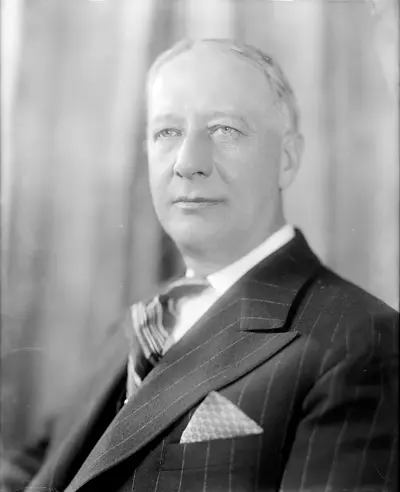
Alfred Emanuel Smith was an American politician who served four terms as Governor of New York and was the Democratic Party's candidate for president in 1928.
