John Foxe Quotes
Neither experience nor improvement can root out the inveterate prejudices of the Roman Catholics, or render them less cruel or inexorable to Protestants.
What the historian did not know was how similarly the Protestants would behave against the Catholics when they had the power. Since the Catholics were the established church, and the Protestants the new “heretics” the Protestants were on the receiving end of most of the atrocities at the beginning. However, as if they had been scholled by their horrible experiences, they repeated them just exchanging the perpetrators and the victims.
John Foxe, 1517-1587, English Historian, Book of Martyrs
Sourced by: Eigen's Political and Historical Quotations

It was not until 1780 that Catholics were allowed to even be members of Town Corporations.


At the time he was referring to Protestants & Catholics. Today we have Muslims vs. Jews & Christians.
Toleration is a relative term. The Muslim Moors made Christians (and Jews) pay a special tax. At times they were forced to wear special clothing so that they could be readily identified. And they could not build churches larger or taller than the smallest mosque in the community. At times, their occupations were restricted but at other times Christians and Jews were appointed to the highest positions like Vizier. The Inquisition, in contrast, forced all Muslims (and Jews) to leave the country without any of their property or money or be tortured and killed—usually by burning at the stake unless of course that they converted to Christianity.


Poland was one of the Nazi occupied nations which cooperated in the mass murder of Jews and facilitated the Holocaust. Even after the war, much of the Polish Catholic clergy maintained virulent anti-Semitic views and in 1946 Polish thugs with the encouragement of some priests engaged in a pogrom in Kielce of returning Polish Jewish refugees. Catholic Primate of Poland, Augustus Hlond, made numerous anti-Semitic statements further exacerbating the problem. Many cast blame on Pope Pius XII who was not very vocal during the Nazi era regarding the ill treatment and murder of Jews, Gypsies, and handicapped, giving a “green light” to the Polish Prelate and those lower anti-Semitic priests. Papal apologists note that Hitler could have turned on the Catholic Church; the Pope had to walk a fine line between condemning evil and risking the welfare of the Church. Nonetheless, many Catholic priests risked and some lost their lives speaking out against the Nazi evil and protecting Nazi targets.

The implication of a double moral standard for adherents of the faith and for others has been characteristics of many religions.

Odo of Chatillon-Sur-Marne. This is an amazingly distressing quotation for most moderns. Here we have the Pope preaching genocide and ethnic cleansing. This was one of the main triggers of the bloody Crusades and is not forgotten by Muslims in the Middle East Today. As Islam has not changed a great deal in 1000 years, most Muslims assume that the same is true of Christianity and especially the popes and the Roman Catholic Church. This is one of the reasons that the Islamic world reacts so strongly when a pope makes any statement negatve about Muslims and Islam.


It is this verse that for some Muslims justifies terrorism against non-Muslims. See {584354} for a specific example. There are similar provisions in the Old Testament which a few extremely conservative Jews and Christians have used to advocate for blasphemy being a capital crime. Note that if an unbeliever repents and becomes a Muslim, he should be spared.


This sura has unfortunately been used by some Serbians and other Christians to justify ethnic cleansing against Muslims.


Louisiana was then a possession of France
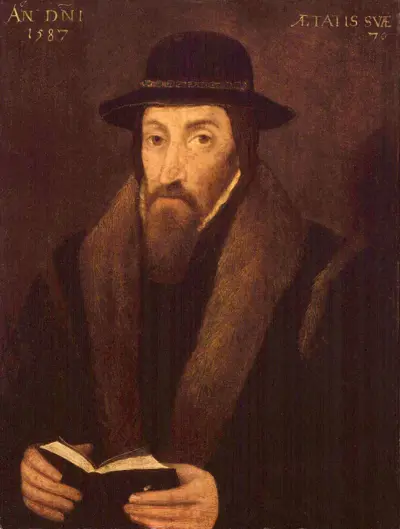
John Foxe, an English historian and martyrologist, was the author of Actes and Monuments (otherwise Foxe's Book of Martyrs), telling of Christian martyrs throughout Western history, but particularly the sufferings of English Protestants and proto-Protestants from the 14th century and in the reign of Mary I. The book was widely owned and read by English Puritans and helped to mould British opinion on the Catholic Church for several centuries.
