Vojtech Tuka Quotes
It is incomprehensible to the government that ecclesiastical circles, and especially the Catholic clergy, should today adduce so many protests against the elimination of the Jews.
Vojtech Tuka, 1880-1946, Prime Minister, Slovakia, March 3, 1943
Sourced by: Eigen's Political and Historical Quotations

Two were executed and the others sent to the Gulags. This is often quoted to show how hostile the Soviet Union was to all religions.

This sura has unfortunately been used by some Serbians and other Christians to justify ethnic cleansing against Muslims.

Saint Benedicta was born and brought up as a Jew and converted to Catholicism. She and a few other leading German Catholics spoke out forcefully against Nazi crimes and immoralities. She was one of the few German Catholics who wanted the Pope to act more forcefully in Germany. The most controversial aspect of the Pontificate of Pius XI was his relative silence and failure to use the powers of the church and excommunication to condemn and control the Nazi rise to power and their, aggression, discrimination, and atrocities including mass murders. The Pope did occasionally speak out condemning the worst of the German Nazi outrages to morality, but he did not do so very vigorously or order the German Cardinals and other bishops to do so. Supporters of Pius XI point out that the entire Catholic Church in Germany was in peril. The Nazis might have shut down their churches, jailed or murdered priests and seize church property. Many of the German Catholics, including the clergy, were Nazi party members or supporters, and he feared a political schism of German Catholics as well. And Italy, surrounding the Vatican was then under the control of the Italian Fascists who were allies of the Nazis, The Vatican itself and its staff were themselves vulnerable and could have been easily occupied. Apologists for Pius XI observe that the entire Church and its leadership could have been wiped out had they ignored the practicality that the Fascists were in control and would tolerate the Church just so far. Saint Teresa and other Catholics who were outspoken, along with the few Protestant Lutheran Clerics who opposed the Nazis, were indeed arrested and Saint Teresa was finally murdered at the Auschwitz concentration camp. Even that did not galvanize Pope Pius XI to assertive anti Nazi action. The records of the Vatican for that period have not been opened for public study so it is not known for sure that the Pope even saw Saint Teresa’s letter or it was intercepted by the strong pro Nazi faction in the Vatican. That year, Pius signed a Concordat (agreement) with the Nazi Government which many in the Vatican naively believed would control and limit the worst of the Nazi actions. But by 1937, Pius condemned the “violations” of the Concordat and Nazi anti-Semitism as well (encyclical written in German, Mit brennender Sorge (With Burning Anxiety). His critics observe that he went no further, even with the Catholic Nazi clerics and other Catholics. The Carmelite order tried to protect Saint Teresa who was then just a non and leading Catholic intellectual (she had a PhD in philosophy) by sending her to a Carmelite facility in Holland. But the Germans overran the Netherlands, arrested her and sent her to Auschwitz where she was martyred. She was beatified by Pope John Paul II in 1987.


What the historian did not know was how similarly the Protestants would behave against the Catholics when they had the power. Since the Catholics were the established church, and the Protestants the new “heretics” the Protestants were on the receiving end of most of the atrocities at the beginning. However, as if they had been scholled by their horrible experiences, they repeated them just exchanging the perpetrators and the victims.
Toleration is a relative term. The Muslim Moors made Christians (and Jews) pay a special tax. At times they were forced to wear special clothing so that they could be readily identified. And they could not build churches larger or taller than the smallest mosque in the community. At times, their occupations were restricted but at other times Christians and Jews were appointed to the highest positions like Vizier. The Inquisition, in contrast, forced all Muslims (and Jews) to leave the country without any of their property or money or be tortured and killed—usually by burning at the stake unless of course that they converted to Christianity.


Poland was one of the Nazi occupied nations which cooperated in the mass murder of Jews and facilitated the Holocaust. Even after the war, much of the Polish Catholic clergy maintained virulent anti-Semitic views and in 1946 Polish thugs with the encouragement of some priests engaged in a pogrom in Kielce of returning Polish Jewish refugees. Catholic Primate of Poland, Augustus Hlond, made numerous anti-Semitic statements further exacerbating the problem. Many cast blame on Pope Pius XII who was not very vocal during the Nazi era regarding the ill treatment and murder of Jews, Gypsies, and handicapped, giving a “green light” to the Polish Prelate and those lower anti-Semitic priests. Papal apologists note that Hitler could have turned on the Catholic Church; the Pope had to walk a fine line between condemning evil and risking the welfare of the Church. Nonetheless, many Catholic priests risked and some lost their lives speaking out against the Nazi evil and protecting Nazi targets.

Earlier in the Nazi movement he had criticized some of the more absurd anti-Semitic positions of Hitler and his henchmen. However, when it became clear that the Nazis had the upper hand he publicly recognized the Nazi government as legitimate, required Catholic clergy to remain loyal to the Nazi government, and maintained bridges between fascism and the Church while over 6 million Jews, Gypsies, and handicapped were murdered—many by his faithful.
The Nazis had started vicious persecution of Jews in Germany. In the early days of irrational anti-Semitism and Nazism he preached against the irrational Nazi propaganda – See {638920}. However, when it became clear that the Nazis had the upper hand, he publicly recognized the Nazi government as legitimate, required Catholic clergy to remain loyal to the Nazi government, and maintained bridges between fascism and the Church He then became silent on the terrible, inhuman, un-Christian treatment of the Jews concentrating his efforts on negotiating the best for the Catholics that he could get. See {639129}.

The term “gentile” was used in the Old Testament to indicate someone who was not of God’s Chosen People—one who was not a Jew. But the Mormon’s used the Biblical term to refer to people who were outside the Mormon faith. When Bamburger ran for the Governorship, there had been only one other Jewish governor in America. At a campaign rally a Mormon anti-Semite called him a “Damned Gentile.” This reply was typical of his humor, and the majority of the state voters and the Mormons voted for him making Bamburger the second Jewish Governor in America.

In 1933, there was still a some of anti-Semitism in America. The persecution of Jews in Germany was very clear at the time, just from the statements and writings by Adolf Hitler and other high level government officials and the laws that they were instituting and proposing. McFadden was one of the extreme isolationists in Congress at the time. They knew very little of the rest of the world, and believed the false assurances provided by German officials and American anti-Semitic, Fascist, pro Nazi partisans. McFadden’s statement was not only contrary to fact, but is among the most naïve of Congressional speeches.

It is amazing what explanations religious and biased fanatics can come up with to explain history.
Saint Benedicta was born and brought up as a Jew and converted to Catholicism. She and a few other leading German Catholics spoke out forcefully against Nazi crimes and immoralities. She was one of the few German Catholics who wanted the Pope to act more forcefully in Germany.

In this quotation the founder of Protestantism criticizes other Christians for their anti-Semitism. Luther later became a virulent anti-Semite himself. See {629230}
It is this verse that for some Muslims justifies terrorism against non-Muslims. See {584354} for a specific example. There are similar provisions in the Old Testament which a few extremely conservative Jews and Christians have used to advocate for blasphemy being a capital crime. Note that if an unbeliever repents and becomes a Muslim, he should be spared.

The Nazis and most of the Arabs were allies in WWII. The Jews of Palestine—although they were opposed to many of the British policies regarding Palestine—were active in the Allied cause contributing units to the British Army. Although the Germans were brutal to civilians, murdering millions, they refrained from public pronouncements or exhortations to kill civilians in most cases. The Arabs did not. The Mufti was actually given the rank of General in the Nazi SS and had his own SS unit. In this despicable exhortation he actually uses a concept and wording from the Koran. See {584355}. This quotation is important in that it refutes a common claim by some Palestinians that it was only the Germans who were responsible for the Holocaust and the post war Jewish Refugee problem and that the Palestinians had to bear the price rather than place Israel in Europe. This quotation and the other by the Grand Mufti prove that Palestinians were not only complicit in persecution of Jews but took a leadership and advocacy role.


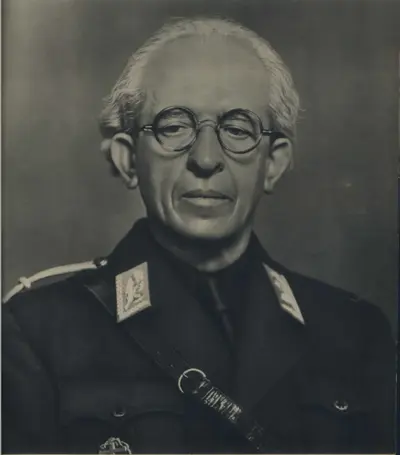
Vojtech Lázar "Béla" Tuka was a Slovak politician who served as Prime Minister and Minister of Foreign Affairs of the First Slovak Republic between 1939 and 1945. Tuka was one of the main forces behind the deportation of Slovak Jews to Nazi concentration camps in German occupied Poland. He was the leader of the radical wing of the Slovak People's Party.
