Pope Gregory VII Quotes
The Roman Church was founded by God alone.
Only the Bishop of Rome [the Pope] is by law called universal.
The Pope is the only man whose feet shall be kissed by all Princes.
The Roman Church has never erred,
Nor, as witness Scripture, will it ever do so.
Gregory VII, c. 1020-1085, , Roman Catholic Pope and Saint, Dictatus Papae, 1075
Sourced by: Eigen's Political and Historical Quotations


He became furious when the Pole had visited his country and there were so many people who anted to see the Pope that Manila traffic was totally jammed and gridlocked. This quote was the President’s reaction to the snarled traffic.


His response was to being asked whether he could do something with Russian Catholics to help Laval win favor with the Pope, to counter the increasing threat of Nazism. This quotation is often used as an example of Stalin’s disrespect for the Papacy. However, in this case, the Pope was extremely weak politically and some argue spiritually for he did not oppose Hitler and the Nazis very much. Defenders of the Papacy argue that Hitler had overwhelming force and little respect for the Pope, and ironically this was what Stain was referring to. Ironically, another Pope, John Paul, had a major part in bring down the Soviet Union and he had no divisions.

The Holy Roman Emperor and the Pope were at odds. The Pope had issued an edict staking out the powers of the Pope. King Henry called a conclave of clerics and deposed Pope Leo VII. The Pope Excommunicated Henry and deposed him as king and emperor. Civil war ensued, and finally they reached a compromise and accommodation with each other." Saint Hildebrand

King Henry VIII had left the Roman Catholic church and taken England and Ireland out also. He replaced the Pope as the head of the English and Irish churches. There was much opposition in Ireland and the priests were the most assertive opponents to the change and were still loyal to the Pope. Queen Elizabeth continued to have problems with the Priests. James I, Elizabeth’s successor, became fed up by the Roman Catholic Priests and therefor issued this Proclamation.

This detestable accusation completely ignores the fact that when the American Catholic Church had a raft of homosexual priests in the early 21st century, the Pope condemned this in the most uncertain terms. Child homosexual molestation is vehemently condemned by both Catholicism and Islam alike—also by straights and homosexual groups.

The Christian Roman Empire was split in two—a Western (Latin) Empire led by the Roman Catholic Church in Rome, and the Eastern (Greek) Roman Empire led by the Orthodox Church headquartered in Constantinople (Byzantium). The two churches were not only in a theological conflict but violence broke out and the armies of the two religious empires attacked each other now and then. In 1439, leaders of the two versions of Christianity met in Florence, and they agreed to reunuion in which the Eastern Orthodox would again acknowledge the authority of the Pope. This was not a popular agreement with the majority of the Eastern Orthodox people and some of the clerical leadership. Constantine, realizing that he did not have pubic support at home for the end to the schism and the acceptance of the authority of the Pope, kept stalling on officially announcing and implementing the unity treaty. The Pope’s patience was wearing thin. Constantine did not adhere to ther treaty and the two churches have been apart ever since.


Smith was the first Roman Catholic to run for President. He was very popular but there was a substantial amount of anti-Catholicism in America at the time. He lost, probably by the margin of the anti-Catholic vote.


The Roman Catholic Church then maintained that salvation was dependent upon obedience to the Pope in all things civil and religious. See {595166} for the way that the Church at the time allowed some authority to civil authorities.

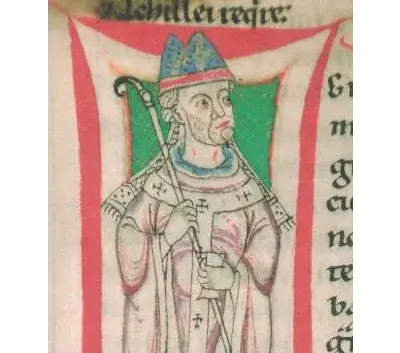
Pope Gregory VII, born Hildebrand of Sovana (Italian: Ildebrando da Soana), was pope from 22 April 1073 to his death in 1085. He is venerated as a saint in the Catholic Church.
