Arthur Grey Quotes
The pope is a detestable shoveling, the right Anti-Christ and general ambitious tyrant over all right principalities, and patron of the diabolical faith.
Arthur Grey, 1536–1593, 14th Baron Grey de Wilton, Statement to Sir Walter Raleigh
Sourced by: Eigen's Political and Historical Quotations


His response was to being asked whether he could do something with Russian Catholics to help Laval win favor with the Pope, to counter the increasing threat of Nazism. This quotation is often used as an example of Stalin’s disrespect for the Papacy. However, in this case, the Pope was extremely weak politically and some argue spiritually for he did not oppose Hitler and the Nazis very much. Defenders of the Papacy argue that Hitler had overwhelming force and little respect for the Pope, and ironically this was what Stain was referring to. Ironically, another Pope, John Paul, had a major part in bring down the Soviet Union and he had no divisions.


He became furious when the Pole had visited his country and there were so many people who anted to see the Pope that Manila traffic was totally jammed and gridlocked. This quote was the President’s reaction to the snarled traffic.


This notice of Excommunication was promulgated to the Catholic clergy in Ireland in May of 1538. It required all Roman Catholic leaders to size the property of Protestants or Catholics who sympathized with them. Those who did were then regarded as traitors by the Protestant King. The anti-Protestant feeling culminated with the massacre of about 100 Protestants who were drowned in Bann a few years later.

The Roman Catholic Church hierarchy had just cracked down on some nuns and their orders who were discussing and debating classic church positions, like male only priesthood, birth control, women’s roles in the society and in the search. There were many strongly worded admonishments from the Vatican. Down found it odd that the Church Fathers should be so distressed by activist nuns when their reaction to Priest sexual predation of young boys was by comparison, so mild.


King Henry VIII had left the Roman Catholic church and taken England and Ireland out also. He replaced the Pope as the head of the English and Irish churches. There was much opposition in Ireland and the priests were the most assertive opponents to the change and were still loyal to the Pope. Queen Elizabeth continued to have problems with the Priests. James I, Elizabeth’s successor, became fed up by the Roman Catholic Priests and therefor issued this Proclamation.


Pippin had the opportunity of expanding his empire by conquering the Lombards whose cavalry he could use if and when the Saracen Muslims would invade again. But he would be seizing another Christian country, contrary to the Pope’s edicts, thus losing the blessings of the Pope. Hence the question. He decided to go for the cavalry. Later, Joseph Stalin asked the same question in much different context. See {627524}. Some historians question whether Pippen actually uttered the quotation or just considered it.

Hoover was an inveterate racist and had an extreme hatred of King. A month later King was awarded the Nobel Peace Prize. What was not known at the time was Hoover, although it had nothing to do with law enforcement, actually contacted New York Cardinal Spellman and illegally transmitted to him parts of FBI confidential and secret files on King for the purpose of persuading the Pope not to grant King an audience. Nonetheless, Hoover himself had a behind the scenes reputation of leaking for his personal purposes and that much of the contents of many FBI files were notes on unsubstantiated claims made by political enemies and often far from the truth. The Cardinal, the Pope and their staffs chose to ignore the Hoover materials.

Two were executed and the others sent to the Gulags. This is often quoted to show how hostile the Soviet Union was to all religions.


Before the Protestant Reformation of Martin Luther, there had been a schism of the Catholic Church into the Western Roman Empire—the Latins, headquartered in Rome; and the Orthodox Church—the Greeks, headquartered in Constantinople (Byzantium). One of the main issues of the schism was the Papacy itself. As this quotation shows, Luther was by no means the first to attack the Papacy. Saint Mark’s quotation here was more than 50 years before Luther was born.
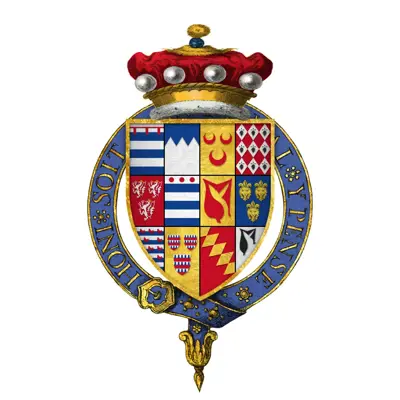
The Rt Hon. Arthur Grey, 14th Baron Grey de Wilton, KG (1536–1593), was a baron in the Peerage of England. Lord Grey de Wilton is now largely remembered for his memoir of his father, for participating in the last defence of Calais (1558), and for his involvement in the massacre after the Siege of Smerwick (1580) on Corca Dhuibhne in County Kerry. He served as Lord Deputy of Ireland from 1580 until 1582.
