Charles Hodge Quotes
But to be the Vicar of Christ, to claim to exercise his prerogatives on earth, does involve a claim to his attributes, and therefore our opposition to Popery is opposition to a man claiming to be God.
Hodge, Charles. Systematic Theology, Vol. 1. Charles Scribner and Company, 1871, p. 150.


His response was to being asked whether he could do something with Russian Catholics to help Laval win favor with the Pope, to counter the increasing threat of Nazism. This quotation is often used as an example of Stalin’s disrespect for the Papacy. However, in this case, the Pope was extremely weak politically and some argue spiritually for he did not oppose Hitler and the Nazis very much. Defenders of the Papacy argue that Hitler had overwhelming force and little respect for the Pope, and ironically this was what Stain was referring to. Ironically, another Pope, John Paul, had a major part in bring down the Soviet Union and he had no divisions.


At the time the Pope had secular, diplomatic relationship with many of the states of Europe:


John Ilyitch Sergieff. The power of the leadership of organizations, religious and secular, has long been in contention. There are those who advocate the strong, very powerful executive such as Russia under the Czars and the Roman Catholic Church and those who prefer a weaker leader with very limited power such as the United States and the Russian Orthodox Church.


He became furious when the Pole had visited his country and there were so many people who anted to see the Pope that Manila traffic was totally jammed and gridlocked. This quote was the President’s reaction to the snarled traffic.


5th Earl of Montrose. The public reaction to a new prayer book issued by the King and created by the King’s religious appointees. Although Protestant in nature, it was created without the early Scottish Protestant tradition of consultation with many levels of clergy and society. It was seen as authoritarian and much like the Catholic mass which was proscribed by Rome. The National Covenant was a document of protest. It was first drafted by Alexander Henderson and Johnston of Wariston, and signed by others, but Montrose was the first signer and the acknowledged leader of the Covenanters.


The Roman Catholic Church then maintained that salvation was dependent upon obedience to the Pope in all things civil and religious. See {595166} for the way that the Church at the time allowed some authority to civil authorities.

The Vatican & the Chinese Communist Government had been at odds for years with much of the Chinese church going underground. Fr. Jin had been jailed for a decade. Then the government allowed him and the Catholic Church and operate openly, but there were still Vatican conflicts over numerous issues including the right of the Government to approve senior appointments of church officials—a privilege the church claimed exclusively. The Vatican ordered Jin not to cooperate and especially not to reopen the national theological seminary which the government had ordered closed. There had been no training for Chinese priests and Jin wanted to reopen the national theological seminary but the Vatican refused cooperation waiting for the government to capitulate to the Vatican’s various demands. Fr. Jin defied the Vatican & reopened the seminary. Without officially admitting their failed tactics, the Vatican let the discipline issue against Jin drop & the national theological seminary thrived.
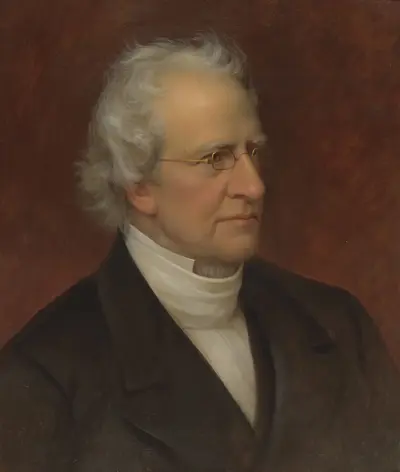
Charles Hodge was a Presbyterian theologian and principal of Princeton Theological Seminary between 1851 and 1878.
