James Phillips Kay-Shuttleworth Quotes
The Moral and Physical Condition of the Working Classes Employed in the Cotton Manufacture in Manchester
He called attention to the relationship between the poverty living conditions, sanitation, and the outbreak of cholera in the Manchester Cholera epidemic of 1832. He went on to advocate shorter working hours, better sanitation, and education for the mill workers.
James Phillips Kay-Shuttleworth, 1804-1877, English Physician, Educator & Reformer, Title of Book, 1832
Sourced by: Eigen's Political and Historical Quotations

He in that same year then persuaded sympathetic MP, John Hobhouse, to introduce the first bill into the House of Commons regulating child labor in the mills. Considered radical in its day, forbade employment of children under the age of 9 from working in the mills, and then limited the hours that children from 9 to 18 to 12 hours a day. The bill was rejected with the same claims that have been made regarding child labor reform attempts ever since. It would slow growth, harm the economy, exacerbate the poverty of poor families and interfere with the parents right to bring up their children. It was not until after his death in 1861 that meaningful child labor laws were passed for the British mills.

This report and others like it eventually led to French labor reforms, but only many years later.


Oastler was a mill owner himself.


3rd Earl Russell of Kingston


The left has always been ambivalent about automation. Many object to it on the grounds that it puts men out of work. However, others such as Lafage, argued that automation was the only economic way to reform the working hours and conditions of labor. The problem at the time was that as long as labor was so cheap, there was no motivation for the manufacturer to invest in better machinery. He and many others argued that minimum wages and their increases increase productivity because it would force manufacturers to invest in more productive equipment to reduce their labor costs.


Ten cents a day was a very low wage—it was about the equivalent of a meal at a tavern at the time. Workers throughout the country were outraged and give him a derogatory nickname—see Quotation 643585.

She was writing about the textile mills of Manchester, England in the Industrial Revolution. Workers’ wages were so low that many of them could not feed themselves and their family decently

Virtually every advance for the working class in England (and the other countries including America) was labeled “socialism” by the conservative economic factions of the time. However, socialists were strong advocates of all these economic reforms and even in the 19th century their impact was recognized.


The coal miners’ strike had been going for 5 months. The major issue was the right to union recognition. The mine owners refused to do that and decided to take the strike. President Theodore Roosevelt mediated a settlement where the miners won more money but no union recognition. The great appeal and significance of this speech is that it stressed the young children who started working in the mines at ages 8 or 9 by working on the “breakers” where they broke up large chunks of coal into smaller chunks. The children never saw daylight and never had a chance for education much less a childhood. At the time, and well into the 20th century the Republican Party was adamantly opposed to any legislation regulating child labor and when two decades later public opinion finally forced Congress to pass Child Labor legislation, the Supreme Court declared it unconstitutional and it took a Constitutional Amendment. See {32240}, {642469}, and {36885}.
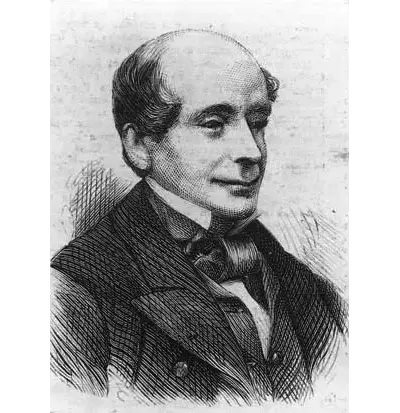
Sir James Phillips Kay-Shuttleworth, 1st Baronet of Gawthorpe Hall, Lancashire, was a British politician and educationist. He founded a further-education college that would eventually become a university.
